
UNFCCC Implementation Forums to be guided by the six axes of the Climate Action Agenda defined at COP30
The events of the Republic of Korea Climate Week (CW3) were organized around the six axes of the Climate Action Agenda, with the aim of accelerating the era of implementation in the fight against climate change
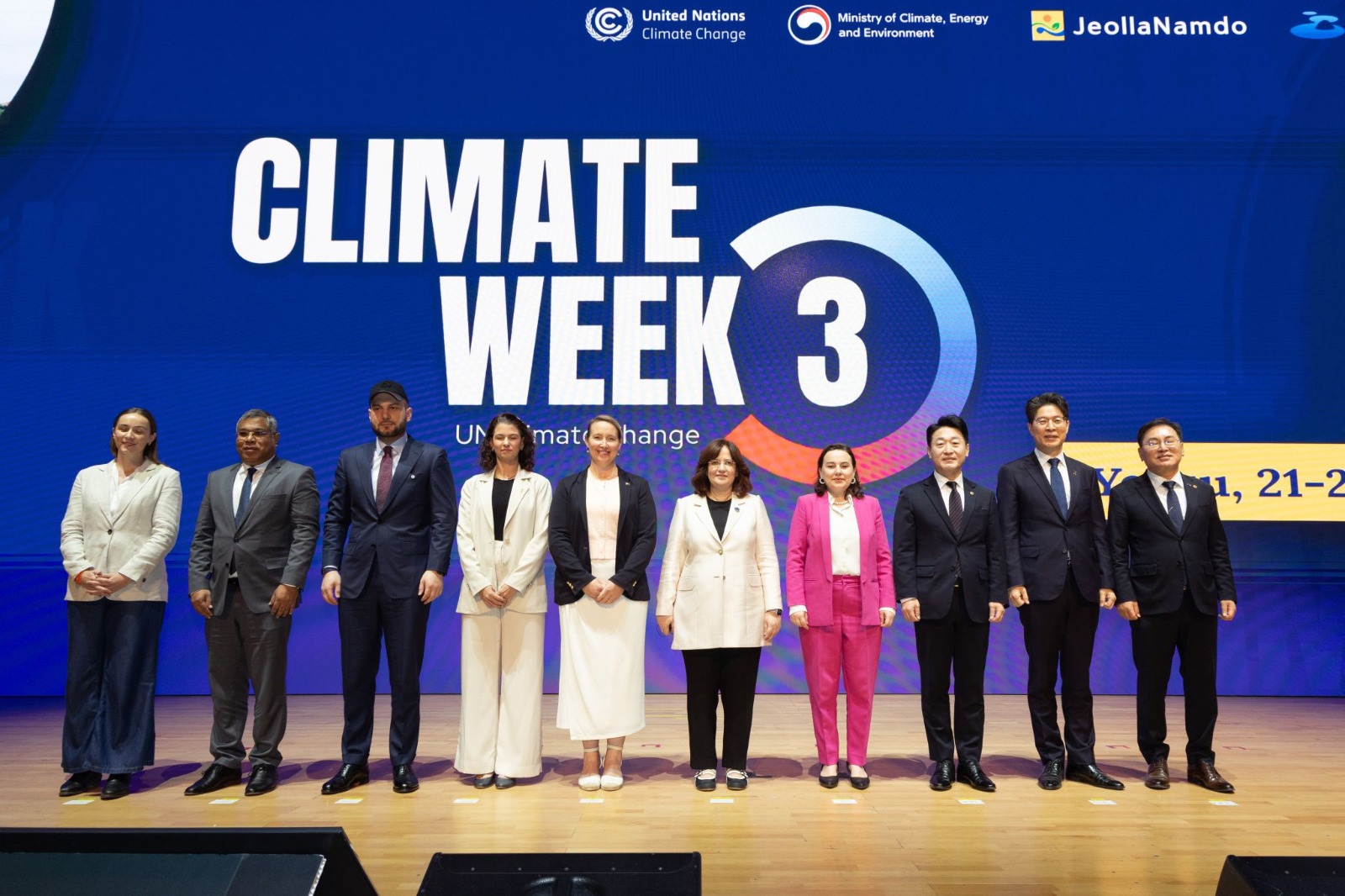
From 21 to 25 April, the United Nations Framework Convention on Climate Change (UNFCCC), the UN body responsible for the global response to the climate crisis, is holding the third Climate Week of 2026 (CW3) in Yeosu, Republic of Korea. Each year, the Convention organizes two events within the official calendar of the Conferences of the Parties. The second event of 2026, on the road to COP31 in Türkiye, will take place in September in Baku, Azerbaijan.
What is new in 2026 is that the Implementation Forums organized during the UNFCCC Climate Weeks will be guided by the six axes of the Climate Action Agenda framework established at COP30: (1) Transitioning Energy, Industry, Transport; (2) Stewarding Forests, Oceans, and Biodiversity; (3) Transforming Agriculture and Food Systems; (4) Building Resilience for Cities, Infrastructure and Water; (5) Fostering Human & Social Development; and (6) Unleashing Enablers and Accelerators including on Financing, Technology and Capacity-Building.
The Implementation and Investment Labs (Implementation Labs) being organized as part of the event are practical, solution-oriented sessions focused on proven initiatives that contribute to the implementation of the Plans to Accelerate Solutions (PAS) under the Global Climate Action Agenda. All labs will be organized around specific PAS across a range of areas, including: ending deforestation and forest degradation; energy and industrial transformation; the health impacts of extreme climate events and their associated waste; climate-resilient water systems; participatory governance; urban mobility; communication to counter climate misinformation; artificial intelligence; among others.
During CW3, there will also be a regional showcase on Asia’s National Adaptation Plans (NAPs), which are part of the Climate Action Agenda, as well as the Regional NAP Expo, with a focus on financing.
The COP30 and COP31 Presidencies, together with the UNFCCC and the High-Level Climate Champions teams, have been working closely to further advance the implementation of actions on mitigation, adaptation, finance, technology and capacity-building.
UNFCCC Climate Weeks aligned with the Climate Action Agenda
“With COP30 in Belém marking a new era of implementation, our 2026 Climate Weeks will help demonstrate how the practical implementation of COP commitments and outcomes can be realized and deliver significant benefits at scale for governments, businesses, communities and people,” said Simon Stiell, Executive Secretary of UN Climate Change.
“Through the 2026 Climate Week, the Republic of Korea will share with the international community its vision of a ‘decarbonized green society,’” said Kim Sung-whan, Minister of Climate, Energy and Environment of the Republic of Korea. “The event will mark an important step in showcasing Korea’s climate solutions with global application potential.
The first letter from the COP31 Presidency
On 13 April, COP31 President-designate Murat Kurum released his first letter, in which he signals that COP31 will be positioned as the ‘COP of the Future,’ with an approach focused on implementation and guided by three core principles: Dialogue, Consensus and Action. The Turkish Presidency also reaffirmed the importance of the six axes of the Climate Action Agenda and its community, which brings together more than 482 initiatives aimed at implementing solutions.
Several thematic areas have been given additional emphasis, in line with the priorities announced for COP31: (1) strengthening the zero waste and circular economy approach (axis 4); (2) Accelerating the clean energy transition (axis 1); (3) supporting green and low carbon industrialisation (axis 1); (4) increasing the resilience of vulnerable regions, oceans and seas (axis 2); (5) supporting food security and developing sustainable agricultural systems (axes 3 and 5); (6) promoting climate-resilient and sustainable cities (axis 4); (7) strengthening financial and institutional mechanisms that support climate action (axis 6); (8) increasing the active participation of youth (axes 5 and 6); and (9) promoting a cross-sectoral action to jointly address climate change, biodiversity loss, and land degradation (axes 2 and 6).