
Special Envoy Marcello Brito Highlights Role of Amazon’s Subnational Governments at COP30
Executive Secretary of the Legal Amazon Consortium says the conference will mark a new era of implementation and integration between the Amazon and Brazil
By Rafaela Ferreira / COP30
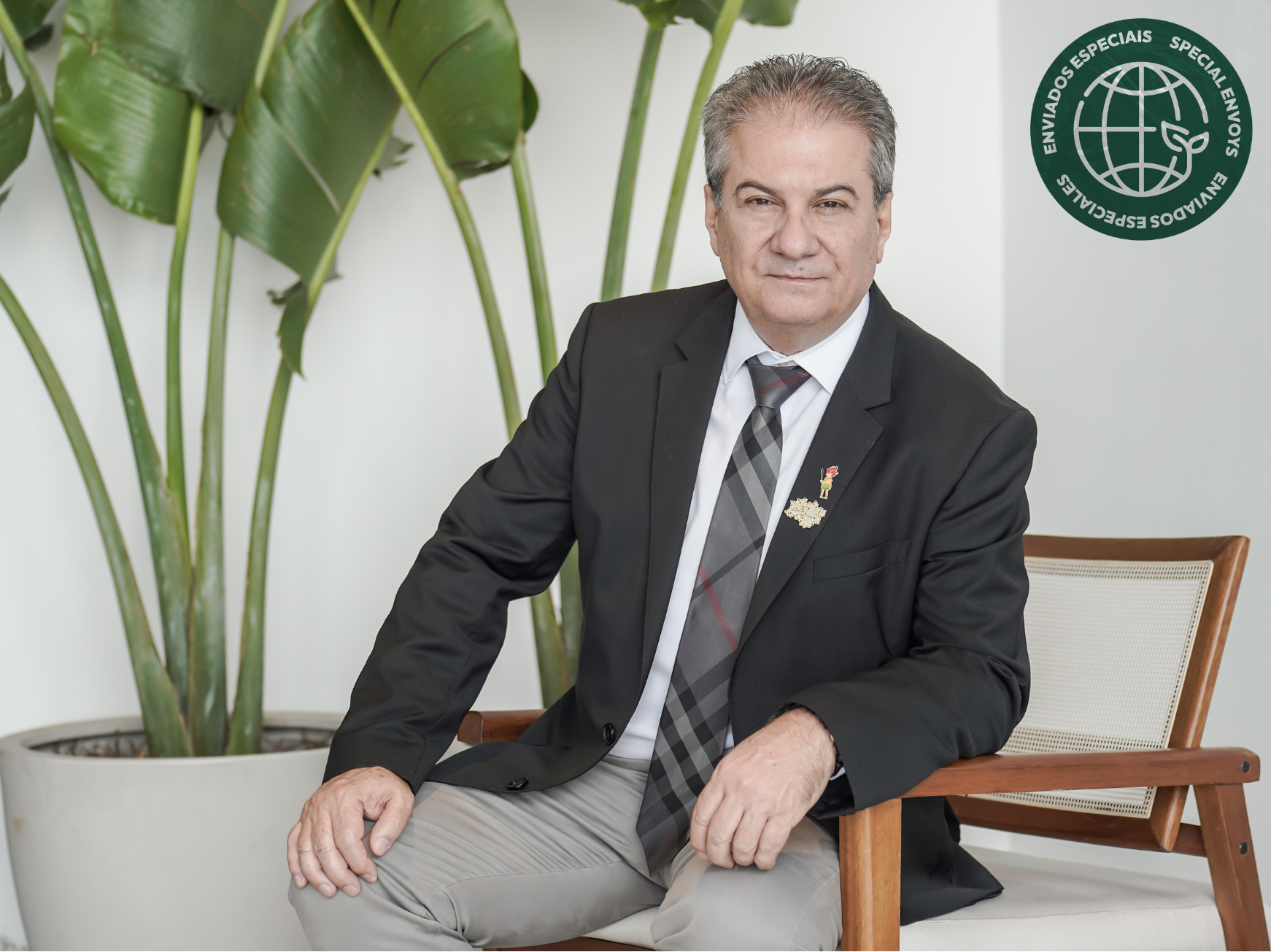
Marcello Brito, Special Envoy to COP30 for Amazon subnational governments and Executive Secretary of the Legal Amazon Consortium, calls this the “COP of implementation.” In the latest feature of the Special Envoys series, the FDC-Agroambiental academic director underscores that while goals and programs are set at the federal level, their execution ultimately depends on state governments, municipalities, and the private sector.
“Creating a direct bridge between subnational governments — between the Amazonian states and the COP Presidency — was a brilliant idea,” Brito said. “When we talk about TFFF, energy transition, or new logistics systems, we are talking about the Amazon. And it is the subnational governments that must design the public policies to provide legal certainty and attract the necessary investments.”
Scheduled to take place in Belém, Pará state, from November 10–21, COP30 goes far beyond symbolism, Brito argues. It represents a chance to correct a historical course. By hosting the conference in the heart of the forest, Brazil reaffirms both the Amazon’s strategic role in its national development and its centrality to the global climate agenda.
“Holding a COP in Belém is more than an international statement about the Amazon — it is about Brazil’s reintegration with the Amazon and the Amazon’s reintegration with Brazil,” he said. “It is an opportunity to rethink and realign the development models that have shaped, and will continue to shape, the region.”
Agriculture at COP30
For Brito, COP30 also opens a window for Brazilian agribusiness to demonstrate progress. “We are preparing to deliver substantial results, especially in regenerative agriculture and livestock,” he noted. “COP30 is a chance to show that Brazil has turned a corner — that agribusiness is now part of the climate solution.”
He added that the Legal Amazon Consortium is bringing together Brazil’s leading think tanks to produce science-based proposals that link technology, sustainability, and agricultural productivity. “This will be an extraordinary showcase — not only for agribusiness but for Brazil’s entire food systems,” Brito said.
He stressed the need to extend agricultural innovation to smallholders and ensure that a just transition also encompasses food systems. “Eighty percent of the world’s agricultural output comes from family farmers,” Brito said. “When we talk about a just transition, we need to give agriculture the same fair timeframe we’ve granted to transport and energy sectors.”
Food Systems
According to Brito, focusing on food systems means addressing the entire supply chain — from production to consumption — and tackling food loss and waste. “We are talking about food systems because we need to bring industry, services, and logistics into the conversation,” he explained. “It is unacceptable that we still lose 30% of what we produce somewhere along the chain — whether during transport, processing, retail, or at home. Most of the waste happens inside people’s homes.”
According to Brito, focusing on food systems means addressing the entire supply chain — from production to consumption — and tackling food loss and waste. “We are talking about food systems because we need to bring industry, services, and logistics into the conversation,” he explained. “It is unacceptable that we still lose 30% of what we produce somewhere along the chain — whether during transport, processing, retail, or at home. Most of the waste happens inside people’s homes.”
Special Envoys
The COP30 Presidency has appointed 29 Special Envoys to help foster engagement across key sectors and regions. Acting voluntarily and in a personal capacity, they were chosen for their leadership and expertise in their respective fields — seven international and 22 national representatives in total.
They serve as key interlocutors in facilitating the exchange of information and perspectives from the constituencies they represent, promoting timely and effective engagement. Furthermore, they will operate as a direct channel for conveying requests and proposals to the COP30 Presidency, serving as a point of contact with various sectors and regions.
Brito described it as a “pleasant surprise” to be invited to join the initiative, given the consortium’s emphasis on pre-competitive collaboration. “As we say at the Consortium, our work is all about collective effort — as envisioned by our president André Corrêa do Lago and CEO Ana Toni,” he said. “It is a healthy continuation of that spirit, strengthening the partnership between the COP30 leadership, the federal government, and the states of Brazil’s Legal Amazon.”
Translation: Tadeu Azevedo (POET/UFC)
Proofreading: Michel Emmanuel Félix François (POET/UFC)