
Marcelo Behar Highlights Role of Bioeconomy in Brazil's Sustainable Future
In another edition of the interview series with the Special Envoys for COP30, the lawyer and sociologist advocates for the integration of nature and development
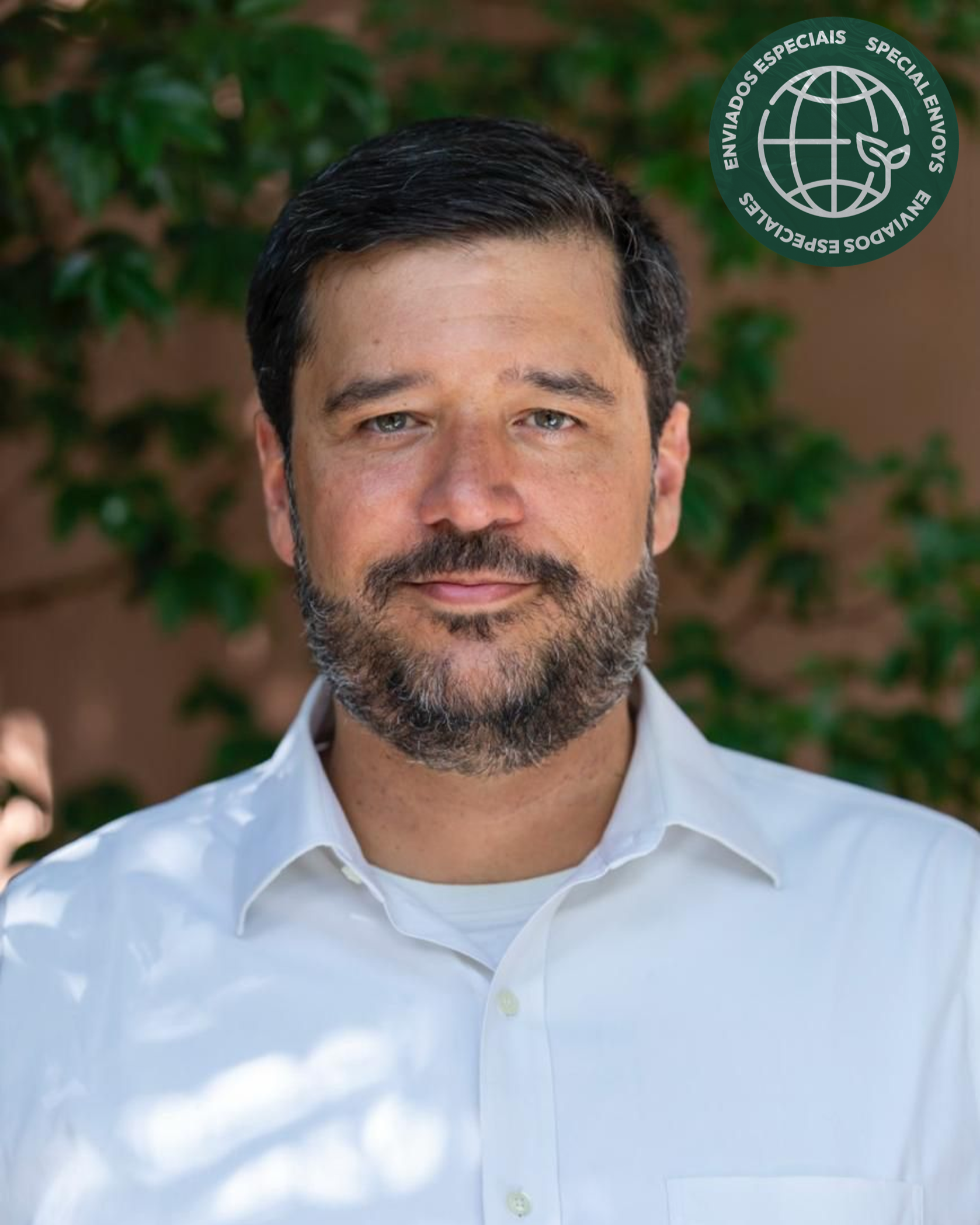
By Bárbara Bezerra / COP30
A sociologist and trained lawyer, with experience in the public sector and in the steel and cosmetics industries, Marcelo Behar speaks enthusiastically about his role as Special Envoy for COP30. He represents the bioeconomy sector and uses a didactic approach to explain the concept: “The Greek terms bios, oikos, and nomos mean the law of life in the household. Everything that belongs to life is part of the bioeconomy.”
For Behar, the bioeconomy represents a new production model based on valuing nature, reducing emissions, integrating with traditional communities, and promoting circularity. As an example of an activity that can be developed from this perspective, he cites transportation: “We can move around in vehicles powered by diesel or gasoline, which are major emitters of greenhouse gases, or choose modes that use biofuels. A significant example is Brazil’s contribution in this sector, with the use of biofuels in maritime freight and aviation.”
He adds that the concept also applies to agriculture. According to Behar, the sector already recognizes the benefits of using bio-inputs—agricultural products such as pesticides and fertilizers of biological origin that are less harmful to the environment.
Another solution proposed by the bioeconomy is the crop-livestock-forest integration, a sustainable production strategy that combines all three activities in the same area. These initiatives can occur alternately or simultaneously. For example, after harvesting a particular crop, pasture is introduced into the area, where tree species are also preserved to provide greater thermal comfort for the animals. The soil, in turn, is enriched by the presence of livestock and the diversification of crops.
“When we have maximized productive units and manage to integrate crops, livestock, and forests at the same time, we achieve a huge gain in carbon productivity. That is the future of Brazilian agriculture—a more bioeconomic future,” Marcelo asserts.
Among the segments of the bioeconomy—agriculture, finance, and biotechnology—the one that most captivates the Special Envoy is sociobioeconomy. For him, it’s a concept that integrates the economy, biodiversity, and the knowledge of traditional communities. Behar recalls his experience as an executive at a cosmetics brand when he learned about the extraction process of breu branco, an aromatic resin used as a base for the company’s perfumes. “The extraction of breu branco can’t be done by someone living in a house or an apartment building. It takes days or even weeks on a boat to complete the collection process. So, it must be carried out by a community that deeply understands the forest.”
At this point, he issues a warning: society needs to change how it views these populations. “Until now, we have seen these people the wrong way, through an urban-centric lens. The traditional communities safeguard 80% of life on the planet. They are responsible for the world’s biodiversity. We need to learn to work with them in a better way. They have a way of life that is directly connected to nature, and we, perhaps out of arrogance, do not recognize it as something noble, valuable, and full of lessons—because human beings are connected to nature. We just forgot. They did not.”
The sociologist sees the TFFF (Tropical Forest Forever Facility—a proposal by the Brazilian government to create an investment fund focused on conserving tropical forests) as a tool capable of strengthening the connection with traditional communities. “The Yanomami, for example, who currently have zero income and, four years ago, were watching their children die of hunger, could receive a monthly income. It is a good start for these people to secure the means to sustain their way of life.”
According to Marcelo, developing the bioeconomy, however, requires overcoming some obstacles. Chief among them is the reluctance of financial agents to take risks in funding these activities. “Sponsors need to be willing to take risks with bioeconomy initiatives rather than others. Some models are seen as safer, and because the bioeconomy has less of a track record, it is sometimes viewed with concern by investors.”
According to Marcelo, banks like BNDES are already developing models and metrics that offer greater security to investors. He reveals that during COP30, the Global Circularity Protocol will be launched, which will assign ratings to companies based on their circularity index — an incentive to direct investments toward more sustainable ventures.
With great enthusiasm for the upcoming conference in Belém, Marcelo Behar extends a heartfelt invitation: “Belém is a beautiful and extraordinary city. Its flavors are spectacular, and the Guamá River is simply marvelous. May the world come and enjoy it.” He emphasizes that COP30 in the Amazon will be more than just a conference—it will be a pivotal moment for the world to listen to those who have lived in harmony with the forest for centuries.
Translation: Michel Emmanuel Félix François (POET/UFC)
Proofreading : Tadeu Azevedo (POET/UFC)