
Global carbon market coalition proposed by Brazil has gained membership in eleven countries
Text endorsed by China, the European Union, the United Kingdom, Canada, Chile, Germany, Mexico, Armenia, Zambia, and France, in addition to Brazil, and will remain open to new signatories
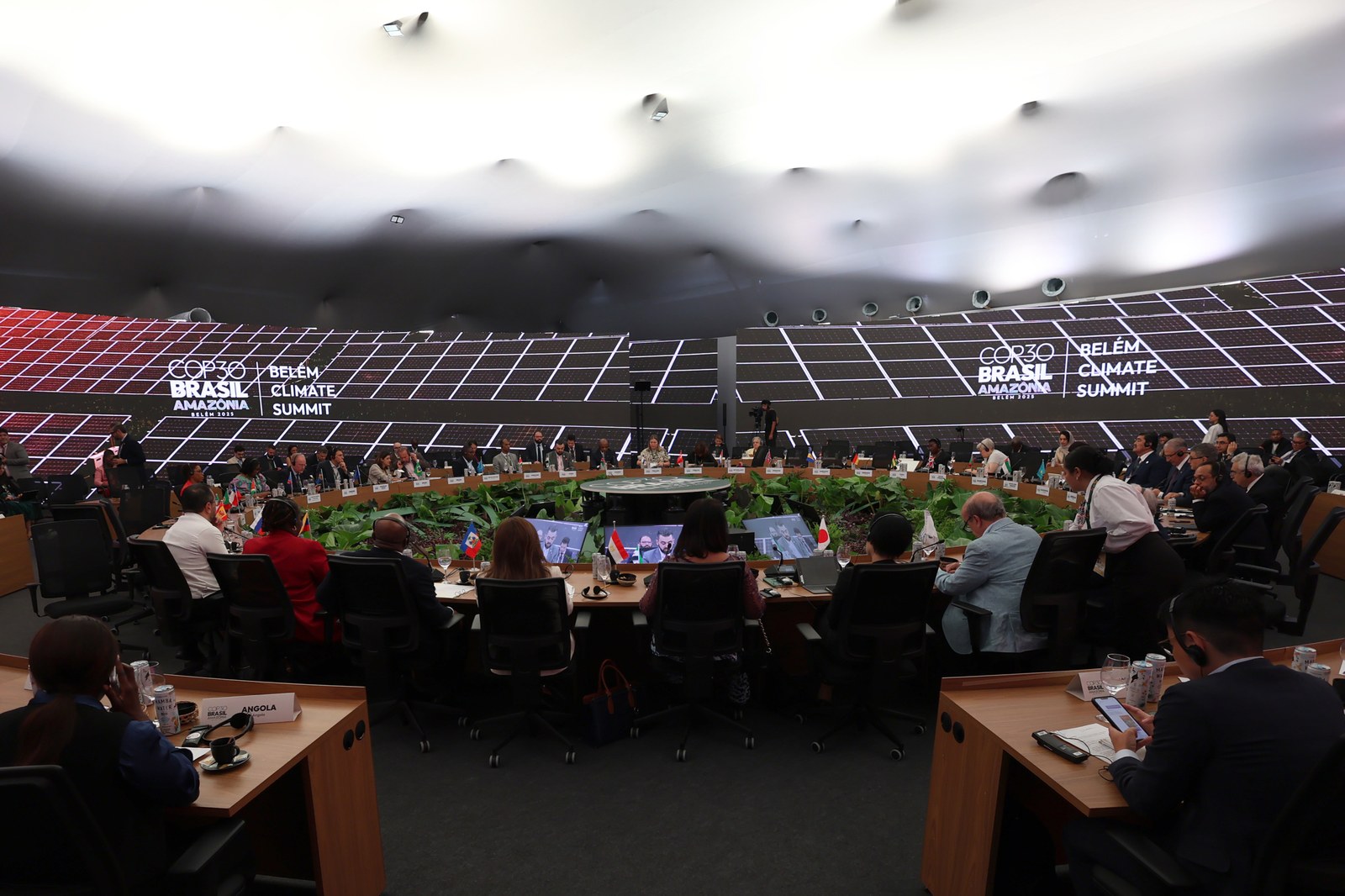
With information from Brazil’s Finance Ministry, by Laura Marques/COP30
On Friday, November 7, during the Climate Summit of Belém, the Open Coalition on Compliance Carbon Markets, proposed by Brazil, gained the support of eleven countries. Brazil, China, the European Union, the United Kingdom, Canada, Chile, Germany, Mexico, Armenia, Zambia, and France endorsed the document, which will remain open for new accessions.
This is a collaborative initiative aimed at exchanging experiences on Monitoring, Reporting, and Verification (MRV) systems, carbon accounting methodologies, and rules relating to the potential use of high-integrity credits, where applicable. It is one of Brazil's main agenda items at COP30.
The declaration launched at the Summit acknowledges the growing global relevance of regulated carbon markets and carbon pricing mechanisms, as well as their role in promoting decarbonization and supporting countries in advancing their climate action goals.
The Deputy Executive Secretary of Brazil’s Finance Ministry (Ministério da Fazenda/ MF), Mr. Rafael Dubeux, stated that the formation of the coalition is a historic milestone for COP30. “The regulated carbon market is one of the most efficient ways to reduce greenhouse gas emissions. By fostering this convergence with some of the world’s largest economies, we are setting common rules and paving the way for harmonization of standards among countries.”
According to him, this alignment will make it possible, in the future, to move toward deeper interoperability between these markets. “This is the best way to achieve the COP’s ultimate goal, which is to reduce greenhouse gas emissions,” he emphasized.
Mr. Dubeux also explained that this coordination among countries is crucial to achieving the goal defined at COP28: to gradually and definitively reduce dependence on fossil fuels in a fair, quantitative, and orderly manner. He added that the coalition enables progress in this direction in a structured and predictable way, reducing risks, encouraging investments, and offering a clear decarbonization pathway for the productive sector.
The Secretary for Carbon Market Affairs at the MF, Ms. Cristina Reis, highlighted that the group of countries joining the coalition already has a significant share of their emissions covered by carbon pricing mechanisms—whether through regulated markets or taxation systems—such as the European Union, China, and now Brazil. According to her, together, these countries represent about 20% of global emissions and will now be able to exchange experiences on methodologies such as MRV systems, rules on credit and offset use, carbon accounting, and transparency standards.
“It is a very positive signal that strengthens unity and international cooperation. Through this instrument—which is a financial, technological, and governance-based market tool—we take an important step toward increasing climate ambition and contributing effectively to the fight against global warming,” emphasized Ms. Reis.
English version: Trad. Bárbara Menezes.
Proofreading by Enrique Villamil.