
From the schoolyard to COP30: children and teenagers step into the climate justice spotlight
The Instituto Alana underscores the importance of listening to children as a pivotal step towards addressing the climate crisis and developing enduring solutions
By Capitu Maciel, Instituto Alana
From the schoolyard to the negotiation rooms, children are speaking about their present to shape the future. In a world marked by deepening inequalities fueled by the climate crisis, the meaningful inclusion of children—through active listening and the use of accessible, child-friendly language—has become an ethical, legal, and political imperative. This inclusion must extend across all decision-making spaces, from the local level to global forums such as the 30th Conference of the Parties (COP30) to the United Nations Framework Convention on Climate Change (UNFCCC).
The Convention on the Rights of the Child (CRC), adopted in 1989, and General Comment No. 26 from the UN Committee on the Rights of the Child (2023) both affirm that every environmental decision must consider the best interests of the child as a primary concern. Children—who, according to UNICEF, make up one-third of the world’s population—are among the groups most affected by the multiple environmental crises unfolding today. They must, therefore, be recognized as central actors in the negotiations that will determine the future they will inherit.
In the history of COPs, children’s presence was initially modest. Between 1992 and 2010, references to them in the negotiation tracks were sporadic. Over time, however, their participation became more strategic, notably with the creation of the Glasgow Work Programme on Action for Climate Empowerment (ACE). That movement continued with the 2024 Expert Dialogue on Children and Climate and culminated in recent COP29 decisions that introduced indicators related to children’s health and education and recognized the disproportionate impacts of the crisis on girls and boys.
COP30, in Belém, holds the potential to mark a new chapter in that trajectory: to strengthen and expand the growing effort to integrate children’s rights across all thematic areas of the climate agenda — from adaptation and mitigation to just transition, gender, finance, and loss and damage. Various proposals and recommendations have underscored the need for intergenerational climate governance that recognizes children and adolescents as both agents of change and priority beneficiaries of climate policies. The policy paper “Children and the Climate COPs,” developed by Instituto Alana and Laclima (the Latin American Lawyers’ Initiative for Climate Action), highlights, among other recommendations, the importance of collecting and strengthening disaggregated data that include age, especially for the Adaptation and Gender tracks.

Moreover, recent UN decisions—such as General Comment No. 26 (2023), the Advisory Opinion on Climate Change (2025), and the Advisory Opinion on Human Rights and the Climate Emergency (2025) by the International Court of Justice (ICJ)—reaffirm that States have legal obligations to protect children’s rights amid the climate emergency. This includes ensuring that climate finance and education programs address their specific needs and vulnerabilities, extending beyond the negotiation halls. The CRC, the most widely ratified human rights treaty in the world, clearly establishes that children must be placed at the center of decision-making and protection efforts.
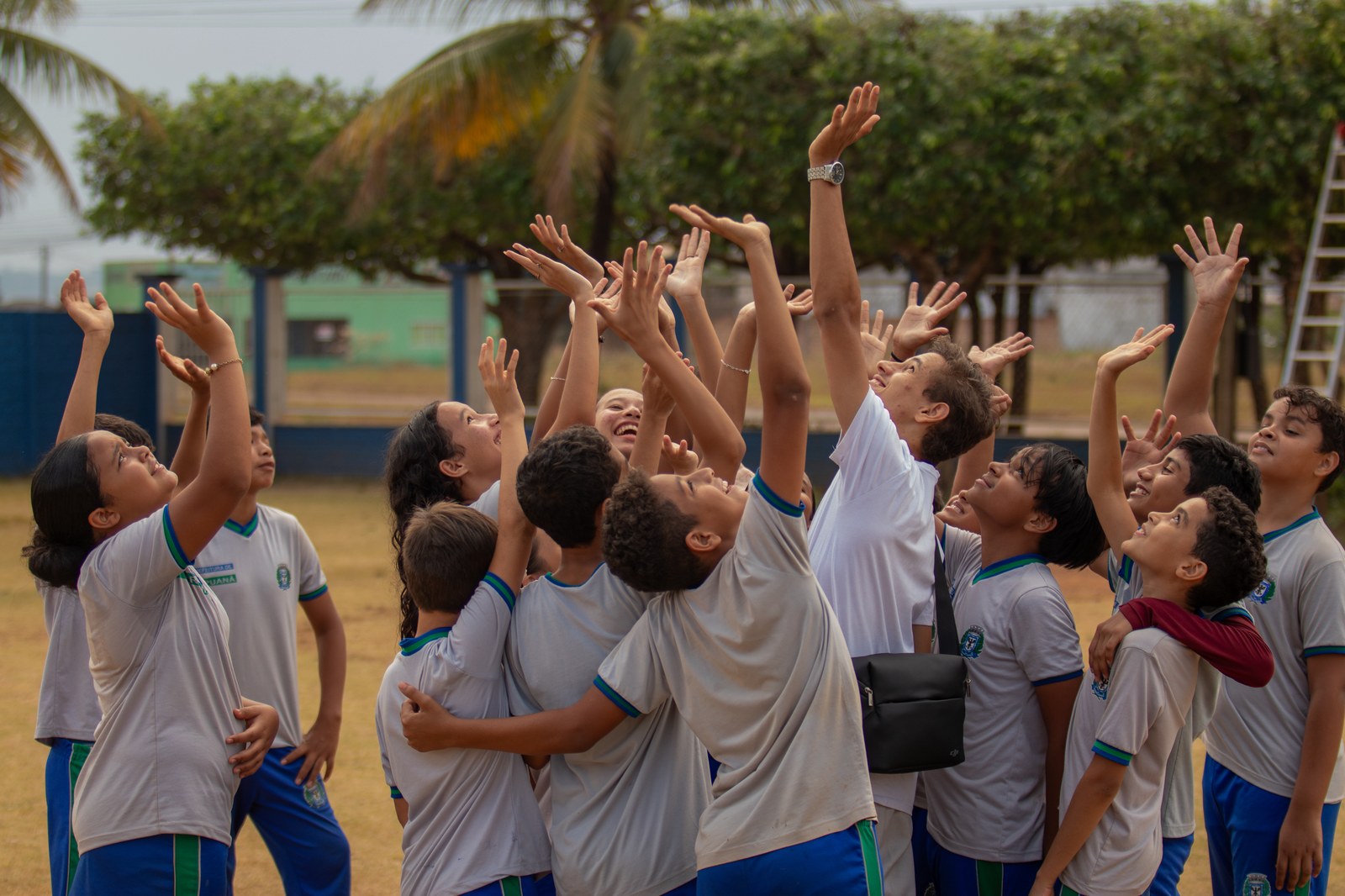
Across schools, communities, and local territories, MiniCOPs—local gatherings for listening and dialogue with children and adolescents—demonstrate that child participation is both possible and transformative. These are children and teenagers contributing ideas, solutions, and hopes for a planet in crisis—moving to “act for a sustainable world”, as expressed by children from Aripuanã, in the Amazon region of Mato Grosso, and from Glória de Goitá, in Pernambuco’s Zona da Mata, as they discussed the impacts of climate change in their regions, decorated miriti toys, and created paintings about and with nature.
In Belém, the challenge will be to turn recognition into action. Listening to children is not a symbolic gesture—it is an imperative for climate justice and intergenerational equity. If the climate crisis is fundamentally a crisis of children’s rights, then it is urgent to ensure that their many forms of expression and existence are represented at the tables where countries and constituencies are writing the next chapters of this story. The future being negotiated at the COP is, above all, the present of children who already feel the effects of the climate crisis today.
In Belém, the challenge will be to turn recognition into action. Listening to children is not a symbolic gesture—it is an imperative for climate justice and intergenerational equity. If the climate crisis is fundamentally a crisis of children’s rights, then it is urgent to ensure that their many forms of expression and existence are represented at the tables where countries and constituencies are writing the next chapters of this story. The future being negotiated at the COP is, above all, the present of children who already feel the effects of the climate crisis today.
The opinions expressed in this article are strictly those of the author.
English version: Trad. Bárbara Menezes.
Proofreading by Enrique Villamil.