
From COP30 to COP31: Bonn Session Highlights Information Integrity as a Pillar of Climate Implementation
Global Initiative gains momentum as countries and partners advance efforts to combat climate disinformation and accelerate science-based climate action
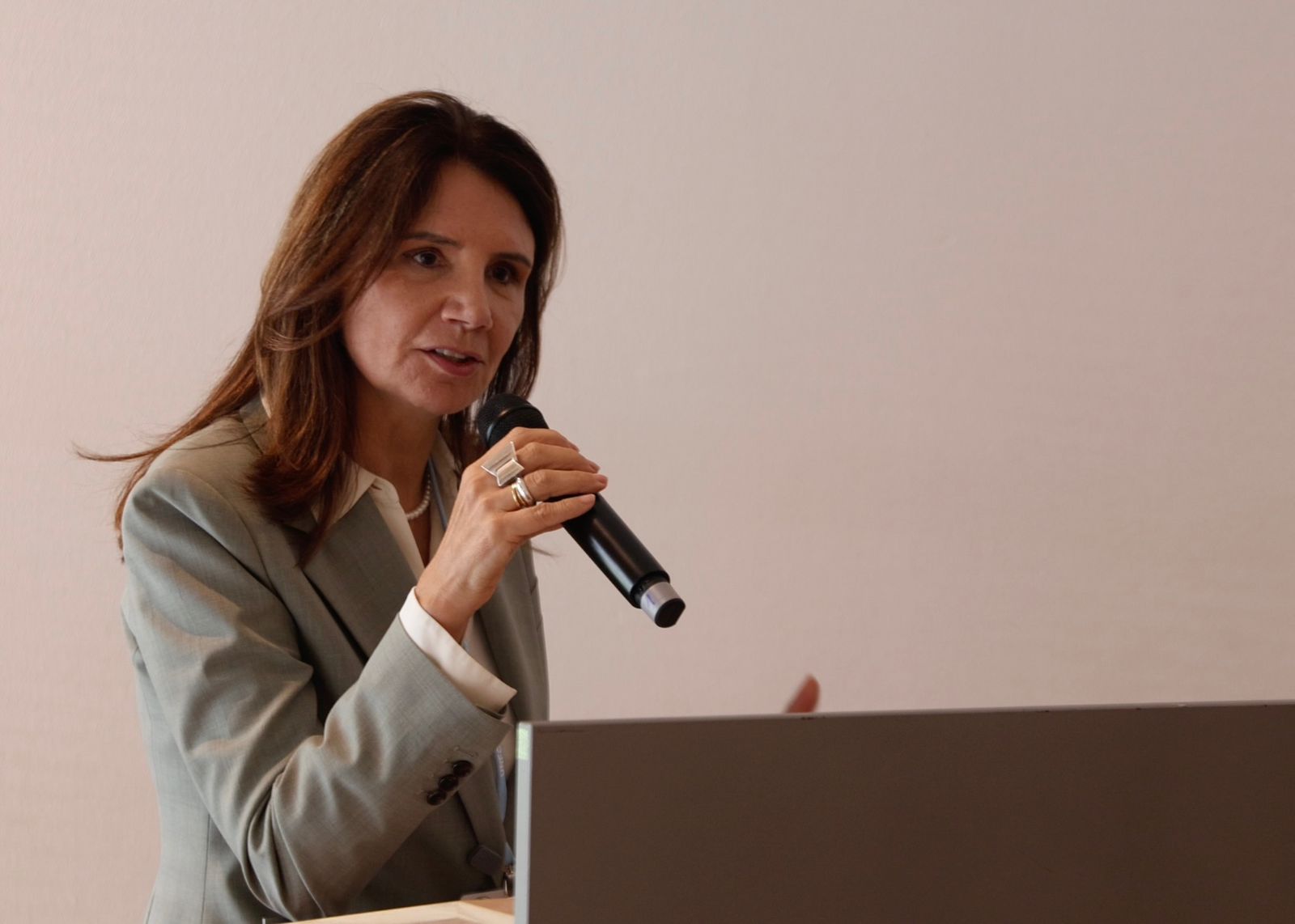
Safeguarding the integrity of information has become a critical condition for effective climate action. This was the central message of the session Strengthening Information Integrity on Climate Change: From COP30 to COP31 and Beyond, held on Monday (15 June) during the UN Climate Change June Meetings (SB64) in Bonn.
Information integrity refers to an information ecosystem in which reliable, evidence-based information is accessible to all, enabling people to make informed decisions and participate meaningfully in public life. When climate discourse is distorted by disinformation, denialism, greenwashing or attacks against scientists and journalists, the effectiveness of climate policies is undermined and the implementation of solutions is delayed.
The session brought together representatives from the United Nations, UNESCO, the UNFCCC, and governments engaged in the Global Initiative on Information Integrity on Climate Change, including France, Armenia and Brazil. Australia also participated, highlighting the relevance of information integrity as the world looks ahead to COP31.
Opening the discussion, COP30 CEO Ana Toni emphasized that information integrity has become one of the Brazilian Presidency’s most tangible outcomes and an essential enabler of Paris Agreement implementation. She highlighted that, for the first time, the issue was incorporated into a decision adopted under the UNFCCC through the Belém Mutirão Decision, included in the COP30 Action Agenda, and reinforced by the Declaration on Information Integrity on Climate Change, which has already garnered broad international support.
Ana Toni also stressed that forums such as the June Meetings in Bonn, together with funding mechanisms and collaborative initiatives, are essential for turning commitments into action. “The more we learn from each other and translate that into concrete actions in our own countries, the more we will be able to win this fight against misinformation,” she said.
Representing Brazil, Ambassador Liliam Chagas, COP30 Chief Negotiator, highlighted that Brazil became the first country to establish a National Chapter of the Global Initiative and is already implementing concrete measures to address climate misinformation domestically. Chagas also underscored Brazil’s efforts to elevate the issue within the climate negotiations themselves. “Brazil is also bringing information integrity into the climate negotiations, with a view to engaging all countries on this agenda,” she said.
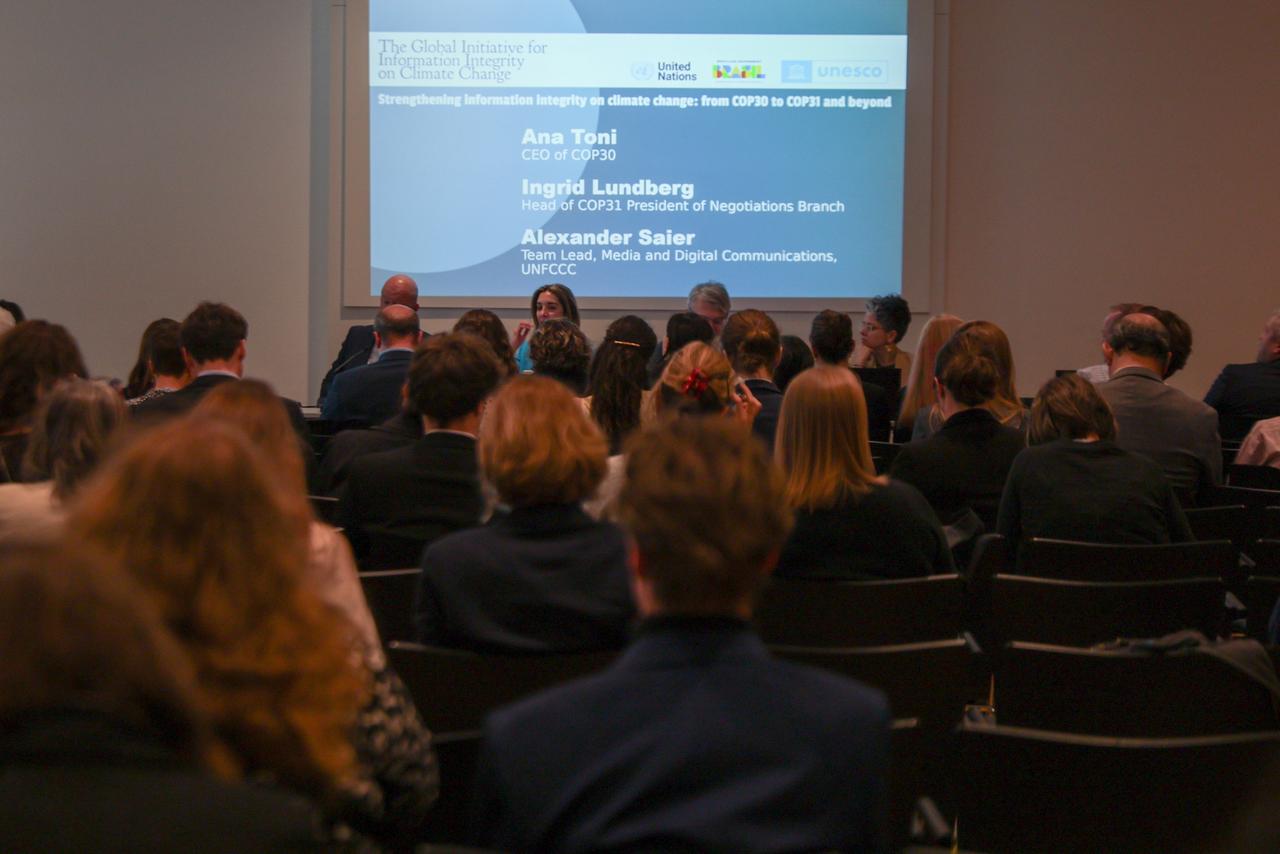
The session showcased the rapid progress of the Global Initiative on Information Integrity on Climate Change, launched at the G20 Summit in Rio de Janeiro in 2024 by Brazil, the United Nations and UNESCO. In just over a year, the Initiative has brought together 15 countries and multiple international organizations, secured the inclusion of information integrity in the COP30 outcomes, mobilized civil society partners worldwide, and begun financing ten projects aimed at strengthening information ecosystems across different regions.
Participants emphasized that disinformation, denialism, and coordinated attacks against journalists, scientists, researchers, and environmental defenders undermine public trust and delay climate action at a moment when accelerating implementation has become an urgent priority.
The discussion reinforced a growing international consensus: protecting information integrity is no longer simply a communications challenge—it is a prerequisite for effective climate governance and for translating climate commitments into real-world implementation.
The World Economic Forum's Global Risks Report 2025 ranks misinformation and disinformation as the top short-term risk for the second consecutive year, underlining their persistent threat to societal cohesion and governance by eroding trust and exacerbating divisions within and between nations. Extreme weather events — a direct consequence of unchecked climate change — ranked second over the same two-year time frame and topped the list of risks over a ten-year period.
Looking ahead to COP31 in Antalya, Ana Toni expressed confidence that the momentum generated by COP30 will continue. “Count on the COP30 Presidency until the last day of our mandate to continue advancing this agenda. And count on Brazil to remain a committed partner well beyond that,” she said.
Read the Declaration on Information Integrity on Climate Change, launched on 12 November 2025 and endorsed by 26 countries and the European Union:
https://www.unesco.org/en/information-integrity-climate-change/cop30declaration?hub=780
Learn more about the United Nations Global Principles for Information Integrity:
https://www.un.org/en/information-integrity/global-principles
More about: Brazil Pioneering Model for Combating Climate Disinformation