
Following COP30 and the AI Impact Summit, Brazil and India launch the Open Planetary Intelligence Network (OPIN)
The initiative aims to accelerate climate implementation and harness Digital Public Infrastructure across developing countries
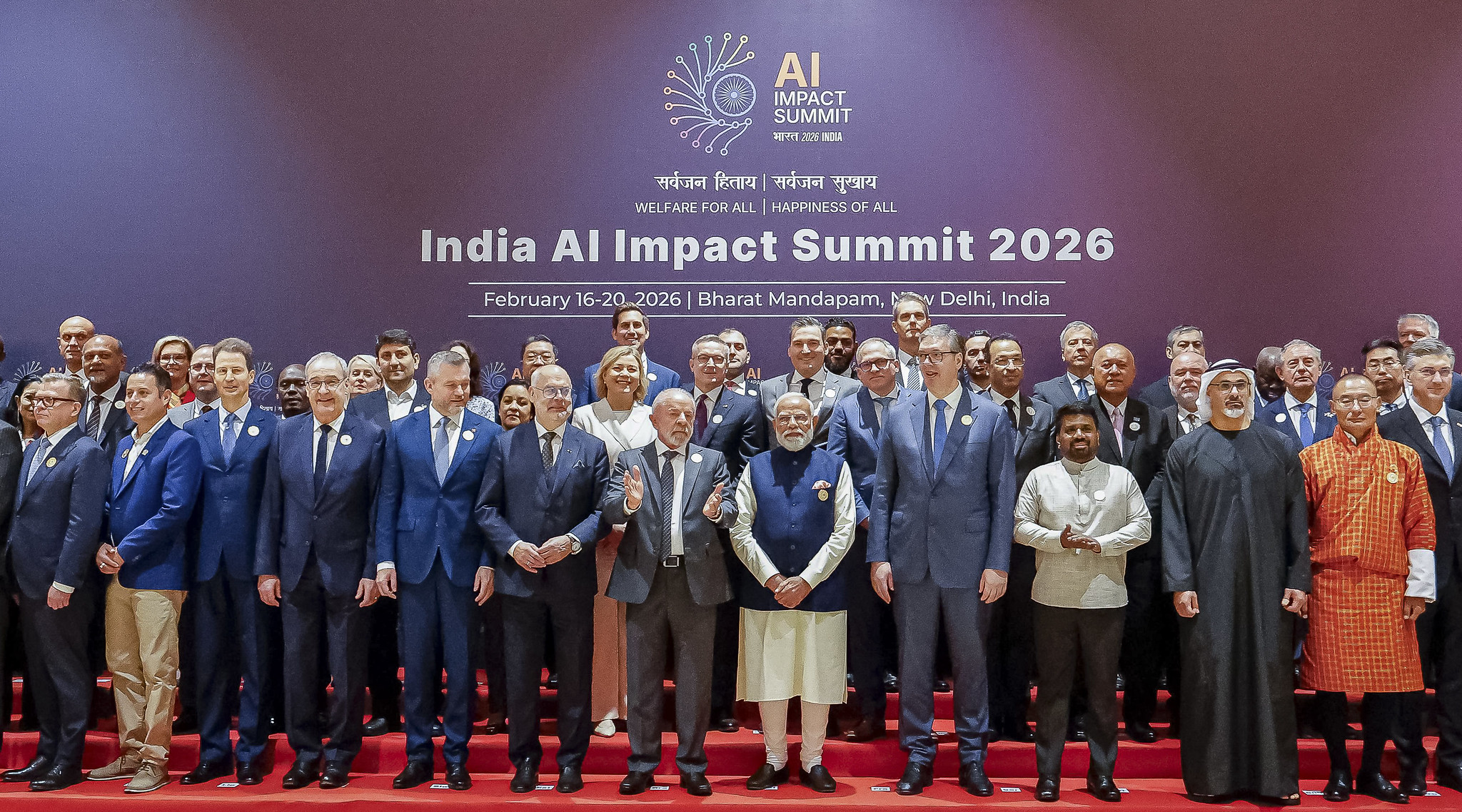
In the context of President Lula’s State Visit to India, and building on the momentum of the AI Impact Summit, Brazil and India jointly launch the Open Planetary Intelligence Network (OPIN) — a collaborative initiative designed to leverage Digital Public Infrastructure (DPI) to accelerate sustainable development and climate implementation for the benefit of the Global South.
OPIN seeks to unify the digital and climate transformations into a single planetary implementation agenda aligned with the long-term goals of the Paris Agreement, while advancing development, combating poverty, and strengthening collective resilience. The initiative builds on key multilateral milestones, including India’s G20 Presidency in 2023 and Brazil’s G20 Presidency in 2024 and COP30 Presidency in 2025, which marked a shift toward accelerated implementation grounded in openness, inclusion, and shared digital capabilities.
“OPIN reflects a deeper structural shift with the increasing integration of the digital and climate transitions into a shared planetary agenda aligned with the Paris Agreement and the 2030 Agenda,” said Túlio Andrade, COP30 Strategy and Alignment Director.
The Paris Agreement is fulfilling its core purpose of mobilizing global climate action — though implementation must now accelerate to avoid dangerous levels of global warming. Digital technologies, particularly Digital Public Infrastructure, offer a structural pathway to provide the speed, scale, and coordination required to accelerate low-carbon and climate-resilient development worldwide.
Grounded in open digital architectures, OPIN will support the integration of climate and development information across scales — from real-time monitoring of emissions and renewable energy systems to digital platforms enabling climate-positive actions and resource mobilization.
By enabling trusted and accessible flows of information, OPIN will help transform fragmented data into actionable planetary intelligence — accelerating the diffusion of finance, technology, and capacity-building resources across the Global South.
DPI has already demonstrated transformative potential at national scale. In Brazil, the PIX digital payments ecosystem has rapidly expanded financial inclusion and economic efficiency. In India, the India Stack — combining universal digital identity (Aadhaar), interoperable payments, and data-sharing protocols — has integrated hundreds of millions of people into formal financial and economic systems.
Applied at planetary scale, Digital Public Infrastructure can enable a new layer of shared intelligence capable of accelerating climate implementation. These applications include real-time early warning systems, climate-smart agriculture payments to smallholder farmers, decentralized energy markets enabling households to participate in energy systems, and interoperable platforms accelerating the deployment of climate finance and technology.
Existing initiatives already demonstrate this potential. The International Solar Alliance is integrating digital systems to accelerate solar deployment and expand energy inclusion. Brazil is leveraging Digital Public Infrastructure to operationalize its Forest Code through the Rural Environmental Registry, strengthening land-use governance and transparency.
Through OPIN, Brazil and India invite partners across the Global South and the international community to collaborate in building an open, inclusive, and sovereign digital foundation capable of strengthening planetary intelligence and accelerating sustainable development and climate implementation at global scale.
“This feels like the moment we begin to ensure that the future of intelligence is collective, open, and planetary — for the benefit of all,” concluded Andrade, who will continue to mobilize OPIN’s partnership engagement as part of the COP30 Presidency’s broader effort to accelerate climate action.
For the full text, please refer to the India–Brazil Joint Statement: State Visit of the President of Brazil to India (paragraph 10).
English version: Trad. Rafael Campos