
“Every cent we invest here belongs to the people of Belém,” Lula says during a visit to COP30 construction sites
The president toured the Canal da União, Porto Futuro II, and Parque da Cidade. These projects will leave a legacy of improved urban infrastructure, sanitation, and quality of life for the people of Pará
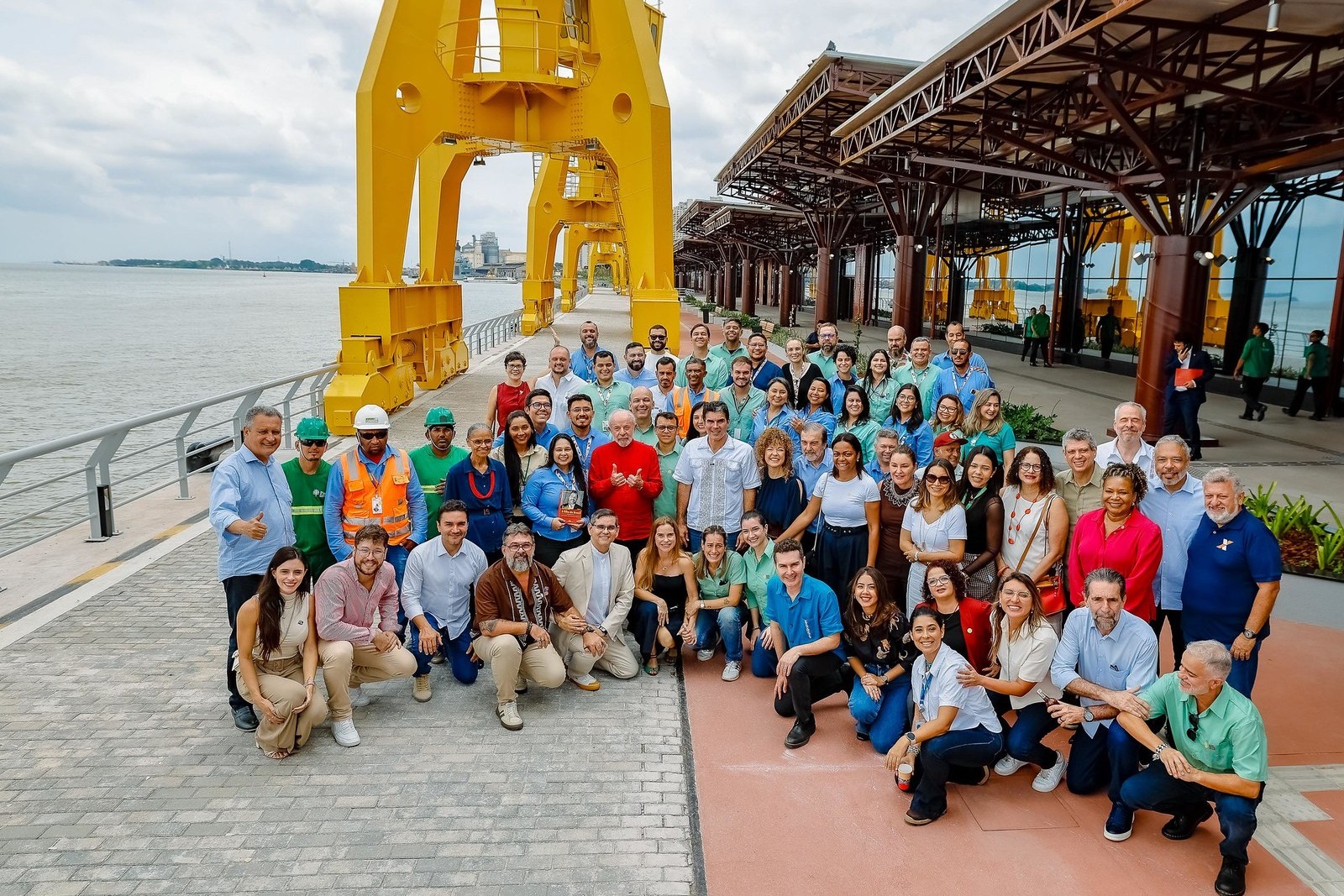
By the Presidency of the Republic
"Every cent we invest here belongs to the people of Belém, and no one will take it away," declared President Luiz Inácio Lula da Silva during his visit to the integrated construction sites for the 30th United Nations Climate Change Conference (COP30) in Belém, Pará, on Friday, October 3.
President Lula inspected the Parque da Cidade, which will host the Conference events, and emphasized that the interventions will benefit the population well beyond the 20 days of the event. "There is no work just for the COP. COP is an event that will last a maximum of 20 days. After that, all these works will remain for the people of the state of Pará, for the people of the city of Belém. When COP leaves, every cent we invest here belongs to the people of Belém, and no one will take it away," he said.
During the tours, the president also mentioned the impacts on the city's mobility and tourism. “When these canals are well-maintained and beautiful, and the streets are well-maintained and beautiful, tourists will also come. If we improve the quality of life for the people of Belém, it means increasing the possibility of more tourists coming to the state of Pará and the city of Belém.”
THE MAIN VENUE — Considered the largest urban redevelopment project in Belém in a century, Parque da Cidade spans 500,000 m2 on the site of a former airport in the Sacramenta neighborhood. The park will host the Blue and Green Zones of COP30.
The Blue Zone is the stage for official negotiations, the Leaders’ Summit, and national pavilions. Access is restricted to official delegations, heads of state, observers, and accredited press.
The Green Zone, on the other hand, highlights solutions and partners that strengthen the commitment to an environmental, social, and governance (ESG) approach through international dialogue and collaboration. Open to the public, the space promotes democratic engagement, diversity of voices, and transparency in the climate debate.
STRUCTURE — COP30 president Ambassador André Corrêa do Lago stressed the importance of the infrastructure at Parque da Cidade. "The more people who come to Belém, the more they will discover how wonderful this city is, and how its people embrace the world. The infrastructure is fantastic. It is already recognized as the best planned of all COPs. The central corridor is brilliant and easy to navigate."
Mr. Rui Costa, the Minister of the Office of the Chief of Staff (Casa Civil), underscored that the event will be memorable for visitors. "The world will leave here enchanted after getting to know the Amazon, and they will be surprised. They will be enchanted not only by the infrastructure but also by the warmth, cuisine, and hospitality of the Brazilian people and the state of Pará," said Mr. Costa.
LANDSCAPE DESIGN — In addition to a landscaping project featuring more than 2,500 trees, 190,000 ornamental plants, and 83,000 m2 of lawns, the Park incorporates climate mitigation technologies such as photovoltaic solar energy and systems for capturing and reusing rainwater.
LEISURE SPACE — The Park was launched in July 2025 and opened to the public, receiving over 670,000 visitors before temporarily closing for the installation of COP30 structures. It includes a Creative Economy Center, a Gastronomy Center, a cinema, a theater, a library, a viewing tower, multi-sport courts, a bike path, and a children’s water park.
UNION CHANNEL — In the morning, President Lula visited the macro-drainage and urbanization works of the Union Channel (Canal da União), part of a group of projects that also includes the completed Vileta, Leal Martins, and Timbó canals. The goal is to reduce flooding problems in the capital of Pará, contributing to the city’s readiness for events such as COP30.
The canal is part of the Tucunduba Basin macro-drainage project, considered a milestone in improving quality of life in the neighborhoods of Guamá, Terra Firme, Canudos, and Marco. The interventions include 350 meters of canal rectification, water and sewage networks, storm drainage, three walkways, one bridge, and the urbanization of streets and sidewalks with tactile paving.
This set of works is part of the largest slum and peripheral urbanization project financed by the Brazilian Development Bank (BNDES), totaling BRL 847 million. In all, 12 canals are under construction, benefiting more than 500,000 people—about 35% of Belém’s population.
LEGACY FOR THE STATE — The projects form part of the urban infrastructure legacy that will remain in the city beyond COP30, with total financing of BRL 1.5 billion from BNDES to the state government. The largest project, with a BRL 740 million credit line from the Bank, is the macro-drainage of the Tucunduba and Murucutu basins, which addresses the historic flooding problems in neighborhoods such as Guamá, Marco, and Terra Firme, benefiting 300,000 residents. The interventions include the rectification of nearly 10 km of canals, as well as the construction of roads, bike paths, bridges, and sanitation networks.
BNDES is also financing other strategic works. In the Mangueirão neighborhood, an investment of BRL 107 million will resolve flooding issues and improve traffic flow. Along Tamandaré Avenue, BRL 162.8 million is being invested in the creation of a linear park, and another BRL 23.7 million in a new river terminal. Rua da Marinha is also being modernized with BRL 248.5 million, adding exclusive bus lanes and a bike path.
MODERNIZATION — In addition, BNDES is supporting the modernization of strategic facilities. The Hangar Convention Center is being fully renovated, with 97% of the work completed. The new International River Terminal, with an investment of BRL 53.7 million, will accommodate large vessels, and the historic Mercedários Complex is being restored with a BRL 36.9 million investment.
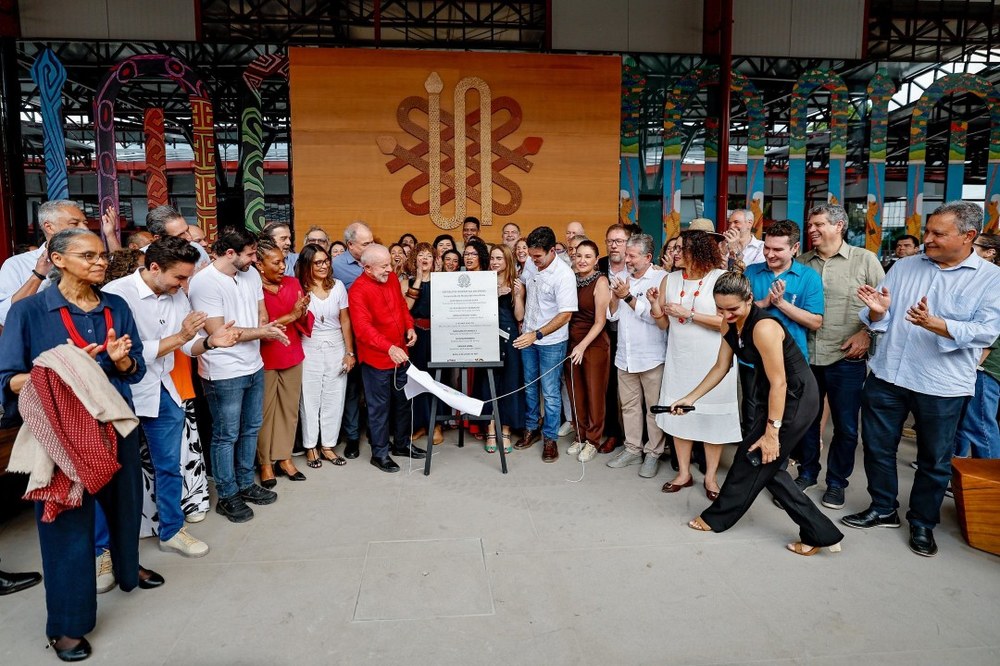
PORTO FUTURO II — Lula also visited the Porto Futuro II construction site, which is redeveloping the old industrial port in the capital city of Pará. The site is now a cultural and leisure complex nearing completion. There, the president participated in the inauguration of the Museu das Amazônias, which is dedicated to promoting science and technology in the region.
The museum is hosting the exhibition "Amazônia" by photographer Sebastião Salgado. "These photos are not portraits of reality; they are interpretations by Salgado. They will allow viewers to encounter the incredible biodiversity of the Amazon. Visitors will be able to learn about the people who protect this biodiversity," explained Juliano Salgado, the artist's son, who passed away in May of this year.
DIVERSITY — The venue also features the exhibition “Ajurí”, created exclusively for the museum. Co-curator Joice Ferreira highlighted the diversity represented in the Museu das Amazônias. “The name acknowledges the plurality within the many Amazons. We share a territory with common features, but also with immense diversity. The museum pays tribute to the Amazon, its biocultural diversity, and the crises it faces,” she said.
With technical partnership and BRL 10 million in non-reimbursable support from BNDES, the museum was designed to be a reference in innovative, inclusive, and community-connected museological practices. The site includes two large exhibition spaces—950 m² and 500 m²—a gift shop, a multipurpose room, and an educational room of 77 m². The multipurpose room features modular infrastructure, multimedia resources, and seating for 130 people.
CATERING — Also within Porto Futuro II, President Lula inspected the works of the Porto Gastronômico, which will offer a culinary experience celebrating the strength and creativity of Pará and Amazonian cuisine. The initiative aims to display regional producers and flavors, stimulating the creative economy through the work of local entrepreneurs. The project brings together 15 local businesses.
BIOECONOMY — The Amazon Bioeconomy and Innovation Park will be Brazil’s first space dedicated to startups, forest product industrialization, and sustainable value chains. The new park will serve as a hub for business, research, and innovation focused on the forest economy and on strengthening sustainable production networks.
The complex includes a factory-laboratory (for food, cosmetics, pharmaceuticals, and forest derivatives), coworking spaces and product development labs, an Innovation Showroom (a one-stop business hub), and a Social Gastronomy Center.
On Wednesday, October 2, the president visited other construction sites in preparation for COP30.
UNA WASTEWATER TREATMENT PLANT (ETE UNA) — Considered the largest wastewater treatment plant in Pará in terms of population served, the project received a total investment of BRL125.2 million—BRL49.5 million from the federal government and BRL75.7 million from the state of Pará.
The facility can treat up to 475 liters of sewage per second and will prevent the discharge of untreated waste into the Guajará Bay. More than 90,000 people will benefit, across ten neighborhoods: parts of Campina, Nazaré, São Braz, Marco, and Sacramenta, and all of Umarizal, Fátima, Telégrafo, Pedreira, and Reduto.
NEW DOCK — The New Dock Linear Park, located along the Doca Canal and the important Visconde de Souza Franco Avenue, was developed through a partnership between the federal government and the state of Pará, with Itaipu Binacional investing BRL 312.2 million. The 24,000-square-meter project extends along 1.2 kilometers of canal.
The initiative improves mobility and traffic flow through the creation of an elevated pedestrian-friendly roadway. The area also includes landscaping, leisure facilities, sports areas, viewing decks, outdoor gyms, food kiosks, and playgrounds. Pavements and walkways were restored, and a bike lane was integrated into the park’s layout amid tree-lined pathways.
“Here we take care of the forest, we take care of people, and we take care of improving the city’s quality of life,” Lula said. “Not all problems are solved yet, but the truth is that Belém will be a different city after COP30. Just wait and see.”
English version: Trad. Bárbara Menezes.
Proofreading by Enrique Villamil.