
Embrapa to Showcase Sustainable Agriculture Technologies at COP30
Innovation Director Ana Euler Highlights Role of Brazilian Science and Agriculture in Climate Transition
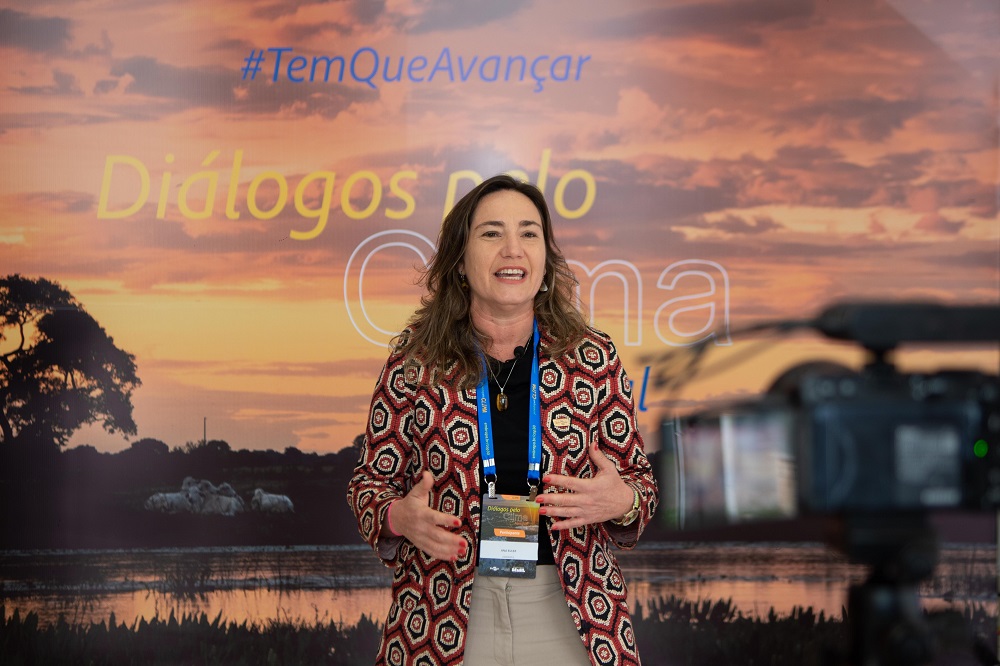
By Rafaela Ferreira / COP30
As COP30 approaches, Brazilian agriculture is increasingly recognized as part of the solution to the climate crisis. The Brazilian Agricultural Research Corporation (Embrapa) will present, in Belém, actions and technologies that reinforce this role. Ana Euler, Director of Innovation, Business, and Technology Transfer at Embrapa, emphasizes that COP30 is an opportunity to demonstrate that science is essential to addressing climate challenges.
For Euler, Embrapa will bring to Belém solutions developed over five decades of research that combine productivity, environmental conservation, and social inclusion. At Embrapa’s space during COP30, the institution will not only showcase its “living solutions” but also open space for technical-scientific discussions, contributing scientific knowledge to global policies for addressing climate change.
“There is no possibility of designing a strategy to confront climate change without being allied with science. Science is part of the solutions. Agriculture—or the multiple agricultures—must be part of the solution, and it must be now,” Euler said.
To bring agricultural research to the conference, Embrapa organized the Journey for Climate, an initiative in partnership with the government and other stakeholders. The program aims to raise awareness about climate issues and promote Brazilian agricultural technologies and practices for agricultural adaptation and greenhouse gas (GHG) mitigation. “The journey reflects decades of research and reinforces our commitment to innovation and socio-environmental responsibility,” Euler explained.
Embrapa has been directing its efforts toward the development of climate-adapted agriculture that prioritizes sustainability. The Journey for Climate seeks to connect different sectors of society, promoting knowledge exchange and the dissemination of technological solutions aimed at building more resilient production systems.
Low-Carbon Agriculture
Among Embrapa’s initiatives to be presented at COP30 is a methodology for measuring soil health. The diagnostic tool assesses the impact of technology use on soil fertility, identifies factors limiting productivity, and supports production stability. According to Euler, the company has been working toward conservation agriculture, resulting in effective soil management.
“Embrapa, representing a research company focused on sustainable agriculture, can contribute significantly to demonstrating, influencing, and inspiring all nations on a climate-smart agricultural agenda, given that agriculture and land use are responsible for one-third of global emissions,” Euler said.
Another initiative is Low-Carbon Beef (Carne Baixo Carbono, CBC), a conceptual brand that identifies beef produced on tropical pastures using practices that reduce GHG emissions. The protocol establishes guidelines for soil, pasture, and livestock management, encouraging sustainable production. This initiative complements the Carbon-Neutral Beef (Carne Carbono Neutro, CCN) protocol, expanding mitigation options for emissions in Brazilian livestock.
“Low-carbon livestock aims not only to reduce emissions but also to promote regenerative activities, environmental services, biodiversity, and social inclusion,” Euler noted.
The director also highlighted new bio-inputs developed in partnership with companies, which help plants withstand drought periods and strengthen adaptation to water stress. “We work on plant genetic improvement and soil-plant systems to ensure greater readiness for water stress events,” she said.
Translation: Tadeu Azevedo (POET/UFC)
Proofreading: Michel Emmanuel Félix François (POET/UFC)