
COP30 showcases Belém as a rising host city for major international events
The Conference brought together delegations and representatives from 195 countries. The 550 thousand square meter structure of the Blue Zone and the Green Zone served as the venue for negotiations, social participation, and cultural activities
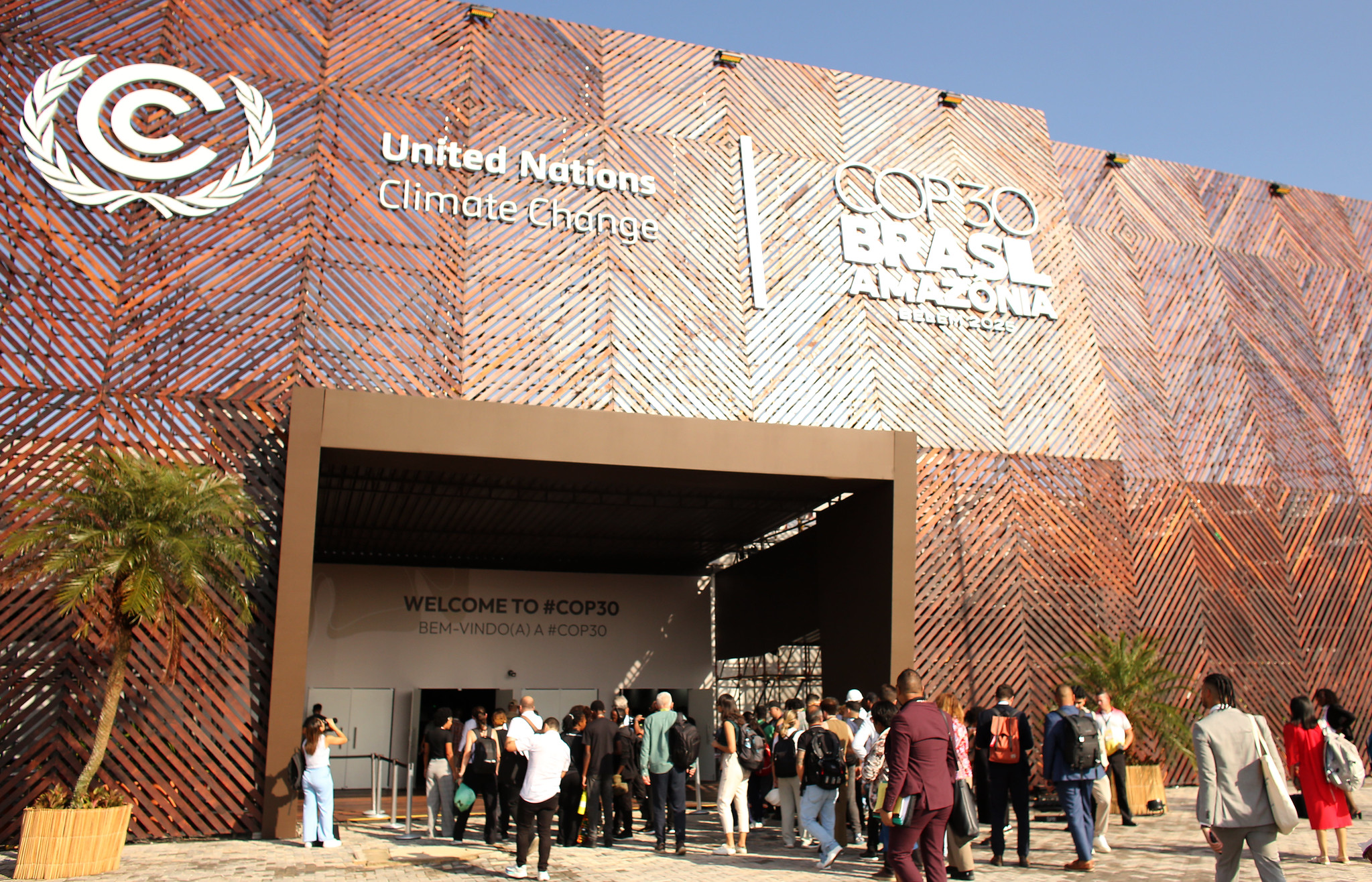
COP30, held for the first time in the Amazon, mobilized one of the largest and most complex infrastructures ever assembled for a United Nations conference. With 550 thousand square meters of official areas distributed between the Blue Zone and the Green Zone, Belém became the stage for a logistical, technological, and human operation unprecedented in Brazil.
Throughout the twelve days of the event, the Conference recorded 513,848 visitors to the Blue and the Green Zones, reflecting both global and local interest in the climate agenda. The Blue Zone alone received more than 42 thousand accredited participants, while the Green Zone maintained a high and steady flow of daily visitors.
According to COP30 Extraordinary Secretary Valter Correia, the event “placed Belém on the map of major global operations. In just a few months, we built a city within a city, equipped with technology, comfort, security, and the capacity to receive tens of thousands of people each day. The scale of this structure reflects Brazil´s professionalism and dedication in hosting a conference of this magnitude.”
Blue Zone: a 160 thousand square meter temporary city dedicated to global negotiations
The Blue Zone concentrated the core of climate diplomacy, with a total area of 160 thousand square meters, of which 120 thousand square meters were entirely built as temporary structures designed specifically for COP30. An additional 34 thousand square meters comprised the Hangar Convention Center and the Gastronomy Center, permanent facilities adapted to host delegations, international organizations, and representatives from 195 countries.
INTERNAL INFRASTRUCTURE
The Blue Zone comprised 149 pavilions, including: 78 country pavilions featuring customized spaces for meetings, negotiations, and events; 71 offices used by delegations, technical teams, and international organizations. And 430 Expressions of Interest (EOIs), a historic record that enabled NGOs, companies, universities, traditional peoples, and subnational governments to request participation, demonstrating the global engagement surrounding the climate agenda.
EQUIPMENT AND INSTALLATIONS IN NUMBERS
The operation of the Blue Zone required the installation of a large-scale infrastructure, which included:
Installed power: 180 generators (88 MW)
Network cabling: 300 km
Optical fiber: 60 km
Air-conditioning units: 200
Transport trucks: 800
Restrooms: 635
Secretary Valter Correia noted that “it is difficult to grasp the full scale of what these numbers represent. They reflect kilometers of cabling, hundreds of pieces of equipment, and a logistics operation that involved thousands of professionals. The Amazon hosted an infrastructure comparable to the largest international conferences in the world.”
Green Zone: social participation in a 45 thousand square meter space
Open to the public, the Green Zone was designed as a major venue for civil society, innovation, and Amazonian culture. Covering 45 thousand square meters, it hosted 61 pavilions and stands from organizations, scientific institutions, social movements, companies, and governments.
The space brought together cultural activities, dialogues, interactive exhibitions, and debates that connected science, forest peoples, youth, and initiatives from the green economy.
An operation without precedent in Brazil
The construction, operation, and dismantling of these structures required months of coordinated planning between the Federal Government, the United Nations, the Government of Pará, the Municipality of Belém, and hundreds of companies and professionals.
For Valter Correia, “the scale of COP30 demonstrates that Brazil is fully capable of hosting international events of the highest standard, even in regions historically distant from major urban centers. The Amazon welcomed the world with efficiency and pride.”
COP30 established Belém as a new global reference in sustainability, innovation, and climate diplomacy, leaving as its legacy a major logistical operation and infrastructure effort that marked the history of United Nations climate conferences.