
COP30 President defends evolution of climate multilateralism towards a two-speed model and accelerated implementation
In a new letter to the international community, Corrêa do Lago warns that the future of climate governance depends on the evolution of multilateralism amidst worsening geopolitics
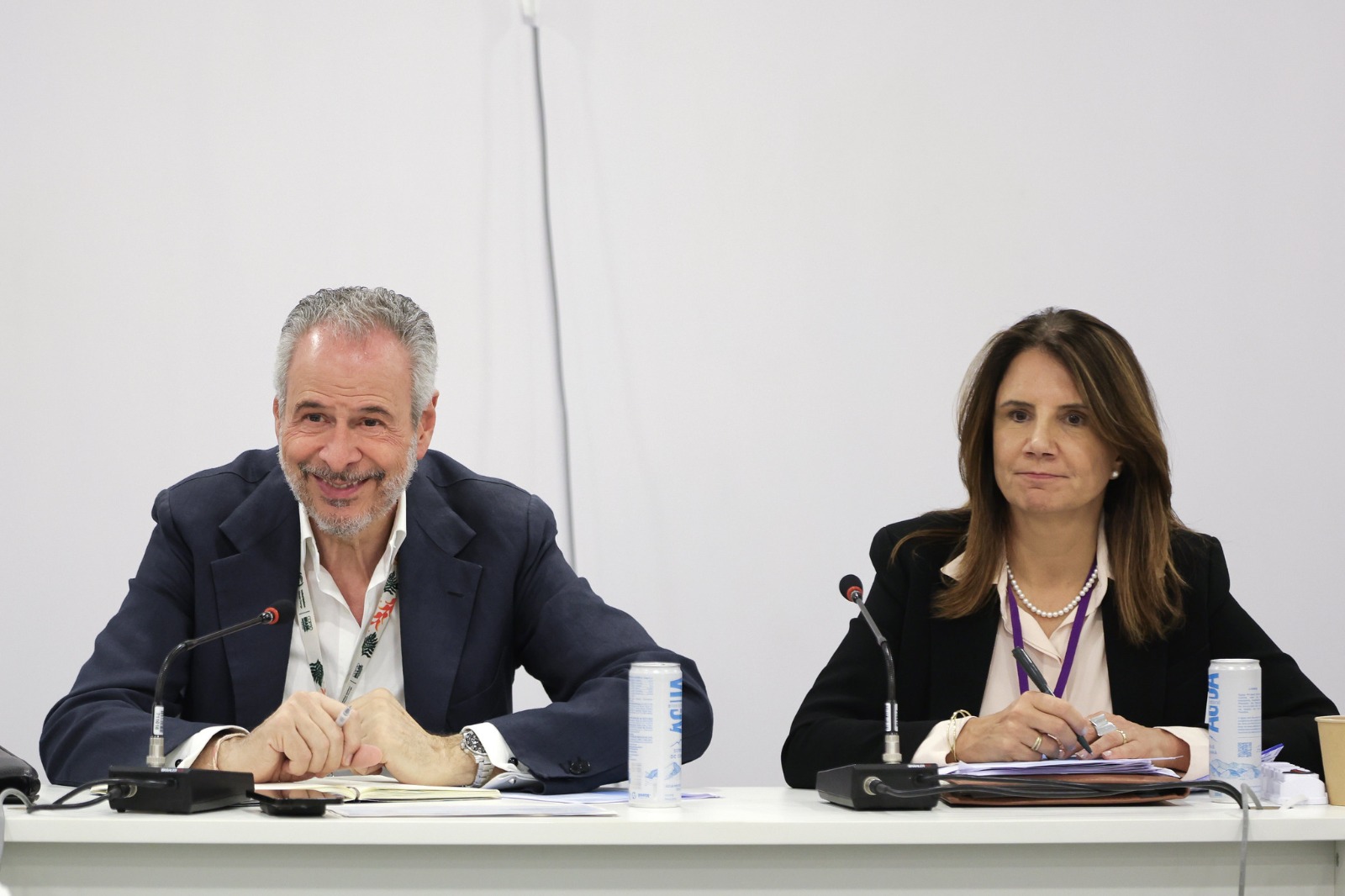
COP30 President André Corrêa do Lago today urged climate multilateralism to adopt a two-tier approach centered on consensus and implementation. In a new letter to the international community, the diplomat also highlighted his pledge to develop roadmaps to transition away from fossil fuels and to halt and reverse deforestation, arguing that future global stability hinges on our collective planning at a time of geopolitical tensions.
“Multilateralism must gain the velocity required to keep pace with global warming, without jeopardizing consensus-based decision-making as the source of legitimacy, universality, and international law. COPs’ traditional roles in formal decision-making, universal coordination, and momentum-building remain real, effective, and continuously necessary”, wrote Corrêa do Lago.
The most recent in a series of communications published since March 2024 by the COP30 President reflects on what the conference represented for climate multilateralism and broader global governance. Despite growing geopolitical and socioeconomic challenges, COP30 contributed to strengthening climate multilateralism, to connecting it to people, and to accelerating the Paris Agreement implementation.
From niche to mainstream, climate implementation is becoming as ubiquitous as the impacts of global warming already are. Corrêa do Lago mentioned “the response to climate change no longer depends on formal authorization, nor is it confined to a single country, actor, or sector”. The results achieved in Belém show that a “working multilateralism” is necessary to demonstrate how multilateral governance can deliver under challenging circumstances while reaching people on the ground.
The letter reinforces the need for a two-tier multilateralism, as seen in COP30: a first institutional tier based on consensus, the golden key in the construction of the climate regime over three decades. A second tier focused on implementation, with the emphasis shifting towards the mobilization, diffusion, and deployment of resources, actors, coalitions of the willing, and mechanisms worldwide.
The Global Implementation Accelerator, established in the COP30 Mutirão Decision and to be co‑guided with the incoming COP31 Presidencies, can serve as a prototype for injecting institutional velocity into climate multilateralism by unlocking speed, scale, and strategic sequencing.
“COP30 revealed something essential: our climate regime has evolved from a machine into a living system. And living systems do not survive through harmony alone, but through adaptation shaped by tension and feedback", wrote the COP30 President. “Responding to this evolutionary pressure does not mean abandoning multilateralism; it means allowing it to mature.”
At Brazil's initiative, under President Lula's directive, COP30 also fostered an unprecedented debate around the global dependency on fossil fuels, the source of nearly 70% of greenhouse gas emissions worldwide but also of growing vulnerability in terms of financial stability and liquidity for development and investment. Although the multilateral system wasn't ready to formally embrace the discussion, Brazil autonomously took on the task of developing roadmaps to transition away from fossil fuels and to halt and reverse deforestation.
“Far from climate morality, these roadmaps are first and foremost about planning and stability", wrote the COP30 President. “Managed well, such planning can reduce systemic risk, protect balance sheets, and strengthen trust. Managed poorly, the same transitions risk disorder, social fracture, volatility, and abrupt collapse in asset values.”
Read the Letter here