
COP30 Opens 2026 with a Strategic Session on the Global Climate Action Agenda
The focus of the meeting was to revisit the progress achieved thus far, such as the consolidation of the Action Agenda in its implementation phase, and also to initiate discussions regarding the transition of the presidency to Australia and Turkey at COP31
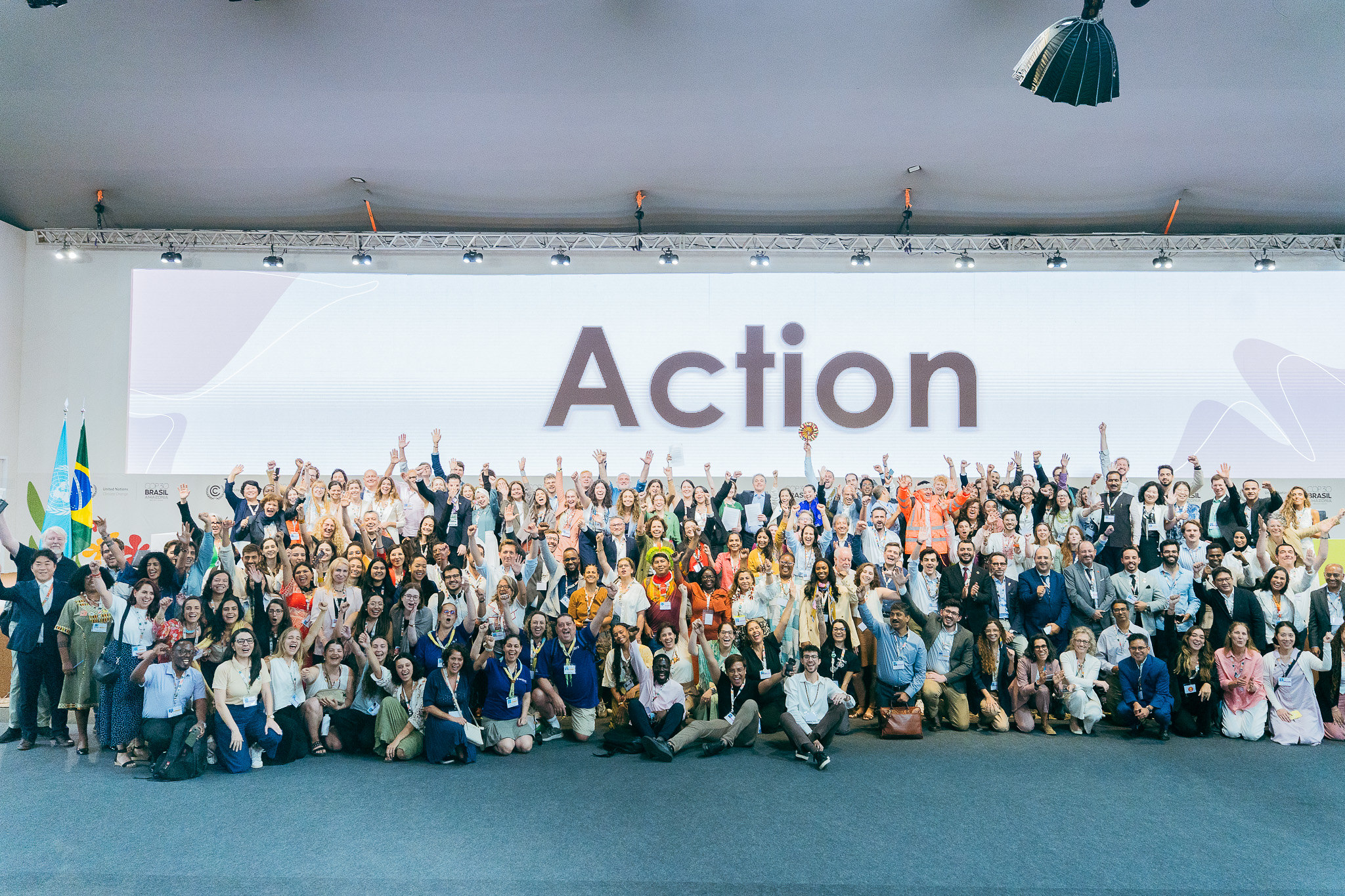
By Rafael Campos/COP30
The COP30 Presidency, the UNFCCC, and the Climate Champions Team held the opening session of the Global Climate Action Agenda for 2026 on Thursday morning (22). The meeting marked a strategic moment in the continuity of work carried out throughout 2025, bringing together initiatives and leaders to celebrate the outcomes of COP30, take stock of the results delivered in Belém, and align priorities for the new implementation cycle leading toward COP31.
Held in a virtual format, the session brought together 546 participants representing members of the Action Agenda Activation Groups and Marrakech Partnership stakeholders, reinforcing a coordination space between state and non-state actors responsible for turning global commitments into concrete action throughout 2026.
In his remarks, Dan Ioschpe, COP30 High-Level Climate Champion, highlighted that Belém marked the consolidation of the Action Agenda as an implementation-oriented platform. According to him, the COP30 experience demonstrated that non-state actors—including cities, businesses, investors, communities, Indigenous Peoples, and civil society organizations—are essential partners in accelerating the implementation of the Paris Agreement and complementing national government action.
Ioschpe emphasized that, despite the progress achieved, the key challenge for 2026 is to raise ambition and institutionalize the Five-Year Vision for the Global Climate Action Agenda (2026–2030), strengthening what he described as the “Mutirão spirit.” The COP30 High-Level Climate Champion identified advancing the implementation of the 120 Plans to Accelerate Solutions launched at COP30 as a top priority.
“Our responsibility—and an extraordinary opportunity—is to ensure that the incoming COP31 Presidency receives a climate action engine running at maximum speed and efficiency,” said Ioschpe. “The task is enormous, and the global context is increasingly challenging. That is why we need to work together 24 hours a day, seven days a week, 365 days a year. The climate emergency cannot wait, and it is with this spirit that we restart today the work of the 30 Activation Groups", said the COP30 High-Level Climate Champion.
From negotiation to implementation
The session also highlighted how the outcomes of COP30’s formal negotiations created the political and institutional conditions to accelerate climate action in 2026. The Conference resulted in the adoption of 56 decisions by consensus, reaffirming a strong commitment to multilateralism and to the effective implementation of the Paris Agreement.
Among the key advances are the roadmaps launched by the Brazilian Presidency to transition away from fossil fuels and to halt and reverse deforestation, as well as the creation of the Belém Mission for 1.5°C and the Global Implementation Accelerator—tools designed to align political decisions, science, and concrete action on the ground.
"Two outcomes of the Mutirão Decision are closely related to the evolution of the Action Agenda: the Belém Mission to 1.5°C and the Global Implementation Accelerator. Achieving 1.5°C will only be possible if we accelerate implementation. In this context, we must learn from the lessons of the Action Agenda", said Túlio Andrade, COP30 Chief Strategy and Alignment Officer.
Legacy and planning for 2026
Bruna Cerqueira, COP30 Global Climate Action Agenda Coordinator, presented an assessment of the results achieved and the priorities for 2026. According to her, COP30 leaves as its legacy a new implementation architecture aligned with the Global Stocktake, designed to provide continuous support for the execution of decisions adopted through the formal negotiation process.
Among the advances highlighted were strengthened transparency, with a growing number of initiatives reporting through the UNFCCC platform; the sharing of case studies and solution banks through the Granary of Solutions; and the collective development of the 120 Plans to Accelerate Solutions, distributed across the six thematic axes of the Action Agenda. Cerqueira also emphasized the consolidation of a continuous annual work cycle, ensuring predictability, coordination, and sustained engagement throughout the year.
“The next step is to build on this collective legacy and accelerate delivery, driven by the leadership of Türkiye and Australia as the incoming COP31 Presidency. We continue to be guided by the five-year vision presented in Belém and by our six axes to accelerate the implementation of the outcomes of the first Global Stocktake agreed by Parties. The Plans to Accelerate Solutions put forward by the Global Initiatives are our tools to overcome barriers to scaling existing solutions. We also have an opportunity to focus implementation across all regions, leveraging the growing number of climate-dedicated weeks,” said Cerqueira.
At the close of the session, it was reaffirmed that the Activation Groups will hold dedicated meetings between 26 and 30 January, during which the work plans and the annual calendar for the Global Climate Action Agenda in 2026 will be presented.