
COP30 debates climate justice and reaffirms the decisive role of the Judiciary
In Belém, justices from Brazil’s higher courts and representatives of international tribunals emphasized that addressing the climate crisis also takes place in the courts
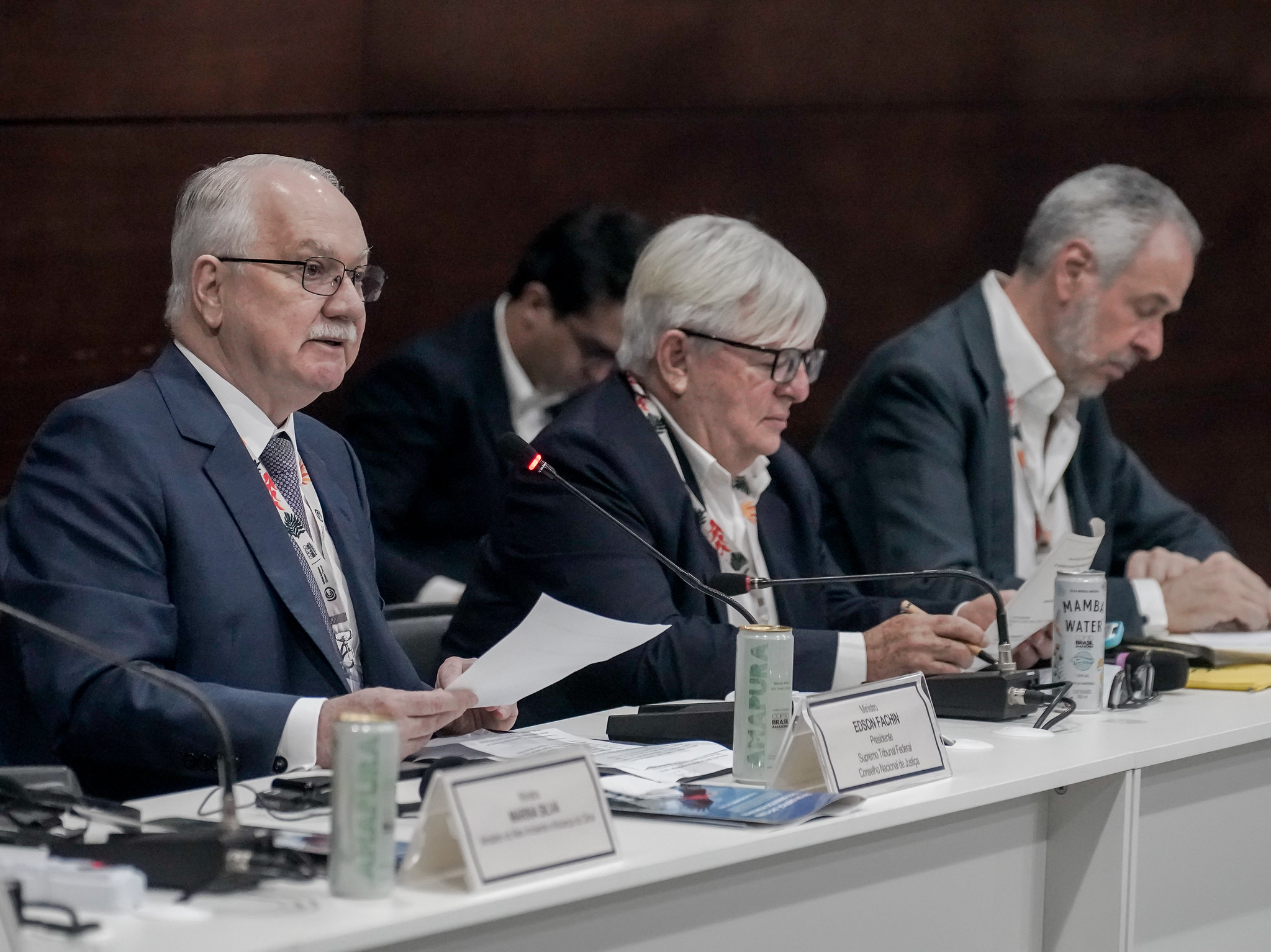
By Nicole Angel/COP30
Climate Justice took center stage on Thursday, 13 November, as part of COP30’s official program, marking a turning point in the history of climate negotiations. In Belém, Brazilian judges and representatives of the international legal community made it clear that the climate crisis is not only a scientific or political issue; it is a matter of justice.
For the first time, the justice system had an expanded role in the official program, through panels addressing the role of the Judiciary in implementing the commitments of the Paris Agreement and in strengthening global governance.
A sense of urgency resonated among judges and ministers, echoing the message of President Luiz Inácio Lula da Silva earlier in the week during the official opening of COP30: “We are moving in the right direction, but at the wrong speed.”
According to COP30 President, Ambassador André Corrêa do Lago, this milestone marks an unprecedented and transformative moment for the conference. “The word urgency is absolutely central,” he stated. “If we believe in science—and that is the case here—we know we have little time. Every action taken sooner will have a more positive impact. The element of urgency dramatically changes the nature of the climate issue.”
Corrêa do Lago noted that the theme of justice, introduced for the first time at the COPs, has gained strength through the work of Brazilian jurists such as Minister Herman Benjamin, who also took part in the discussions. “The role of the Judiciary will become increasingly decisive, nationally and internationally, in ensuring the implementation of what has already been agreed. We must act. We already have norms, rulings, and legislation. Now it is time to deliver,” he concluded.
The Judiciary as a Guardian of the Future
Recently retired Supreme Federal Court (STF) Justice Luís Roberto Barroso opened the debate with an analysis of “the escalation of global inaction.” According to him, the climate commitments made by governments remain insufficient and are often unfulfilled, while the impacts continue to intensify.
“What was once treated as an issue of intergenerational justice has become a matter of present survival.” He recalled that the Brazilian Constitution recognizes an ecologically balanced environment as a fundamental right and stated that although the Judiciary is not the main actor, it must act to protect life and human rights.
Supreme Court Minister Cármen Lúcia reaffirmed the ethical and legal foundations of the Judiciary’s role in environmental protection, emphasizing that this is not a political choice but a constitutional duty. “The Brazilian Constitution is already a green one. It allows for no setbacks when what is at stake is life itself,” she stated, recalling Supreme Court decisions that have safeguarded public environmental policies.
The role of the Judiciary as an instrument for realizing climate goals was also underscored by Superior Court of Justice (STJ) President Herman Benjamin. “The sense of urgency and the responsibilities that fall upon the Judiciary are inseparable,” he emphasized.
Superior Court of Justice Minister Regina Helena Costa observed that the creation of a “Justice Day” within a COP “demonstrates that the international community recognizes the role of courts in advancing climate justice.” She noted that the STJ rules weekly on environmental cases, “many of which are related to deforestation, which remains Brazil’s main challenge.”
STJ Minister Afrânio Vilela added that judicial decisions, even individual ones, “have a pedagogical effect throughout the justice system.” “From the protection of a small spring by a local ruling to the regulation of large national hydroelectric plants, each decision reaffirms the ethical and legal duty to preserve the environment for future generations,” he stated.
The Link between Ethics, Politics, and Law
Brazil’s Minister of the Environment and Climate Change, Marina Silva, brought an ethical dimension to the discussion, emphasizing that the conference must be “the COP of Justice.” She referred to the Bali Principles of Climate Justice (2002) and highlighted that the concept must apply to diverse realities, from urban peripheries to Indigenous territories.
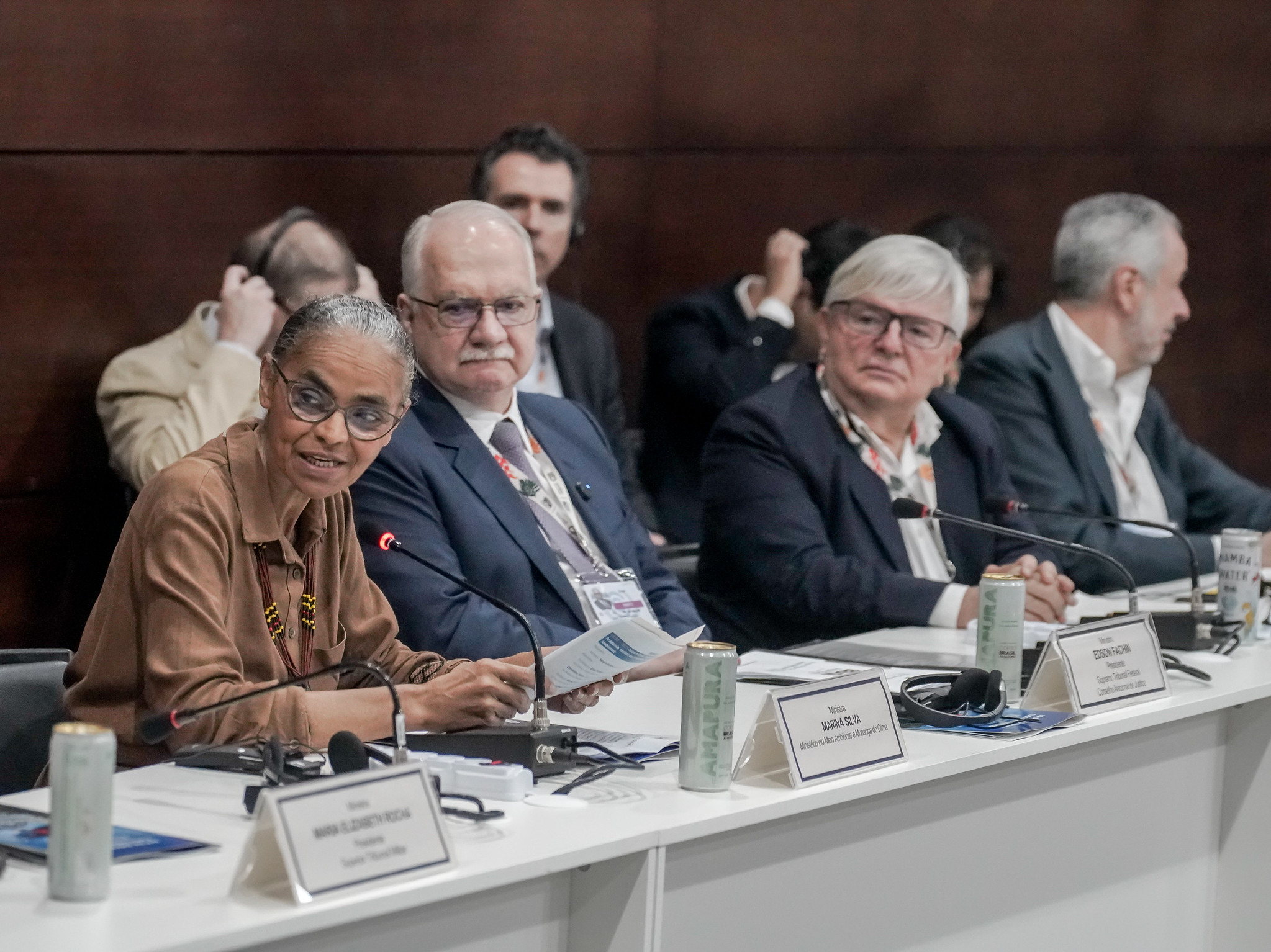
“Each territory experiences the crisis in its own way. True climate justice will only be achieved when we recognize the historical responsibilities and ecological debt among peoples,” the minister explained.
From the Amazon to the World: International Law in Motion
Concluding the debate, International Court of Justice (The Hague) Judge Leonardo Brant presented the advisory opinion on climate change, a document considered a milestone in consolidating international climate law. The opinion establishes that States’ failure to act against the climate crisis constitutes a violation of international law, carrying global legal responsibility.
Brant emphasized that the opinion recognizes climate obligations as universal duties of the international community. “It is the first time that the Court acknowledges that climate harm has an erga omnes nature - that is, it affects all humanity,” he explained.
The document reaffirms that States must remedy damage and adopt measures to prevent recurrence, such as reviewing fossil fuel exploration licenses and setting more ambitious targets. “Climate failure is no longer merely a matter of political irresponsibility; it has become a legal wrong,” Brant concluded.