
Brazil Strengthens Civil Society Role in COP30 Preparations, Announces Amazon Investments
Event organized by the Office of the Secretary-General of the Presidency with Social Participation Forums allocates R$ 600 million for restoration of degraded areas and land regularization in the Amazon
By Office of the Secretary-General of the Presidency
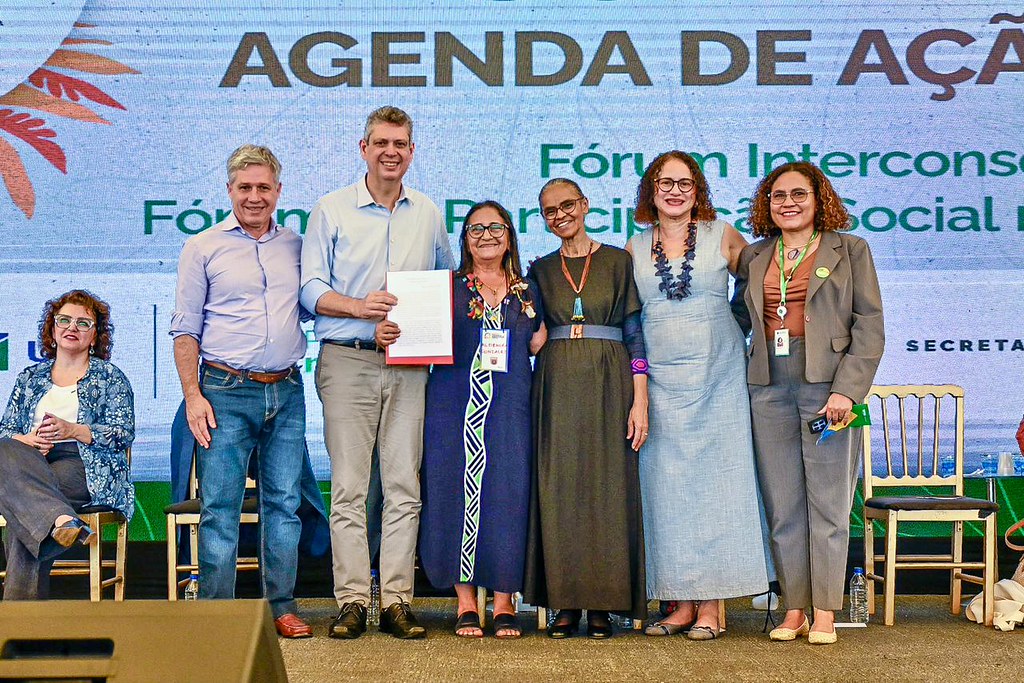
“Social Participation in the COP30 Action Agenda” was the theme of an event initiated by the Office of the Secretary-General of the Presidency, bringing together the Intercouncil Forum and the Social Participation Forums of the Legal Amazon states on Thursday, October 16, and Friday, October 17, in Brasilia. The event aimed to consolidate civil society contributions to the Action Agenda of the 30th United Nations Climate Change Conference.
Held at the Athos Bulcão Conviviality Center at the University of Brasilia (UnB), the event gathered Ministers Márcio Macêdo, of the Office of the Secretary-General of the Presidency; Paulo Teixeira, of Agrarian Development; and Ministers Marina Silva, of Environment and Climate Change, and Luciana Santos, of Science and Technology, alongside COP30 President Ambassador André Corrêa do Lago.
The COP Action Agenda is a set of commitments, initiatives, and practical measures designed to implement international climate agreements. It functions as an executive and collaborative arm of the COPs, translating political negotiations into concrete actions. The agenda is structured around six thematic pillars: Energy, Industry and Transport; Forests, Oceans, and Biodiversity; Agriculture and Food Systems; Cities, Infrastructure, and Water; Human and Social Development; and Cross-Cutting Issues.
For COP30, scheduled to take place next month in Belém, Brazil has sought broad civil society engagement, emphasizing the Amazon, traditional peoples, and climate and social justice as central axes of the ecological transition.
Minister Márcio Macêdo called on all leaders participating in the event: “Let us make this the COP of popular participation. A milestone where Brazil looks itself in the eye and, with the calmness of those who know their own value, declares that the ecological transition will be just, development will be inclusive, and democracy will increasingly be a collective endeavor,” Macêdo said.
Marina Silva, Minister for the Environment and Climate Change, stressed that COP30 must be the COP of implementing decisions already made in previous conferences. “We have already decided that it is necessary to transition to the end of deforestation, to the end of fossil fuels, and to enable $1.3 trillion for developing countries. Therefore, COP30, God willing, and through the efforts of our COP President, must leave Belém with new foundations to tackle climate change through adaptation, mitigation, and the transformation of the unsustainable development model that brought us to this crisis,” she emphasized.
SOCIAL PARTICIPATION AS A HALLMARK - Ambassador André Corrêa do Lago, COP30 President, highlighted that Brazil has always stood out for its social participation, which pressures governments to implement changes across all sectors. “We must ensure that this tradition continues, maintaining Brazil’s immense social participation. Everything you are contributing to COP30 is extremely important. Without strong social participation, countries do not move—and we must make them move,” he said.
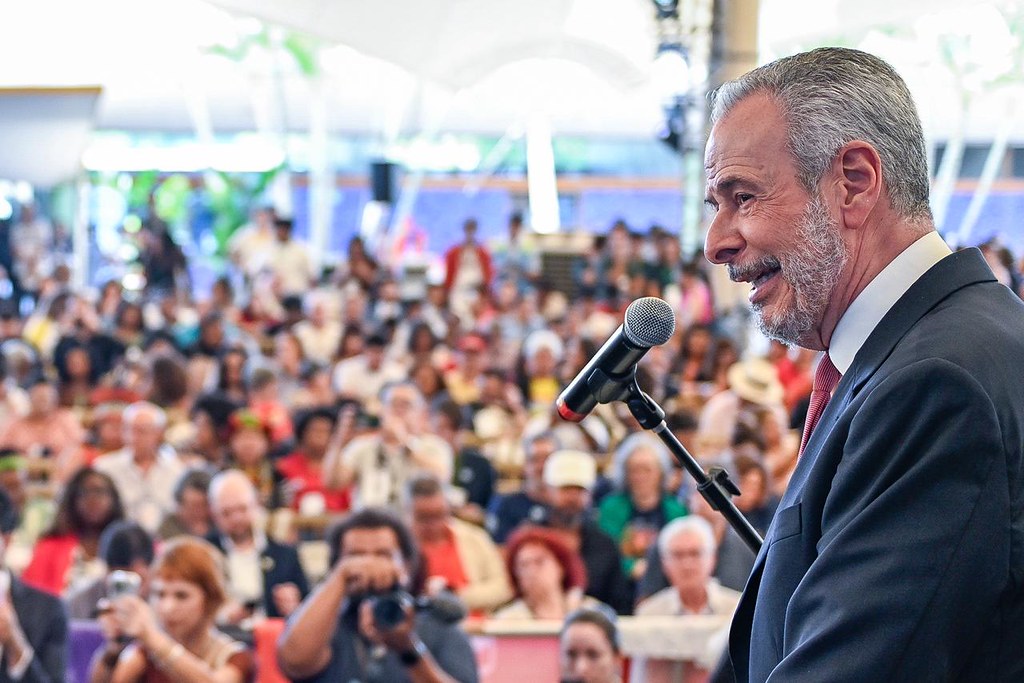
INVESTMENTS - Investments were also announced in productive forests, totaling R$ 150 million, following the result of the Amazon Fund Call for Proposals for the 2025–2029 period, covering the states of Amazonas, Acre, Rondônia, Mato Grosso, Tocantins, Pará, and Maranhão. Eighty agrarian reform settlements, home to 6,000 families, will benefit from the recovery of 4,600 hectares. Resources come from the Ministry of Agrarian Development and Family Agriculture (MDA), the Ministry of Environment and Climate Change (MMA), and the National Bank for Economic and Social Development (BNDES).
Another R$ 146 million from the Amazon Fund will be invested in land regularization in the Legal Amazon through the Caminhos Verdes (Green Paths) project, which aims to strengthen land governance and environmental management as a strategy to reduce and mitigate deforestation in settlements and federal/state areas, contributing to the National Land Governance Policy, the Terras do Brasil Program, and the National Land Regularization System (SINARF). Approximately 13,000 families will receive definitive land titles.
“We validated this program across the territory, engaging with agrarian reform settlers, rural organizations, riverside communities, and quilombolas. This program has become the pride of rural workers in the Amazon. What is being funded here is reforestation with productive species that are more profitable than soy or livestock. At COP30, Brazil will deliver the world’s largest productive reforestation program with significant economic development potential,” declared MDA Minister Paulo Teixeira.
CONTRIBUTIONS - The Intercouncil Forum (comprising around 60 national councils and collegiate bodies for discussions on cross-cutting topics) and the Social Participation Forums of the nine Legal Amazon states (representing 281 social movements and civil society organizations) held in-person and virtual plenaries over the past two months to address the topic. At the same time, the Plataforma Brasil Participativo provided spaces in September for contributions to the Action Agenda.
For national councils and collegiate bodies, three types of contributions were submitted: solutions considered as public policies implemented by ministries; proposals developed by councils, collegiate bodies, and national conferences; and suggestions for improving the axes and objectives of the Action Agenda.
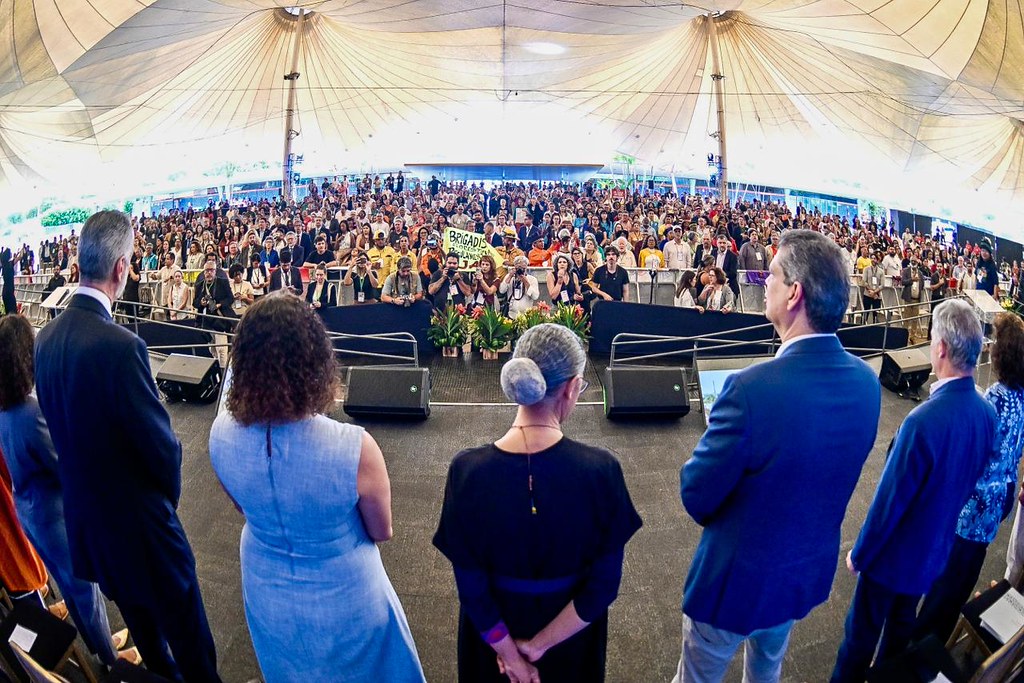
For the Social Participation Forums of the Legal Amazon, two types of contributions were submitted: solutions understood as practical experiences developed in Amazonian territories by social movements and civil society organizations, and proposals reflecting the agendas and actions of these groups.
“The Social Participation Forum, which brings the voices of the Amazon to discuss public policy strategies for the Amazon and for the world, from the perspective of climate justice, is of utmost importance for us, the peoples of the Amazon, and especially for us women of the Amazon, who experience the impacts of climate change on our lives, territories, and peoples,” said Benedita Nascimento of the Movimento Articulado de Mulheres da Amazônia (MAMA), who participated in the Brasilia meeting.
Over the two-day event (Thursday, October 16, and Friday, October 17), contributions will be systematized into documents for review and approval in working groups and separate plenaries. In the final joint plenary, a unified document will be approved and submitted to the COP30 Presidency.
AWARDS - During the event’s opening, Minister Márcio Macêdo received two awards Brazil earned last week for its federal strategy on Social Participation and Popular Education.
The country was recognized in the regional “Americas” category and the thematic “Social Participation” category by the Global Summit of the Open Government Partnership, held at a seminar in Spain. The Office of the Secretary-General leads social participation policy within the federal government.
Translation: Tadeu Azevedo (POET/UFC)
Proofreading: Michel Emmanuel Félix François (POET/UFC)