
Brazil Mobilizes 11-State Task Force to Enforce the Forest Code
Led by the COP30 Presidency alongside federal and state partners, simultaneous actions across eleven states reinforce the country's commitment to advancing climate goals
By Inez Mustafa/COP30
As a demonstration of what climate federalism means—a groundbreaking concept incorporated into Brazil’s Nationally Determined Contribution (NDC)—the COP30 Presidency, in coordination with the federal government and various states, launched the Forest Code Task Force. Throughout the week, simultaneous actions took place in eleven Brazilian states, reinforcing the country’s commitment to environmental conservation through corrections to the Rural Environmental Registry (CAR) and assessments of environmental compliance.
Luciana Abade, COP30’s mobilization coordinator, emphasizes that the task force is a symbol of Brazil’s leadership in harmonizing production, environmental conservation, and inclusion.
Brazil wants to present itself at COP30 as a hub of solutions. We have public policies that value the environment, strengthen sustainable agriculture, and tackle the climate crisis through cooperation, she emphasized.
Abade also notes that the initiative aligns with the COP Presidency’s first letter, which calls on the world to take collective action.
The task force is led by the Ministry of Management and Innovation in Public Services (MGI), the Brazilian Forest Service (SFB), the COP30 Presidency, state governments, and civil society partners.
Climate Federalism in Action
The task force also put into practice the climate federalism outlined in Brazil’s Nationally Determined Contribution (NDC), with actions tailored to local realities.
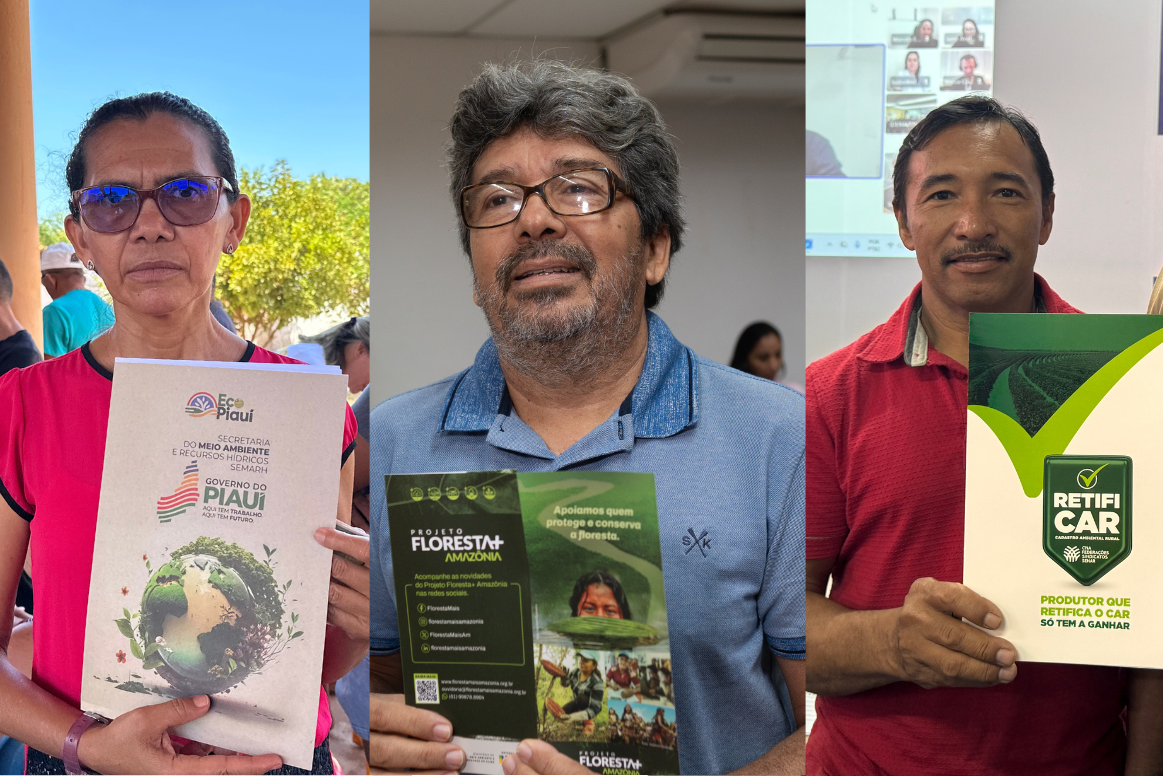
In Ceará, in the city of Pacajus, over 200 validated CAR receipts were delivered to rural producers through the RetifiCAR project. In Maranhão, the State Secretariat for Environment and Natural Resources (SEMA) set up a service desk for new registry applications. In Paraíba, a six-hour workshop trained facilitators in the municipality of Patos. In Alagoas, the task force in Penedo featured lectures on environmental regularization and the Environmental Regularization Program (PRA), along with a hands-on correction workshop.
Sergipe focused on raising awareness among municipal managers, launching CAR support points in city halls. Rio Grande do Norte hosted an online lecture on YouTube. Bahia returned data from the State Forest Registry of Rural Properties (CEFIR) to municipalities in the Arid Territory. Pernambuco organized dialogue circles in Serra Talhada. Piauí concentrated efforts in the Macambira settlement.
From CAR to the Climate Plan
The operation to implement the Forest Code is a key component of the Climate Plan, launched by the federal government as a tool to meet Brazil’s Nationally Determined Contribution (NDC). The plan sets ambitious goals, including the restoration and reforestation of 12 million hectares by 2030, and views environmental regularization as a strategic foundation.
Marcela Eberius, from the Brazilian Forest Service, emphasized that accelerating the implementation of the Forest Code is essential: “It directly impacts the country’s climate goals, since regularization goes hand in hand with the NDCs.”
Henrique Dolabella, director of CAR at the Ministry of Management and Innovation (MGI), highlighted that field efforts strengthen the link between sustainability, prosperity, and public policy: “Each validated CAR means greater access to rural credit, better conditions under the Agricultural Plan, and new income-generating opportunities. Producers who preserve more than the law requires can issue Environmental Reserve Quotas and be compensated for keeping the forest standing,” he explained.
Translation: Michel Emmanuel Félix François (POET/UFC)
Proofreading: Tadeu Azevedo (POET/UFC)