
Belém has a Joint Health Operations Center during COP30, and the healthcare network is being strengthened
Under the responsibility of the Ministry of Health and the municipal and state secretariats, the unit monitors incidents in real time during the conference. There will also be a field hospital operating 24 hours a day to support the event
By the Ministry of Health
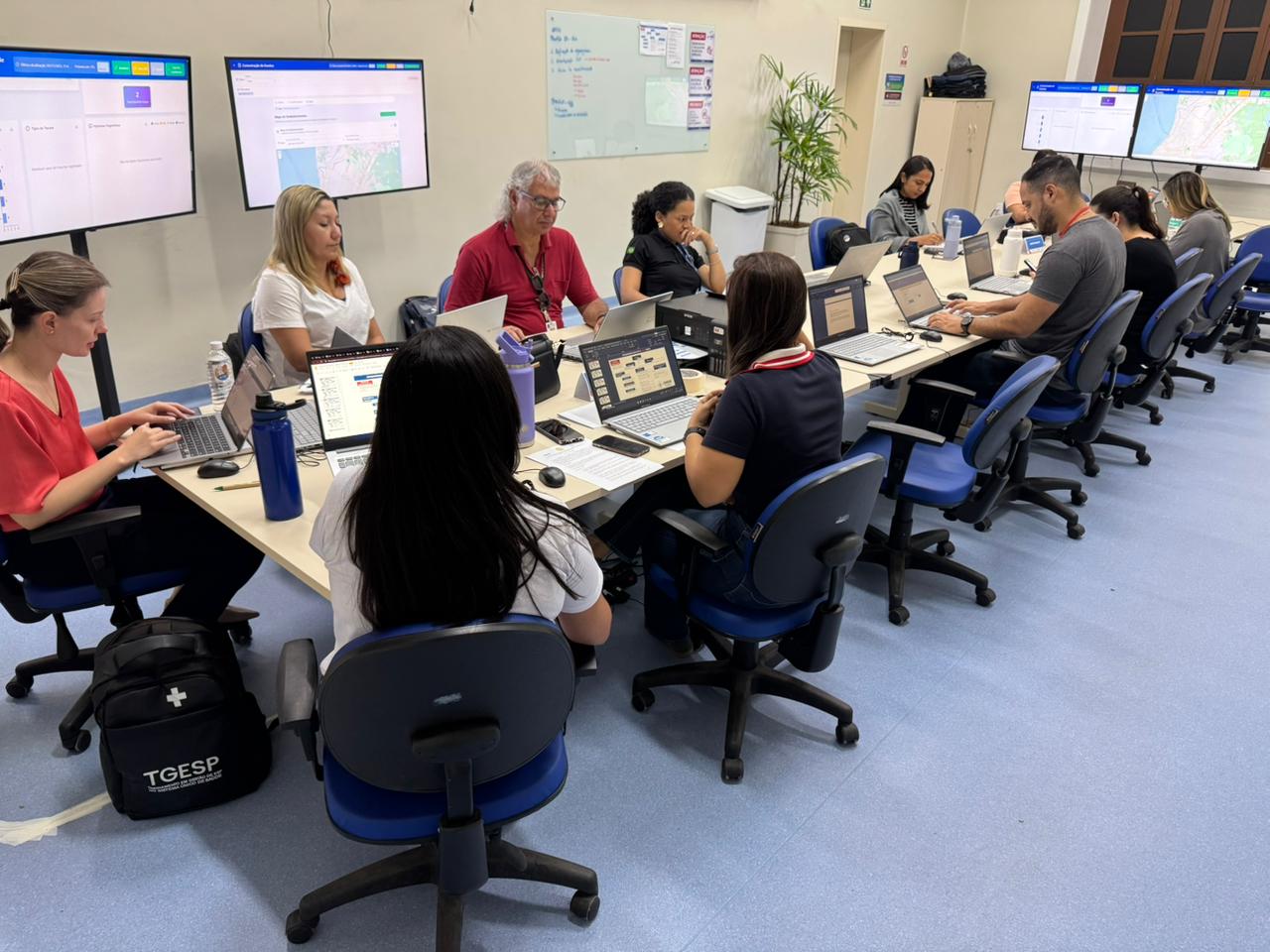
The COP30 Joint Health Operations Center [Centro Integrado de Operações Conjuntas de Saúde/CIOCS] that operates 24 hours a day. This strategic hub for health surveillance and coordination is collaboration between the Ministry of Health [Ministério da Saúde/MS], the Pará State Department of Public Health [Secretaria de Estado de Saúde Pública do Pará/SESPA], and the Belém Municipal Health Department [Secretaria Municipal de Saúde de Belém/SESMA].
Located at the Santa Casa de Misericórdia do Pará Hospital, in Belém’s Umarizal neighborhood, the unit is inspired by other successful operations, such as those set up during the Círio de Nazaré, an annual festival held in Belém (PA) that attracts thousands of people.
“COP30 will be an environmental milestone, as well as a milestone in strengthening the health infrastructure of the Amazon. It will consolidate Belém as a model of integrated management, active surveillance, and response capacity within the Unified Health System [Sistema Único de Saúde/SUS],” stated the Minister of Health, Alexandre Padilha. According to Padilha, Brazil is building a legacy of health and sustainability for the people of the Amazon. “This legacy begins here, with the SUS in the forest, caring for people and the planet simultaneously,” he emphasized.
The CIOCS structure unites professionals from the three levels of management within the Unified Health System [Sistema Único de Saúde /SUS]—federal, state, and municipal—and utilizes cutting-edge technology for real-time incident monitoring, data analysis, and the immediate response team mobilization.
Daniel Coradi, the General Coordinator of the Strategic Information Center for Health Surveillance of the Ministry of Health [Centro de Informações Estratégicas em Vigilância em Saúde do Ministério da Saúde/MS], emphasizes that the CIOCS is an essential technology for continuous monitoring and rapid response to situations requiring the action of emergency response teams. “The Ministry of Health has supported CIOCS operations for mass events for over a decade, following international standards of integration between healthcare and surveillance areas.”
Strengthened healthcare system
Another key structure is the Field Hospital (HCamp) of the National Health Force [Força Nacional do SUS/FN-SUS], which is set up at the Usina da Paz in the Jurunas neighborhood. This neighborhood is one of the most populous areas of Belém. The unit operates 24 hours a day and has six modules, including triage, emergency care, regulation, and logistics. It has the capacity to provide urgent care and patient stabilization.
A total of 144 volunteer medical professionals from various states will be mobilize, including doctors, nurses, pharmacists, and technicians. Four advanced care stations will be set up in the COP30 Blue Zone to ensure medical coverage across all areas of the event.
“COP30 is a global milestone, and the SUS will demonstrate its strength in response and solidarity. The Field Hospital symbolizes Brazil’s ability to integrate health, the environment, and emergency preparedness,” said Rodrigo Stabeli, General Coordinator of the National Health Force [Força Nacional do SUS/FN-SUS].
Investments and legacy
Since 2023, the state of Pará has received BRL 4.7 billion in federal investments, with BRL 1.6 billion allocated exclusively to Belém to strengthen primary and specialized care, surveillance, pharmaceutical assistance, and the expansion of surgical procedures. Notable advances include the construction of eight new Basic Health Units [Unidades Básicas de Saúde/UBS], the expansion of hospital beds, and the hiring of 554 community health agents, thereby increasing the presence of the Unified Health System [Sistema Único de Saúde/SUS] throughout the region.
In addition to the temporary structure for COP30, the Ministry of Health [Ministério da Saúde/MS] announced an additional BRL 53 million to improve the city’s healthcare system, with permanent enhancements, such as acquiring linear accelerators for cancer treatment, expanding surgeries through the Now There Are Specialists (“Agora Tem Especialistas”) program, and modernizing hospital services.
“Whatever happens during COP30, the health system will be prepared,” assured the Minister of Health, Alexandre Padilha.
Planning for the future
COP30 will also serve as a stage for strategic launches, including the Belém Health Action Plan, which will be presented at the conference on November 13. The document aims to establish Belém as a global model for adapting the health sector to climate change by focusing on early warning systems, responses to extreme events, and strengthening local resilience.
Meanwhile, the Ministry of Health [Ministério da Saúde] is developing structural initiatives such as the National Health Sector Adaptation Plan [AdaptaSUS – Plano Nacional de Adaptação do Setor Saúde], and the More Health for the Amazon Brazil Strategic Agenda [Agenda Estratégica Mais Saúde Amazônia Brasil].These initiatives aim to reduce regional inequalities and promote sustainable technologies.