
Action Agenda Advances the Implementation of the Plans to Accelerate Solutions (PAS) in 2026
An interministerial workshop brought together ministries of the Brazilian Federal Government to align priorities, strengthen coordination, and ensure continuity in the implementation of the PAS, key instruments of the COP30 Action Agenda
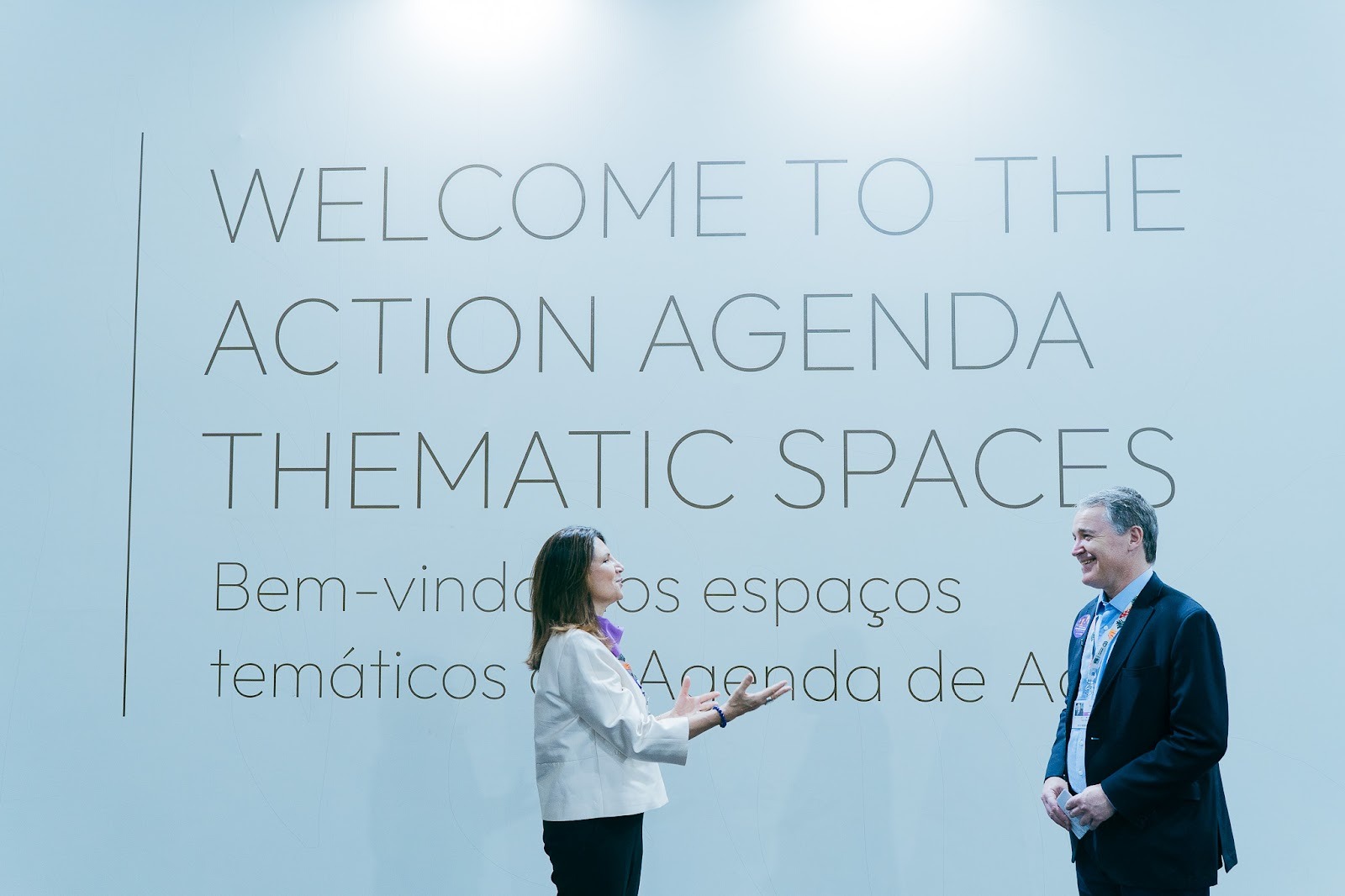
Building on the collaborative and coordinated work of the COP30 Action Agenda, 2026 marks progress in the implementation of the Plans to Accelerate Solutions (PAS), instruments designed to translate climate ambition into concrete deliverables. During an interministerial workshop held on Monday (2) in Brasília, ministries of the Brazilian Federal Government aligned priorities, strengthened coordination, and planned actions to scale up, accelerate, and ensure continuity of the plans’ results throughout the year, in collaboration with international initiatives.
Throughout 2025, in preparation for COP30, Brazilian ministries supported 48 of the 120 PAS published under the Action Agenda, distributed across the six thematic axes that structure the implementation of the first Global Stocktake (GST-1): transitioning energy, industry, transport; stewarding forests, oceans, and biodiversity; transforming agriculture and food systems; building resilience for cities, infrastructure and water; fostering human and social development; and unleashing enablers and accelerators including on financing, technology and capacity-building.
Held at the CAPES Building, the meeting aimed to provide a collaborative space for planning actions to be led by ministries under the Action Agenda in 2026, foster information-sharing among ministries, and clarify the annual implementation cycle of the PAS.
What are the PAS and how do they work?
The Plans to Accelerate Solutions are voluntary, collaborative, multisectoral, and delivery-oriented instruments, created in the context of COP30 to accelerate the implementation of the Paris Agreement, guided by the conclusions of the first Global Stocktake (GST-1). Each PAS is a collaborative effort among international initiatives focused on voluntary climate action, bringing together governments, the private sector, civil society, and other stakeholders around clear objectives, measurable deliverables, and a short- to medium-term timeframe.
“Since their inception, the plans have been designed to go beyond declaratory commitments,” explains Bruna Cerqueira, COP30 Climate Action Agenda Coordinator. The PAS operate as implementation platforms capable of mobilizing finance, developing standards and regulatory frameworks, disseminating technologies, and strengthening institutional capacities.
Interested in learning more about examples of Plans to Accelerate Solutions? Explore the Plan to Accelerate Greening Cities to Beat the Heat and the Belém Health Action Plan.
Planning and Coordination for 2026
The interministerial workshop marked a moment of organization and deeper engagement in the implementation of the PAS, with a focus on defining deliverables for 2026, developing annual calendars of strategic events, and strengthening the governance of the plans. Activities were structured around the Action Agenda’s thematic tracks, enabling the identification of synergies, shared challenges, and opportunities for cooperation among ministries.
Cerqueira also highlighted the role of international mobilization spaces throughout the year. “In 2026, the COP30 Presidency will work to further integrate the Action Agenda into the Climate Weeks held throughout the year, leading up to COP31. These moments will be key opportunities to showcase the results of implementing the Plans to Accelerate Solutions,” she said.
Continuity and Acceleration of Implementation
The approach adopted in 2026 aligns with the message of the Twelfth Letter from COP30 President André Corrêa do Lago, which underscores the need to accelerate climate implementation in a context of growing urgency. In the letter, the President highlights the Action Agenda and the PAS as expressions of a form of multilateralism capable of operating at different speeds, combining consensus-based decision-making with the practical mobilization of solutions by actors ready to move forward.
By contributing to several of the PAS currently published, Brazil reaffirms its leadership role within the Action Agenda and in linking national public policies with international cooperation. “Throughout the year, Brazilian ministries have the opportunity to continue fostering collaboration among the initiatives under each Plan to Accelerate Solutions, helping to strengthen the systemic vision needed to accelerate multiple climate solutions within the Action Agenda,” emphasized Barbara Godoy, Advisor on the Action Agenda to the COP30 Presidency.
Throughout 2026, the COP30 Presidency will continue to collaborate with ministries in tracking deliverables, identifying synergies among plans, and mobilizing partnerships, reinforcing the Action Agenda as a multisectoral platform to accelerate climate solutions with concrete results on the road to COP31.
English version: Trad. Rafael Campos