
Action Agenda adopts an unprecedented structure to advance COP commitments
Two structural efforts were undertaken at COP30 to accelerate the implementation of the Paris Agreement through the Action Agenda. These efforts consisted of aligning the Action Agenda with the Global Stocktake, with a focus on the fulfillment of Nationally Determined Contributions, and establishing a Five Year Vision to guide next steps
By Rafaela Ferreira COP30
COP30 represented a turning point for the Action Agenda. This is because the COP30 Presidency organized it with the objective of ensuring continuity and global impact for goals that have been under construction, with contributions from Brazil, since Eco 92, the United Nations Conference on Environment and Development, event that established the United Nations Framework Convention on Climate Change. At COP30, held in Belém, the Action Agenda gained additional structure.
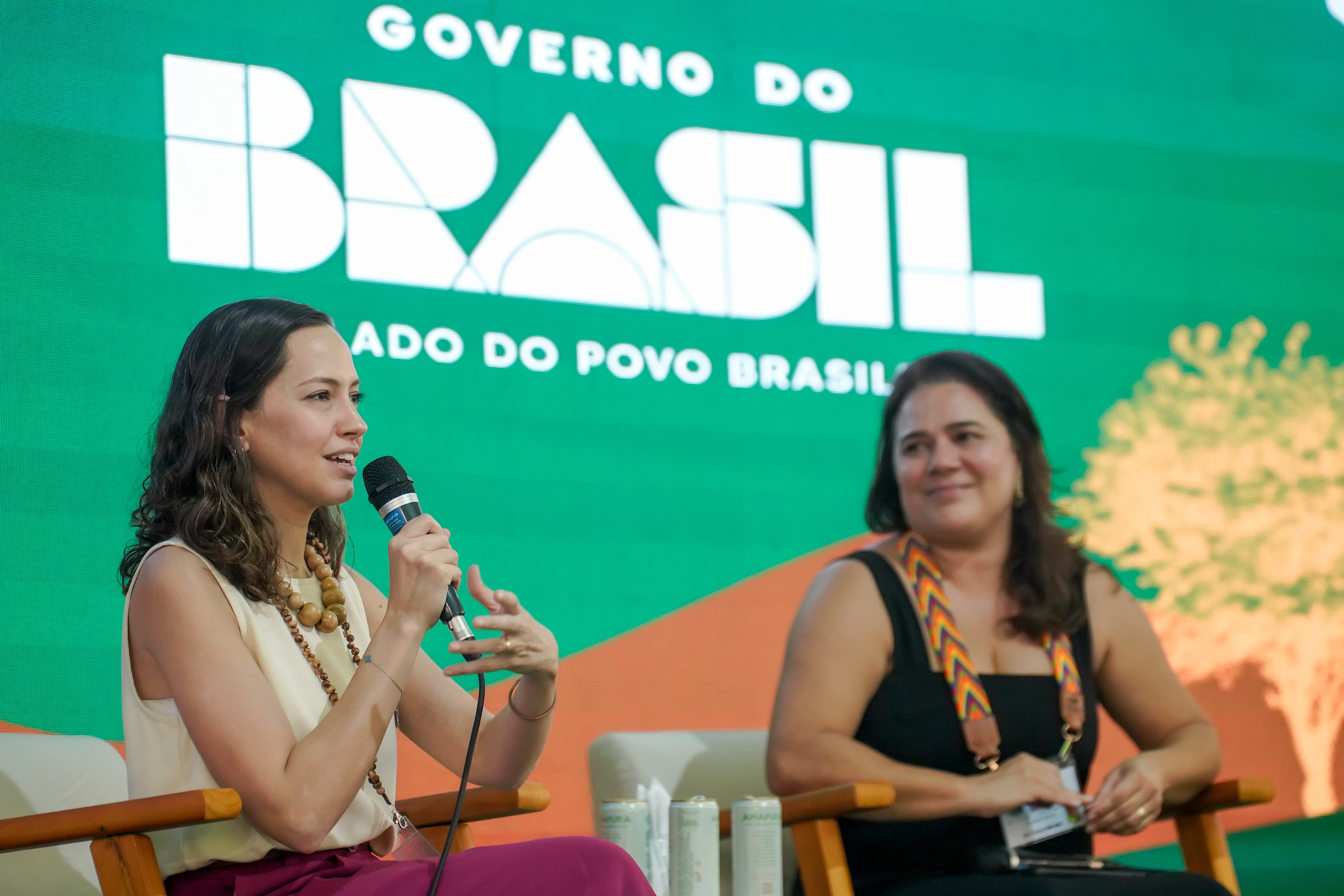
“The Action Agenda is not new,” says Bruna Cerqueira, Director of the COP30 Action Agenda. It was created in response to the Paris Agreement through the Marrakech Partnership for Global Climate Action at COP22 in 2016. Its objectives are to increase climate ambition, accelerate the implementation of solutions that are already available, and provide visibility and coherence to climate action initiatives in a systematic manner, rather than only during climate conferences.
The Action Agenda is the space within the Conferences of the Parties where actors who do not negotiate, but who are essential for implementation, come together. These actors mobilize and contribute to translating agreements reached by negotiators into concrete action. They are represented by the private sector, investors, subnational governments, civil society, and also by all voluntary contributions that countries wish to lead and implement beyond the Paris and Kyoto Agreements, for example.
The partnership is coordinated by the High Level Climate Champions, who are appointed each year, and serves as the main coordinating mechanism for the Global Climate Action Agenda within the framework of the Climate Convention.
“This COP put forward two innovative proposals,” explains Bruna. The first was to move away from an Action Agenda in which each presidency defines between five and ten priorities that change every year, toward structuring a process that reflects the outcome of the first Global Stocktake of the Paris Agreement. The Global Stocktake assesses every five years the collective progress of countries in meeting climate goals related to mitigation, adaptation, and means of implementation.
In this way, the first report, published in 2023, identified gaps and priorities that require attention from countries. Based on this assessment, the COP30 Action Agenda was organized around six thematic pillars: (1) Transitions in the Energy, Industry, and Transport Sectors; (2) Sustainable Management of Forests, Oceans, and Biodiversity; (3) Transformation of Agriculture and Food Systems; (4) Building Resilience in Cities, Infrastructure, and Water; (5) Advancing Human and Social Development; and (6) Enablers and Accelerators, including Finance, Technology, and Capacity Building.
“The other proposal we made was to map all Action Agenda initiatives from the past ten years,” says Bruna. “We identified 482 global initiatives that have contributed to the Action Agenda and sought to significantly expand collaboration among them,” adds the Director of the Action Agenda.
Over the course of these six months, from the launch of the six pillar structure in June at the Bonn Conference to COP30, these initiatives were encouraged to operate with greater transparency and to report on the impacts actually generated. “We recorded a sixfold increase in the number of initiatives that began reporting their results,” Cerqueira notes.
The task now is to ensure the continuity of this structured space so that, upon reaching the next Global Stocktake in 2028, it will be possible to demonstrate what Action Agenda actors have delivered, the solutions they have brought forward, and how they have accelerated the implementation of the Paris Agreement.
“Over the coming year, we expect to work very closely with the COP31 Presidency, with our COP30 High Level Champion Dan Ioschpe, and with the individual designated by the next COP Presidency to join this team,” Bruna emphasizes.
Renewed Architecture for Implementation
By introducing a new emphasis at this COP, which was also recognized as the COP of Implementation, the objective is to ensure that climate solutions are coordinated, monitored, and scaled across regions and sectors. Accordingly, each new declaration is expected to be accompanied by a clear and transparent implementation plan. This structured yet flexible approach is embodied in the Five Year Vision of the Global Climate Action Agenda.
The document, launched at COP30, establishes a framework to guide the acceleration of Paris Agreement implementation between 2026 and 2030, in complementarity with the formal negotiation process. The Vision seeks to provide continuity, focus, and scale to existing solutions, aligning the Action Agenda with Global Stocktake priorities and with the ambition and implementation cycles of Nationally Determined Contributions.
The principles guiding this Vision include a focus on implementation and real impact, alignment with science and equity, inclusion of different regions and actors, complementarity with the multilateral regime, and continuous learning. These principles ensure that the Action Agenda goes beyond announcements by prioritizing measurable delivery, replicable solutions, and tangible benefits for people.
The proposed organizational structure strengthens the role of the High Level Climate Champions, the team that supports the Champions, and the actors associated with the Marrakech Partnership. It provides greater clarity of roles, coordination through thematic pillars, and stronger connections with existing initiatives and coalitions. The objective is to reduce fragmentation, improve global coordination, and support the scalability of solutions across different regional and sectoral contexts.
Finally, the Vision defines an annual implementation cycle with clear priorities, moments of political mobilization, tracking of deliverables, and periodic assessments. Transparency is central and includes regular reporting, clear communication of results, monitoring of progress, and visibility of impacts in order to enhance credibility, collective learning, and trust in the Action Agenda as a continuous pillar of global climate implementation.
Read the full document available in English: Five Year Vision of the Global Climate Action Agenda.