
A new public notice from the Brazilian development bank is expected to raise up to BRL 73.7 billion for climate investment
BNDES notice attracted 45 fund proposals and prepares financial support of up to BRL 21 billion; selection of up to seven initiatives will be announced in January 2026
With information from the BNDES News Agency
The effort to mobilize private resources to address the climate crisis received a significant boost during COP30 when the preliminary results of Brazil’s National Development Bank (BNDES) Public Call for Climate Mitigation were disclosed.
The notice received 45 proposals from investment funds; collectively, these funds target an equity value of approximately BRL 73.7 billion.
The funds are requesting BRL 21 billion in financial support from BNDES through equity and credit operations. These operations will focus on sectors that are crucial to the climate agenda, including industrial decarbonization; energy transition; adaptation infrastructure; low-carbon agricultural technologies; ecological restoration; reforestation; and forest conservation.
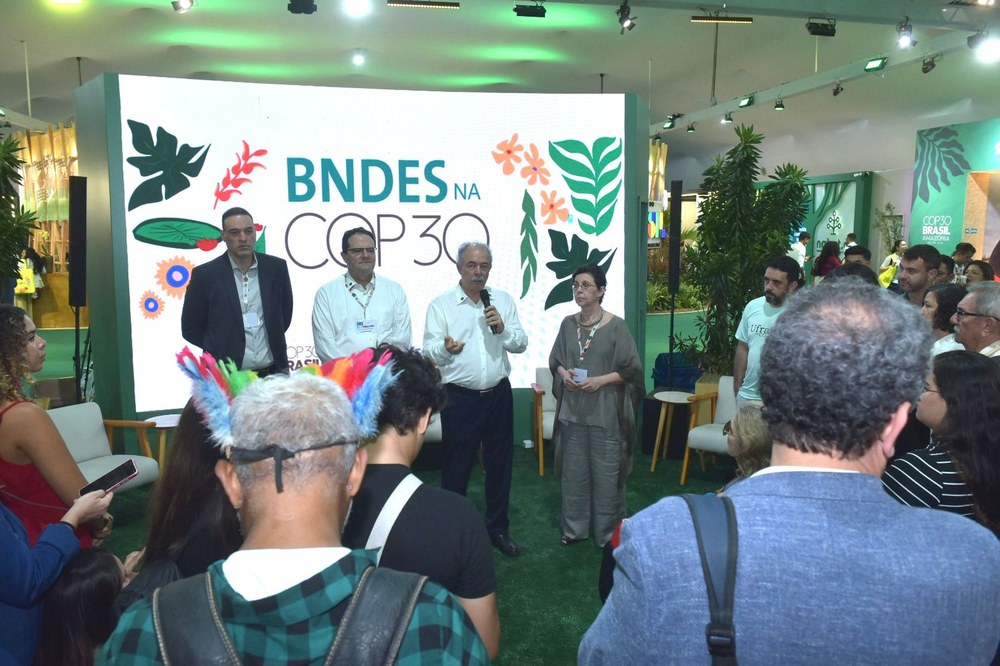
During the presentation of the mechanism at the BNDES Pavilion at COP30 in Belém, state of Pará, Brazil, BNDES president Aloizio Mercadante reiterated its alignment with Brazil's ambition to transform commitments into concrete action. “To encourage private investment in a structured way, we have created a scaling mechanism that is capable of generating a real and lasting impact.”
BNDES will complete the selection of up to seven funds by January 2026. The criteria include technical robustness, governance, the capacity to mobilize private capital, and alignment with the COP30 climate agenda. The expectation is that, by combining public and private resources, the mechanism will generate a significant leverage effect in the financing of sustainable solutions.