
Mumbai Climate Week starts to knit a global thread of action from the Global South on the road to COP31
Solutions and innovation for the global south advance the Global Climate Action Agenda renewed in Belém, including a billion-dollar climate investment program
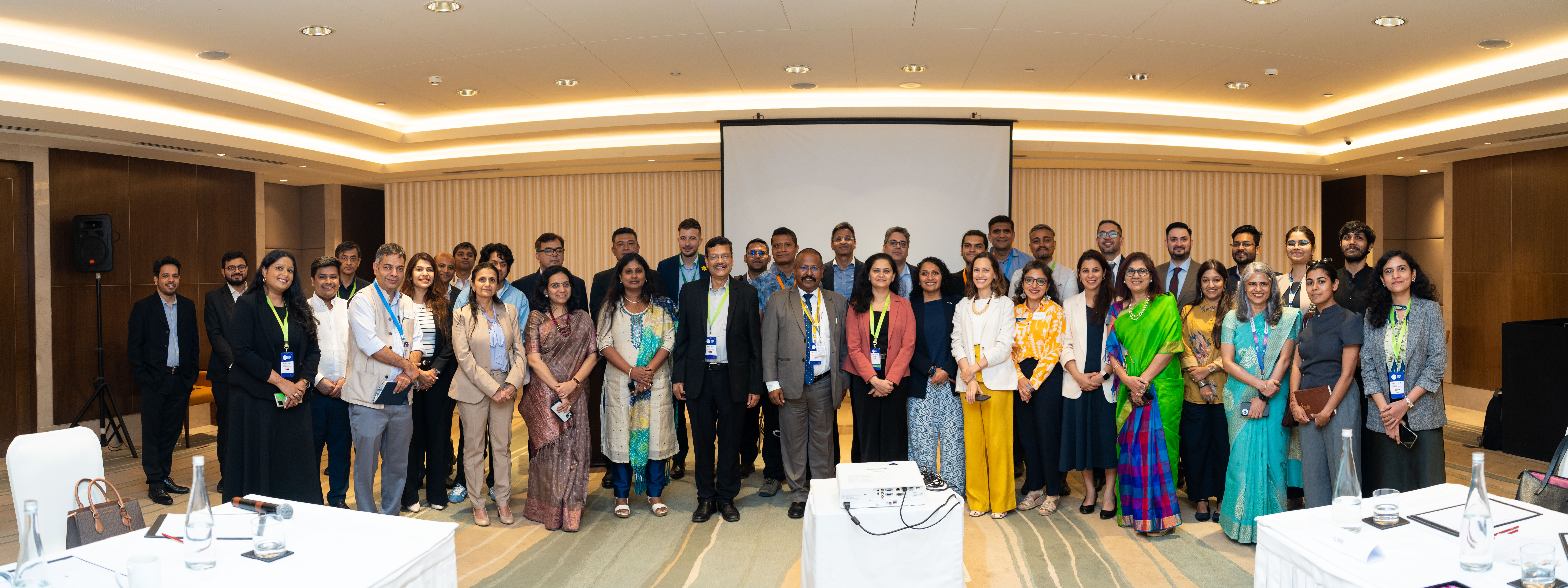
Leaders at last week’s Mumbai Climate Week did more than talk about rising temperatures and worsening floods. They rolled out major investment programs, enlisted dozens of cities to fight extreme heat, and unveiled more than 1,000 ready-to-fund climate projects.
Mumbai Climate Week 2026 is India’s first dedicated climate action platform focused on implementation, finance mobilisation, resilience planning, and citizen engagement. Led by Project Mumbai in partnership with India´s wealthiest State, the Government of Maharashtra.
At COP 30, Countries adopted the paradigmatic decision to formally transition the regime from its 30-year negotiation phase to a new era focused on implementation. Under a renewed vision for the next 5 years, the so called Global Climate Action Agenda became a delivery framework to turn climate agreements into real-world progress, a dedicated space at the COP process for the over 480 coalitions of Countries, Subnational Governments, Businesses, Investors and Civil Society Organizations who are willing to move faster on 6 thematic axes.
Climate Weeks across all regions of the world have been booming and are deeply rooted in what matters to citizens. They can help knit a thread of action 365 days per year and bring results to COPs that are relevant to people´s lives and different Country realities. Mumbai was the first stop of 2026 and showed exactly that.
Kicking off last week’s announcements, state officials in Maharashtra (where Mumbai is located) launched the Climate Investment Facilitation Program to attract billions of dollars in private investment. The effort, supported by The Climate Group’s Under2 Coalition and AVPN, is designed to steer finance toward clean energy, resilient infrastructure, and low-carbon growth – all tied to Maharashtra’s goal of building a USD 1 trillion economy by 2047 and to Action Agenda Axis 4: “building resilience for cities, water and infrastructure”.
In parallel, Maharashtra officials and World Resources Institute India announced a pipeline of more than 1,000 ready-to-fund climate projects across 44 cities. The projects span public transport, clean energy, water systems, and waste management – and are structured to attract private investment, not just government grants.
Equally significant: 30 cities across Maharashtra signed on to the global Beat the Heat coalition, backed by the United Nations Environment Programme. The initiative helps cities prepare for longer, hotter summers through better cooling systems, urban planning, and early warning tools. The coalition’s expansion demonstrates a growing recognition that rising temperatures – increasingly deadly in South Asia’s urban corridors – can no longer be treated as a seasonal inconvenience.
Advancing action on Axis 3, Transforming Agriculture and Food Systems, the Action Agenda on Regenerative Landscapes (AARL) - started by the COP28 Presidency, WBCSD, and BCG - brings together over 40 agribusinesses, financial institutions, on‑the‑ground partners, and national state actors to catalyse investments. They are mobilizing $9 billion in committed investment by 2030, with plans to engage 12 million farmers and advance regenerative practices across over 210 million hectares and 110 countries. In Mumbai, they launched their second Country Landscape Accelerator, focused in India.
Mumbai Climate Week reflected the spirit of the Global Climate Action Agenda: people-centred, action-oriented, and rooted in cooperation.
India’s Climate Crisis and Leadership in Numbers

The urgency behind these announcements was underscored by recent climate shocks. Asia is warming more than twice as fast as the global average, with heat waves, cyclones, and floods taking a staggering human and economic toll.
A study published in Nature last November found that rainfall-related deaths during Mumbai's monsoon season are nearly ten times higher than official figures suggest, with slum residents bearing over 80 per cent of the toll. Analysts estimate that rising urban heat alone could cut India's GDP by as much as 2.5 per cent if left unchecked.
For governments and businesses alike, last week offered a chance not just to name these problems, but to start financing and building solutions, including through a business coalition backed by WBCSD to fund adaptation projects.
How the Action Agenda Connects Global Goals to Local Impact
The outcomes in Mumbai align with broader shifts in global climate action. At COP30 in Belém, Brazil, the Action Agenda was redesigned around six priority areas based on the first-ever global assessment of where countries are falling short on their climate promises.
For South Asia, those priorities address the region's biggest challenges. Building resilience for cities, infrastructure, and water speaks to the crisis confronting Mumbai, Dhaka, Jakarta, and Manila – coastal megacities where aging infrastructure meets intensifying monsoons and rising seas.
Transforming agriculture and food systems addresses the livelihoods of hundreds of millions of smallholder farmers across the Indo-Gangetic plain and the Mekong Delta, whose harvests are increasingly at the mercy of erratic weather. Stewarding forests, oceans, and biodiversity remains inseparable from the fate of mangroves and coral ecosystems that protect shorelines and sustain fisheries and tourism economies.
And India’s momentum on Transitioning Energy, Industry, and Transport is rising. Hon. Chief Minister of Maharashtra Devendra Fadnavis underscored that India has crossed 260 GW of renewable energy capacity and recently added 55 GW in a single year — 75% of which came from renewable sources. “We see climate action much beyond compliance — we see it as competitiveness. States that move early will attract capital, talent and innovation. Maharashtra intends to lead that movement”, said Fadnavis.
The results from Mumbai Climate Week offer early evidence that this framework is functioning as intended – organizing global climate priorities to unlock finance, partnerships, and projects at the state and city levels.
“Climate action must improve living conditions just as policy must lead to positive actions on the ground”, said Samed Ağırbaş, COP31 Climate High-Level Champion.
“In South and Southeast Asia, that means helping farmers protect their harvests, making cities greener, promoting clean industry, reducing waste, and ensuring communities have access to climate finance”, he continued. "The Action Agenda is how we connect these solutions to the communities that need them most”.
Speaking at the opening session, CEO and Co-Founder of Project Mumbai & Founder of Mumbai Climate Week Mr Shishir Joshi said, “For Mumbai it is daily life. Mumbai – a city of immense diversity and dynamism, has always stood resilient to the face of challenges. From monsoon floods to public health crises, to terrorist attacks, its people embody the spirit of adaptation, innovation, collective strength and above all kindness. Mumbai is a living test bed for Climate solutions, as the financial capital of India and the melting pot of culture, Mumbai also the country’s kindness capital, is uniquely positioned to lead the way in Climate resilience setting an example for the cities across Global South”.
English version: Trad. Rafael Campos