
In Colombia, the CEO of COP30 says the transition away from fossil fuels is “feasible, fair, and necessary”
Ana Toni takes part in high-level discussions at the 1st Conference on the Transition Away from Fossil Fuels, in Santa Marta
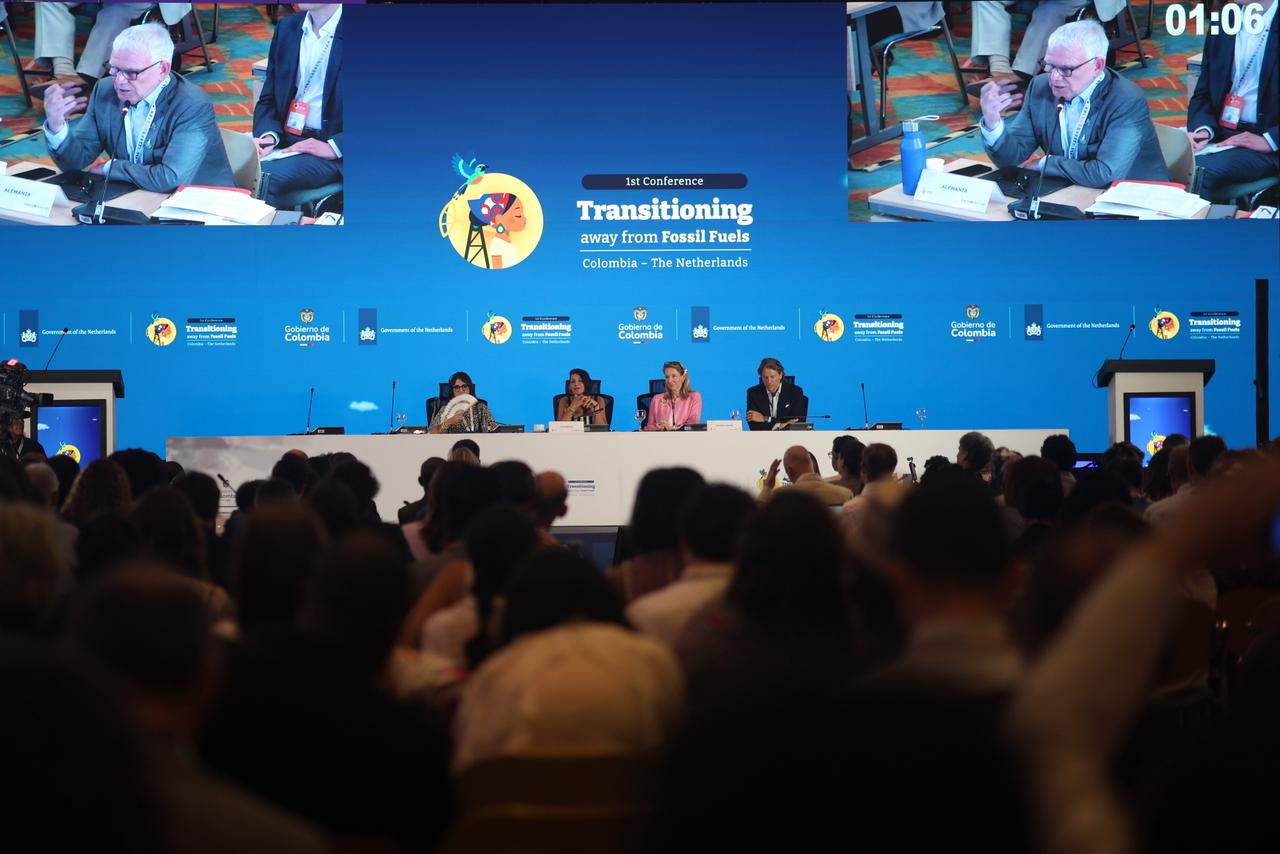
COP30 Executive Director Ana Toni took part this Tuesday (April 28) in the high-level segment of the 1st Conference on the Transition Away from Fossil Fuels, organized by the governments of Colombia and the Netherlands in the Colombian city of Santa Marta. The Executive Director highlighted the development of the COP30 Presidency’s roadmap on fossil fuels, stating that the transition is not only feasible, fair, and necessary, but must also be planned and accelerated.
In her opening remarks, Ana Toni noted that COP30, held in November 2026 in Belém, has already delivered results. These include an unprecedented debate on the transition away from fossil fuels, the drafting of the COP30 Presidency’s roadmap, the creation of the Scientific Panel on Energy Transition—launched this week—and the conference in Santa Marta.
“All these processes share a common goal: to accelerate what was already multilaterally agreed at COP28—namely, to transition away from fossil fuels in a just, orderly, and equitable manner,” the Executive Director said.
The commitment to develop the “International Roadmap of the COP30 Presidency on Transitioning Away from Fossil Fuels in Energy Systems, in a Just, Orderly and Equitable Manner, accelerating action in this critical decade, so as to achieve net zero by 2050 in keeping with the science” was undertaken by COP30 President André Corrêa do Lago at the closing of the Belém conference. To build it, the COP30 Presidency is engaging with representatives from national and subnational governments, the private sector, civil society, the financial sector, among other stakeholders.
The non-mandated document stems from a debate initiated by President Luiz Inácio Lula da Silva in Belém on overcoming dependence on fossil fuels. In remarks on November 7, cited by Ana Toni in her speech, President Lula underscored the unsustainability of a development model based on intensive fossil fuel use, in place for 200 years, and stated that “the world needs a clear roadmap to end this dependence on fossil fuels.”
The COP30 Executive Director thanked the 267 contributions received by the COP30 Presidency for the fossil fuels roadmap following a consultation that closed this month.
“There is no doubt that this conference will bring vital insights, strategic ideas, contributions, and solutions to the roadmap,” said Ana Toni. “This conference brings together civil society, subnational governments, the private sector, movements, and governments—not to convince one another of the need for a transition away from fossil fuels, but to discuss pragmatic actions and solutions that can and should be adopted nationally and internationally to accelerate the transition.”
The economist also stressed that the turbulent geopolitical landscape only reinforces the need for the transition. The war in Iran, she said, shows that “the rapid implementation of the already agreed transition away from fossil fuels is vital not only for tackling climate change.”
“It is also vital for energy security and sovereignty, for economic security and equity, and for justice and peace,” Ana Toni concluded.