
Global Climate Action Agenda Presents Results at the 64th Session of the UNFCCC Subsidiary Bodies (SB64) in Bonn
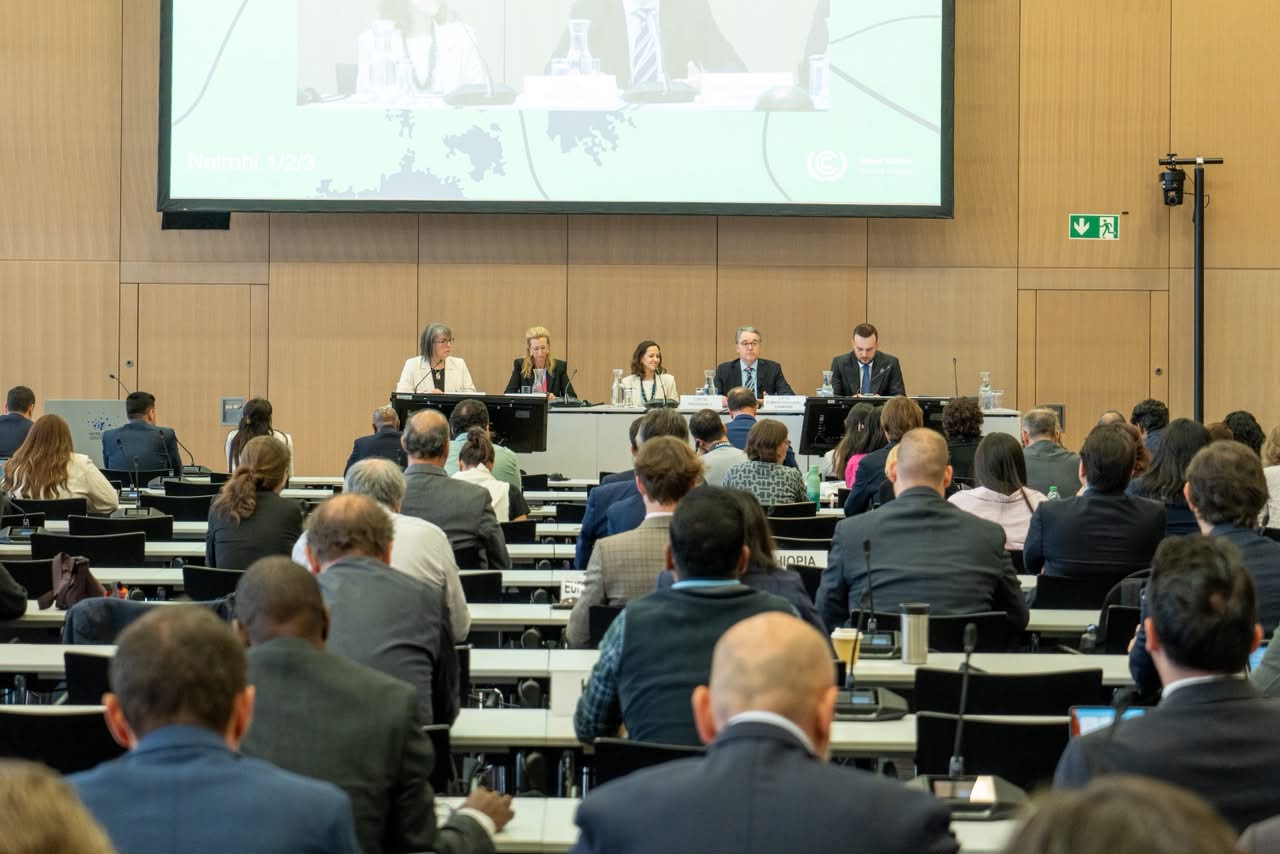
Six months after the United Nations Climate Change Conference (COP30) in Belém, the Global Climate Action Agenda presents the progress of more than 480 ongoing action initiatives and the development of 120 Plans to Accelerate Solutions (PAS) that mobilize governments, businesses, cities, financial institutions, and civil society organizations to accelerate the implementation of climate action.
The first results of this mobilization were presented this week (Tuesday, June 9, and Wednesday, June 10), at meetings of the six thematic axes of the Action Agenda and at the public event "Global Climate Action Agenda: Proof of Progress", held during the 64th Session of the UNFCCC Subsidiary Bodies (SB64) in Bonn, Germany.
At the meetings of each thematic axis, Action Agenda initiatives had the opportunity to share progress on their Plans to Accelerate Solutions (PAS). During the "Proof of Progress" event, the High-Level Climate Champions, representatives of the COP30 and COP31 Presidencies, and the UNFCCC showed how the Five-Year Vision (2026–2030), launched in Belém, is beginning to translate into coordinated action across the six thematic axes of the Agenda.
"Six months after COP30, we are seeing clear evidence that the implementation era has already begun," said Dan Ioschpe, High-Level Climate Champion for COP30. "The architecture created in Belém is working, momentum is building, and partners around the world are turning climate ambition into concrete action. We have established a predictable, multi-year results delivery mechanism that can continue to accelerate progress from one COP to the next."
Reorganized during COP30 around six axes aligned with the outcomes of the first Global Stocktake, the Global Climate Action Agenda uses the Plans to Accelerate Solutions (PAS) to bring together governments and non-state actors to overcome regulatory, financial, and technical barriers in strategic sectors such as energy, industry, transport, nature, food systems, cities, human development, finance, technology, and capacity-building.
Progress Across the Six Thematic Axes
Among the results highlighted at the event:
The e-Dutra zero-emission freight transport corridor in Brazil continues to expand its scale and attract new partners to accelerate the electrification of freight transport. At the same time, data from the Industrial Transition Accelerator show that 19 commercially scaled sustainable industrial projects, representing approximately US$43 billion in investment, reached a final investment decision over the past six months.
The Tropical Forests Forever Facility (TFFF) has already received formal support from more than 60 countries, while Luxembourg announced a €50 million contribution to tropical forest protection.
Brazil's Eco Invest program, a pilot under the FX Edge PAS, mobilized more than US$20 billion for sustainable fuels, infrastructure, and regional bioeconomy projects.
The Regenerative Landscapes Action Agenda launched its second National Landscape Accelerator in India, contributing to a coalition that aims to mobilize US$9 billion by 2030 to promote regenerative agriculture across 110 countries.
Thirty new cities have joined the Beat the Heat initiative since COP30, expanding global efforts to address extreme heat events. Through the Cool Cities Lab, participating cities have gained free access to tools for climate risk assessment and the implementation of urban cooling solutions.
Through its Plan to Accelerate Solutions, the International Association of Public Transport has already trained more than 500 professionals in the field across Latin America and the Caribbean, contributing to building the workforce needed for the expansion of sustainable mobility.
A major harmonization initiative between ISO and the Greenhouse Gas Protocol is advancing to improve the consistency of greenhouse gas emissions accounting, leveraging the global reach of national standards bodies in more than 170 countries and of companies representing the vast majority of S&P 500 firms.
Building Momentum Toward COP31
The event also highlighted the continuity of implementation acceleration processes between COP30 and COP31. Participants emphasized that the Five-Year Vision provides a stable framework for accelerating implementation, strengthening collaboration between governments and non-state actors, and supporting the delivery of outcomes from the UNFCCC process.
The COP31 High-Level Climate Champion, Samed Ağırbaş, outlined the priorities for the next cycle and underscored the importance of deepening cooperation across all six thematic axes on the road to COP31 in Antalya.
Throughout the session, representatives from international organizations, businesses, cities, youth groups, and civil society shared concrete examples of implementation and discussed opportunities to scale up the impact of actions ahead of COP31. Representatives of Party countries including Australia, Egypt, the United Kingdom, the European Union, and Morocco acknowledged the progress of the Action Agenda and reinforced the importance of continuity across Presidencies and Champions.
As the international community moves toward COP31, the event demonstrated that climate progress is increasingly being measured by the solutions actually delivered.