
COP30 Presidency Presents Elements of its Roadmap on Transitioning Away from Fossil Fuels
Contributions from Parties and non-Party stakeholders help define guiding principles and identify key challenges to be addressed at both domestic and international levels; the document will be presented ahead of COP31
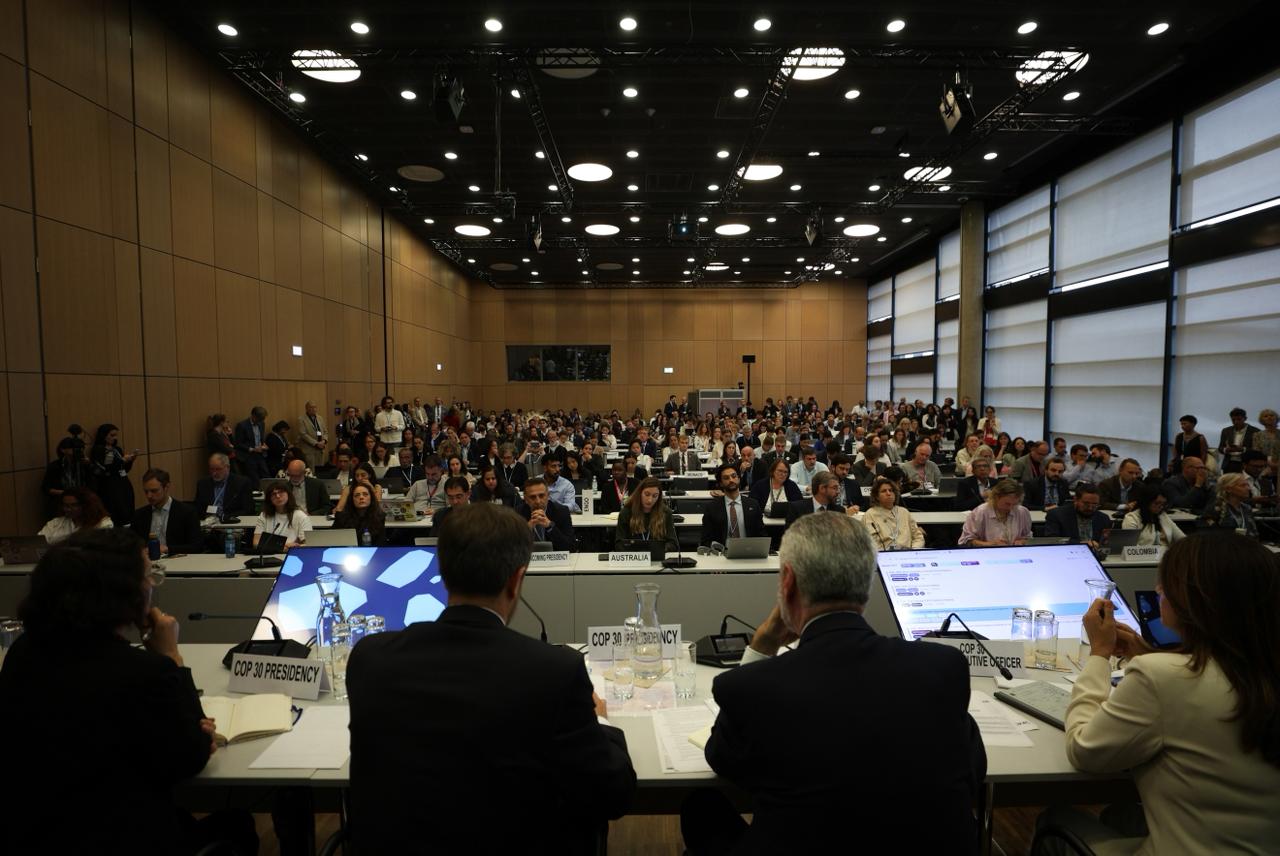
Before a packed audience on Friday afternoon (June 12) at the June meetings in Bonn, Germany, the COP30 Presidency presented key elements of its COP30 Presidency Roadmap for transitioning away from fossil fuels in energy systems, in a just, orderly and equitable manner, accelerating action in this critical decade, so as to achieve net zero by 2050 in keeping with the science.
The event marked another step in the development of the Roadmap, which will be presented ahead of COP31 in Antalya, Turkey. "This roadmap will be about implementation of a decision already taken, and it can come through many forms: individuals, businesses, groups of countries," COP30 President André Corrêa do Lago said. "The great thing about implementation is we are much freer to implement than to negotiate. Negotiation needs consensus; implementation does not."
The COP30 Presidency highlighted the breadth of stakeholder engagement throughout the process, noting the high number of contributions received (268), representing 115 Parties and 257 non-Parties, including UN-affiliated agencies, civil society, the private sector, and academia. The COP30 Presidency also participated in more than 50 dialogue sessions and ten conferences with sectoral representatives.
Participants at the Bonn event highlighted the COP30 Presidency's transparency and inclusiveness of the drafting process.
Premises and objectives
Drawing on the dialogue and contributions received, the COP30 Presidency identified a set of guiding principles for developing the roadmap. These include recognizing the diversity of national circumstances and transition capacities; ensuring the document remains flexible, non-prescriptive, and focused on practical implementation while supporting nationally determined pathways; adopting a multidimensional approach to understanding transition challenges and opportunities; and incorporating principles of just transition, inclusion, and common but differentiated responsibilities and respective capabilities.
Anchored in paragraph 28(d) of the first Global Stocktake, the Roadmap aims to support a transition away from fossil fuels in energy systems in a just, orderly, and equitable manner, accelerating action in this critical decade toward net zero emissions by 2050, in keeping with the science.
The Presidency also presented a diagnosis of the main barriers to implementation, grouped into four broad categories: economic and financial; technological and infrastructure-relatedl; institutional and governance-related; and social and political — each presenting issues that need to be addressed to accelerate the transition away from fossil fuels.
"The transition is irreversible. Ensuring it is just, fair, and orderly —but also fast enough to keep 1.5°C within reach— is a challenge, one that no country can face alone," the representative of Australia said, which will lead the formal negotiation process for COP31.
The representative of Türkiye, which will preside over COP31, highlighted elements of its agenda for Antalya, such as a global push for electrification, and reaffirmed its commitment to implementing the Global Stocktake. "We are confident that Antalya must be a COP that belongs to all Parties." He noted that Türkiye's contribution to the roadmap will rest on three components: country ownership, means of implementation, and process, taking into account the consensus-based framework under the Paris Agreement.
Parties and non-Party stakeholders at the session reinforced the premises and diagnosis presented by the COP30 Presidency, as well as the importance of developing a Roadmap to turn commitments into implementation. Among the most recurring themes were access to finance for the energy transition, the reduction of fossil fuel subsidies, recognition of differences between national contexts, the incorporation of justice and inclusion principles, and the need for actions to be consistently guided by the best available science.
Over the coming months, the COP30 Presidency will consolidate the contributions and prepare recommendations for the final version of the Roadmap. "This is a historic moment, and we hope to make history together with all of you," COP30 CEO Ana Toni said.