
COP30 Presidency discusses Roadmaps and Global Implementation Accelerator in Copenhagen
Held annually in the Danish capital, the ministerial was the final high-level gathering before the June UNFCCC negotiations in Bonn
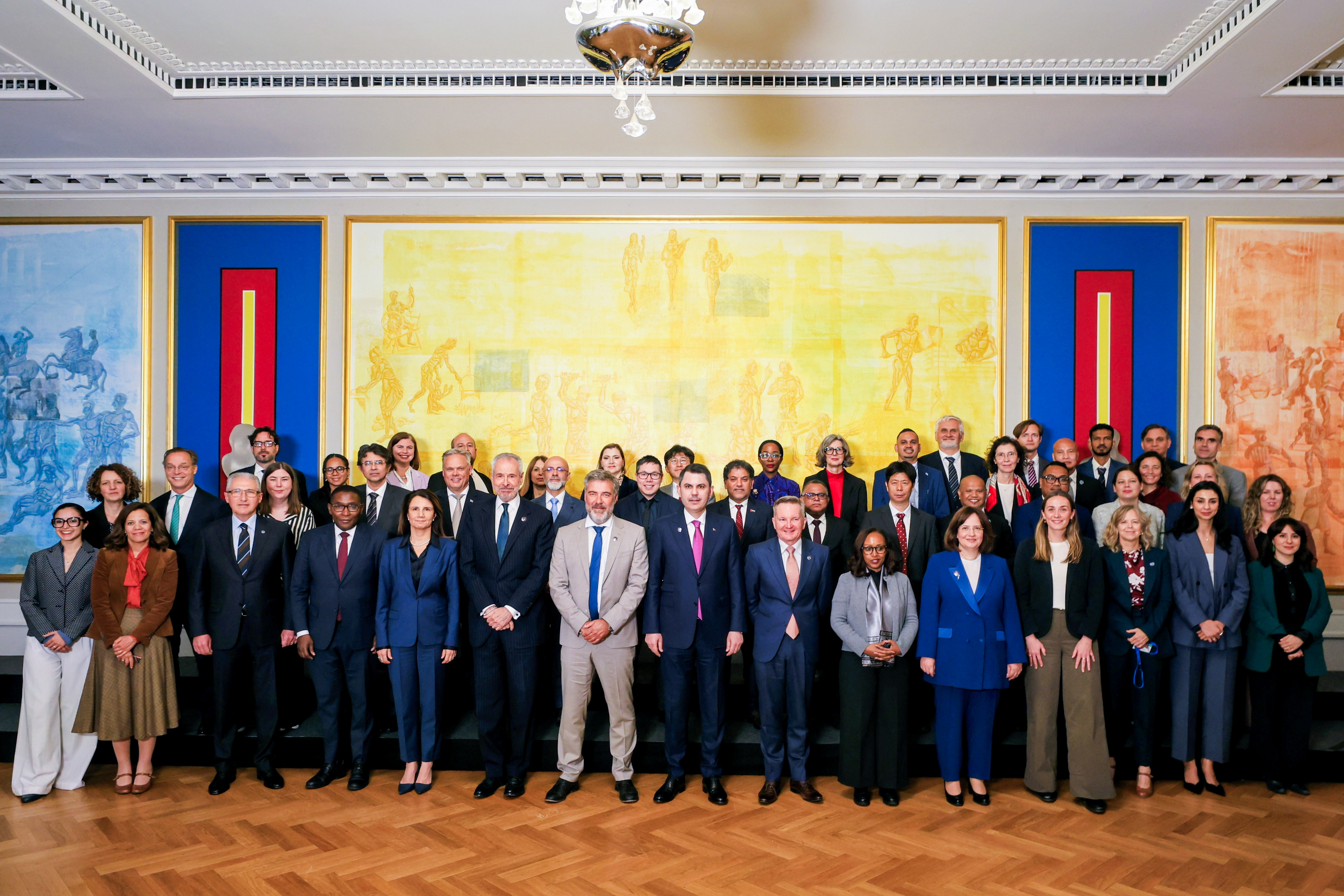
Representatives from around 40 countries participated this week in the Copenhagen Climate Ministerial in Denmark, the final high-level meeting before the June sessions of the subsidiary bodies of the United Nations Framework Convention on Climate Change (UNFCCC) in Bonn, Germany. The COP30 Presidency presented updates on the development of its roadmaps and, together with the COP31 Presidency, presented the proposal for the Global Implementation Accelerator.
“We have the tools, the technologies, and we know what must be done to keep temperatures from rising beyond 1.5°C. But we need to move much faster and at a much greater scale. We need resources, technology transfer, and stronger cooperation. All of this will be addressed in the COP30 Presidency Roadmaps on fossil fuels and deforestation,” said COP30 President André Corrêa do Lago.
The two roadmaps, the ambassador said, will help countries identify ways to transition away from fossil fuels and end and reverse deforestation and forest degradation by 2030, as agreed at COP28 in Dubai in 2023. More than 440 contributions were received for the documents in response to the consultation held between February and April.
“The COP30 Presidency is making every effort to bring the best available information to ensure that discussions on deforestation and fossil fuels are grounded in the strongest possible evidence. This will help ensure that the roadmaps developed are feasible and capable of accelerating climate action,” added the COP30 President.
The Brazilian delegation was led by Corrêa do Lago, COP30 CEO Ana Toni, and Ambassador Liliam Chagas, Director for Climate at the Ministry of Foreign Affairs’ Secretariat for Climate, Energy and Environment. Over the two days of sessions, discussions also addressed topics such as the implementation of Nationally Determined Contributions (NDCs), the future of the climate regime, and adaptation to the impacts of climate change.
Global Implementation Accelerator
In another panel, Ana Toni presented the preliminary proposal for the Global Implementation Accelerator, a voluntary cooperative mechanism whose creation was agreed under the COP30 “Mutirão” Decision. The initiative is being developed by Brazil, as the COP30 Presidency, together with Türkiye and Australia, co-presidents of COP31, and will be presented at this year’s climate conference in November.
“The Accelerator should serve as a mechanism to advance Action Agenda solutions with the greatest potential to trigger positive tipping points and generate cascading effects,” said Ana Toni. “The proposal is to accelerate solutions — such as technologies, procedures and methodologies — included in Plans to Accelerate Solutions across the different initiatives and objectives of the Action Agenda.”
The idea, which will continue to be discussed in Bonn and at subsequent meetings, is for an independent panel of experts to pre-select 10 to 15 Action Agenda solutions according to criteria to be defined by the COP Presidencies. This list would then be submitted to a council, which would choose three to five solutions each year to be accelerated.
“The Accelerator will complement the many other essential mechanisms within the implementation ecosystem,” the CEO stated. “Its added value is that it will focus exclusively on solutions with the potential to scale and generate cascading effects through high-impact exponential technologies.”
Climate regime
The Copenhagen Climate Ministerial has been organized for the past five years by the Danish government as an opportunity to advance issues that will be central in Bonn and at the COP, while also discussing climate multilateralism and its future direction. Ambassador Liliam Chagas highlighted two key points raised by countries:
“There is a perception that negotiations have become too broad, covering many different issues, and that they need to focus on what will truly help reduce greenhouse gas emissions,” she said. “A second perception was the confirmation that the regime is going through a transition phase — from negotiation and commitments toward implementation of what has already been agreed.”
According to the diplomat, ten years after the Paris Agreement, countries continue to uphold and strengthen commitments to develop climate policies, national adaptation plans, and to align global financial flows with the transition to a low-carbon economy. These ideas, she said, are converging toward simplifying the climate regime.
“There is a movement toward making negotiations more focused and better organized, so that countries can concentrate on advancing these areas,” she said.