
Alliance Presented in Bonn Accelerates Implementation of National Adaptation Plans
Transforming planning into action swiftly is essential to strengthening the resilience of populations in the face of the increasingly severe impacts of climate change
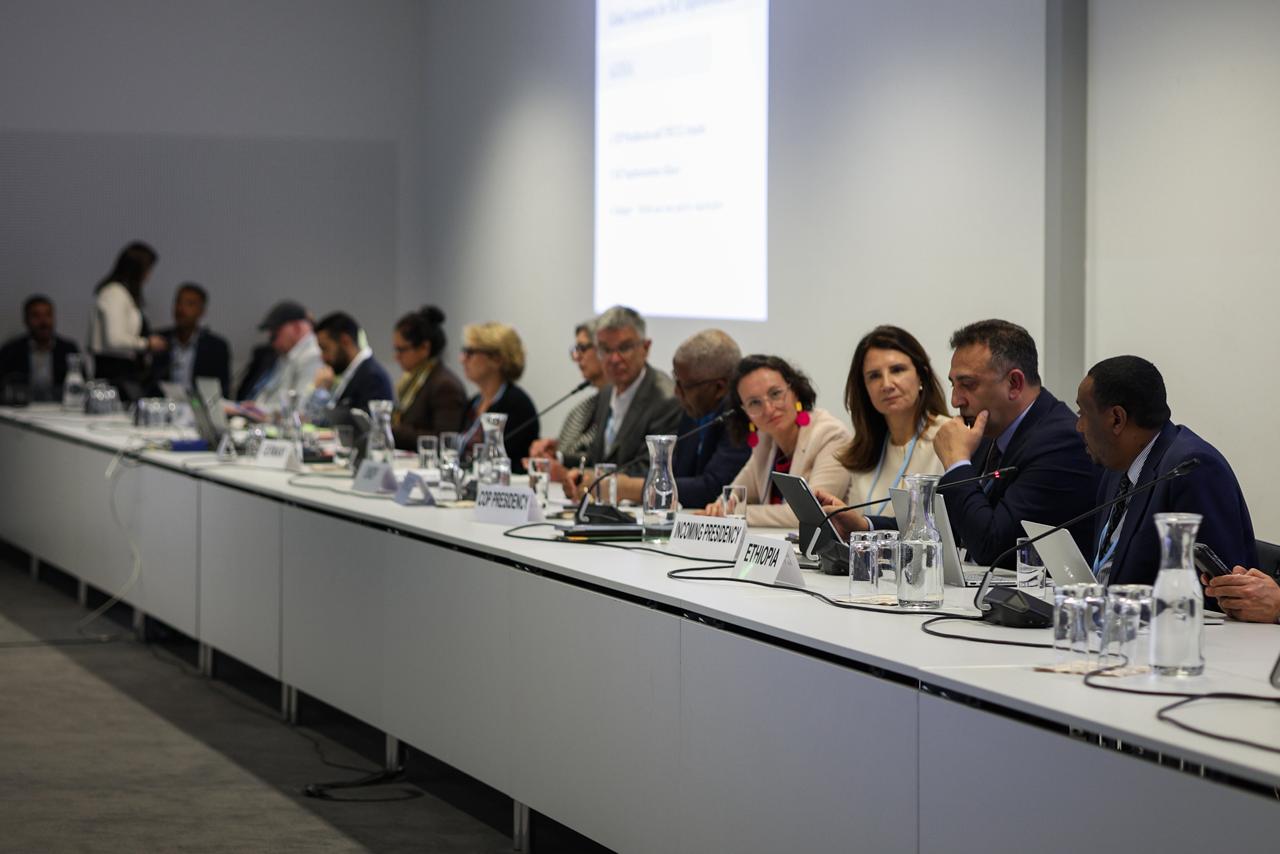
The need to translate National Adaptation Plans (NAPs) into concrete action was at the center of discussions on Thursday (11) in Bonn, Germany. “Mitigation (of greenhouse gas emissions) is essential, but we also need to move quickly on adaptation, because the impacts of climate change are already a reality for every country,” said COP30 CEO Ana Toni.
She participated in the presentation of the Alliance for the Implementation of National Adaptation Plans, an initiative led by the COP30 Presidency in partnership with the United Nations Development Programme (UNDP), the Government of Germany, and the Government of Italy.
The Alliance is open for membership. The CEO highlighted the importance of continuity in the adaptation agenda across upcoming United Nations climate conferences, noting the presence of representatives from the future presidencies of COP31 and COP32. Collective effort, she noted, will be essential to ensure that NAPs become effective instruments for protecting the populations most vulnerable to climate impacts.
The COP30 Presidency has been working to raise the profile of the issue, in both formal negotiations and the climate action agenda. In addition to establishing the Alliance, it advocates for strengthening the indicators of the Global Goal on Adaptation, increasing finance dedicated to adaptation, and encouraging the development and implementation of NAPs.
To date, seventy-six developing countries have submitted NAPs to the United Nations Framework Convention on Climate Change (UNFCCC). “NAPs cannot be seen merely as planning instruments, but above all as tools for translating strategies into concrete action on the ground,” she said. In this regard, the Alliance bridges the gap between planning and implementation — a key bottleneck in global climate adaptation. It is structured around three core objectives: fostering collaboration for NAP implementation, strengthening the enabling environment to mobilize adaptation investment and finance, and expanding private-sector engagement in this process.
Prioritisation
At the event, UNDP Senior Technical Advisor for Adaptation Policy and Planning Rohini Kohli also underscored the urgency of implementing national strategies. She described NAPs as “roadmaps for resilience,” guiding countries in reducing vulnerabilities and preparing for the impacts of climate change.
According to Kohli, by connecting governments, financiers, and technical partners, the Alliance can help navigate the obstacles that typically hinder implementation — such as fragmentation among the institutions supporting the plans and the difficulty of converting them into investment-ready projects. Another obstacle cited by the UNDP representative is the low political priority given to the adaptation agenda. International cooperation, as noted by other participants at the Bonn event, is one avenue for advancing in this area.
Heike Henn, Director for Climate, Energy and Environment at Germany’s Federal Ministry for Economic Cooperation and Development, said adaptation must remain at the heart of the global climate agenda. She stressed that the impacts of the climate crisis are already a reality and demand simultaneous action on mitigation and adaptation, and that international cooperation is essential for building an ecosystem capable of mobilizing resources, sharing experiences, and strengthening community resilience.
Federica Fricano, Director of European Affairs and International Climate Negotiation at Italy’s Ministry of Ecological Transition, noted that challenges stemming from the disconnect between national priorities and financing, combined with weak institutional coordination and limited access to technical support, constrain implementation. The new Alliance, she noted, has the potential to reduce fragmentation.
Challenges
Among the key demands raised by developing countries at the event was the need to strengthen methodologies for calculating the costs of adaptation measures. Another priority is expanding adaptation finance, particularly through public resources and non-reimbursable support instruments.
María Luisa Alonzo, Director of Climate Change at Uruguay’s Ministry of the Environment, noted that South American countries such as Argentina, Ecuador, Paraguay, and Uruguay already have national plans or sectoral strategies for adaptation across areas including infrastructure, cities, agriculture, and energy. “NAPs have been fundamental in identifying climate risks and impacts. We are now entering a phase where we need to translate these strategies into concrete projects,” she emphasized.
The Uruguayan representative noted that while private-sector participation is important, it is necessary to develop regional approaches that can respond to the different economic realities of countries.
Beyond financial and methodological aspects, participants emphasized the importance of building a new narrative around climate adaptation. The international debate, they noted, tends to focus on technical indicators and metrics, while the impacts of adaptation on people and communities receive comparatively less attention.