
Embrapa Hosts Expert Dialogues to Support Brazil’s Participation in COP30
“Dialogues for the Climate” Circuit debates climate change impacts on agri-food systems and the sustainability of Brazilian biomes
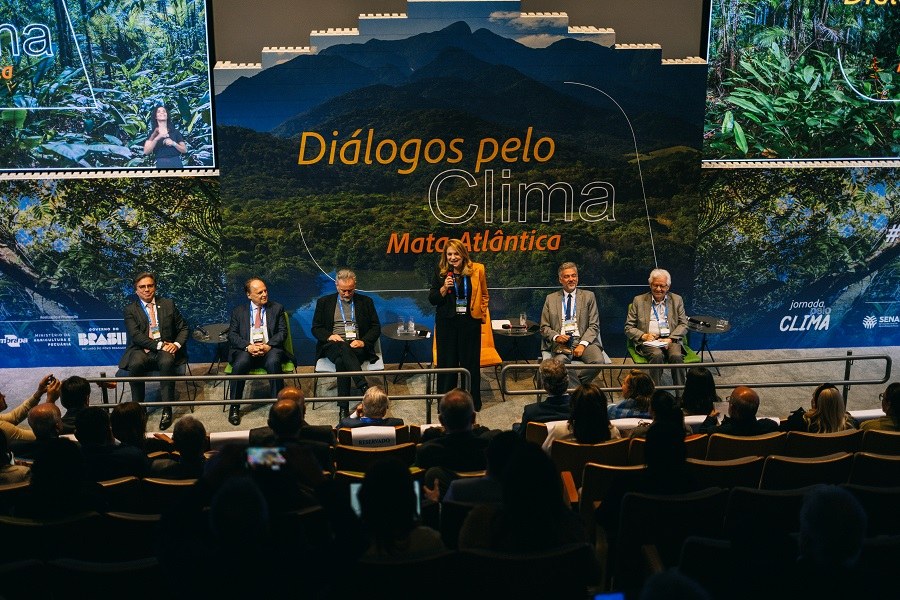
By the Brazilian Agricultural Research Corporation – Embrapa
COP30, taking place from November 10–21 in Belém (PA), will be strengthened by scientific knowledge produced by the Brazilian Agricultural Research Corporation (Embrapa). Through the Dialogues for the Climate series, Embrapa led a nationwide set of meetings to discuss the impacts of climate change on Brazil’s biomes and agri-food systems.
The discussions brought together experts, government representatives, producers, and civil society to provide input for Brazil’s participation in the conference and for the formulation of public policies aimed at sustainability. Each meeting focused on a specific biome, creating a comprehensive overview of Brazil’s perceptions and challenges in the face of the climate crisis. The discussions highlighted paths toward more sustainable agriculture and strategies for mitigation and adaptation to environmental impacts.
The series visited capitals representing Brazil’s key biomes. The first session took place in Brasília on May 7, and the final session in São Paulo on October 8. Other host cities included Cuiabá (MT), Corumbá (MS), Manaus (AM), Porto Alegre (RS), and Fortaleza (CE), addressing the Cerrado, Pantanal, Amazon, Pampa, Atlantic Forest, and Caatinga, respectively.
Based on these meetings, Embrapa is preparing a document consolidating the main contributions discussed during the Dialogues for the Climate. The material, to be submitted to the COP30 Presidency, will serve as guidance for Brazilian negotiators and as a tool for shaping public policies to tackle climate change.
Collective Responses
At the launch of the Dialogues for the Climate in May, Embrapa President Silvia Massruhá emphasized that climate change is a challenge requiring collective action — a principle actively pursued by Embrapa. She noted that while Brazil is among the countries most vulnerable to climate change, it also has the potential to lead global discussions on sustainable agriculture. “The climate crisis is both a challenge and a window of opportunity,” she said.
Clenio Pillon, Embrapa’s Director of Research and Development, stated at one meeting that addressing the climate crisis is impossible without consistent investment in science. According to Pillon, Brazil must form strategic alliances and integrate efforts to continue advancing both productivity and sustainability in agri-food and forestry systems. “We are talking about evidence that can support public policy, as well as gaps that agricultural research still needs to address,” he noted.
Pillon stressed the importance of these debates as input for Brazil’s participation in COP30, where the country can strengthen its role as a reference in conservation agriculture and renewable energy. “We are discussing evidence to inform public policies, and also gaps that agricultural research must focus on,” he noted.
Ana Euler, Director of Innovation, Business, and Technology Transfer at Embrapa and coordinator of pre-COP30 initiatives, highlighted the participation of producers, federal and local governments, universities, and traditional communities in discussions on bioeconomy, biodiversity, and building more resilient agri-food and forestry systems.
“The debates reinforce the need for investments in research and systematic data collection. We can only reduce uncertainties and risks if we have robust data. It is also essential to focus on those most vulnerable. All voices heard in these discussions should help inspire a positive climate agenda for Brazil and the entire planet,” Euler said.
Solutions
At the regional meetings, local representatives also contributed insights. Marcelo Behar, Coordinator of the Climate Governance and Development Forum at the Getulio Vargas Foundation (FGV) and COP30 Special Envoy for Biodiversity, emphasized that Brazil is among the countries with the greatest capacity to provide climate solutions globally.
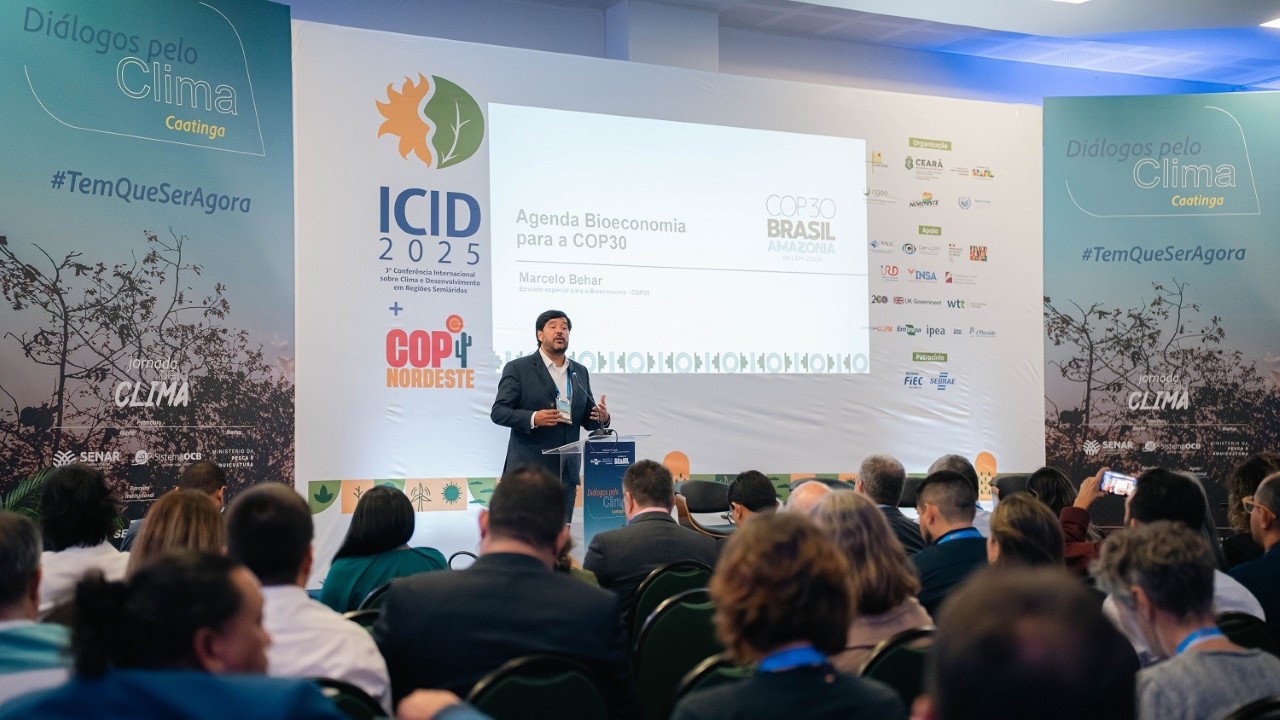
He pointed out that Brazil is not only highly motivated to reduce the impacts of global warming but also uniquely positioned to offer climate solutions worldwide. Behar highlighted the Caatinga as one of six Brazilian biomes fundamental for bioeconomy development. “We will work with forests, agriculture, socio-biodiversity value chains, biotechnology, and finance to ensure the future produces more and better, emits less, and restores nature,” he said.
Sérgio Xavier, Executive Coordinator of the Brazilian Climate Change Forum and representative for the Northeast among the 29 Special Envoys to COP30, also spoke at the Fortaleza event. He emphasized that current economic models drive greenhouse gas emissions, pollution, deforestation, and forest degradation.
According to Xavier, the priority is to invest in new regenerative and inclusive models, integrating technological innovations to align production processes with human needs and environmental sustainability. “The economy must fit within natural biogeochemical cycles. Natural, healthy, and just ways of life should guide business models,” he said.
Journey for the Climate
The Dialogues for the Climate series is part of Jornada pelo Clima (Journey for the Climate), a major Embrapa initiative showcasing the essential role of science in Brazilian agriculture for sustainable transformation.
The Journey is supported by master sponsors: National Rural Learning Service (Senar) and Brazilian Cooperative Organization (Sistema OCB); Diamond + Diamond sponsors: Ministry of Agrarian Development and Family Agriculture (MDA); Diamond + Gold sponsor: Nestlé; Diamond sponsors: Bayer and IICA; Gold + Local Biome sponsor: Caixa Econômica Federal; Biome sponsors: Ministry of Fisheries and Aquaculture (MPA); Showcase sponsors: Ministry of Development and Social Assistance, Family and Fight Against Hunger, Morfo, and OCP Brasil; institutional support: Canal Rural; institutional partnership: Sebrae. Sponsorship administration is handled by Faped.
Translation: Tadeu Azevedo (POET/UFC)
Proofreading: Michel Emmanuel Félix François (POET/UFC)