
COP30 secures carbon neutrality certification
Held in Belém, the conference obtained international carbon neutrality certification following an independent audit under the ISO 14068-1 standard. By measuring, reducing, and offsetting emissions, Brazil has reinforced its leadership within the global climate agenda

Following an exhaustive international audit, the 30th Session of the Conference of the Parties to the United Nations Framework Convention on Climate Change (COP30), hosted in Belém, Brazil, has been officially certified as a carbon-neutral event in compliance with the ISO 14068-1:2023 standard.
The achievement represents a watershed moment, meeting rigorous international benchmarks for quantifying, reducing, and offsetting greenhouse gas emissions through a transparent, highly structured process. As the world’s preeminent forum for climate discourse, COP30 now serves as a global benchmark for sustainability, bolstering both its institutional credibility and Brazil’s vanguard position in climate action.
The conference involved thousands of delegates from across the globe, necessitating a massive infrastructure and complex logistics. The certification confirms that every facet of the summit—from the international flight paths of delegates to the energy consumption at the local venues—was meticulously inventoried and mitigated.
According to Mr. Valter Correia, the Special Secretary for COP30, this milestone delivers a powerful message to the global community. “Achieving carbon neutrality, verified independently under ISO 14068, was a rigorous and challenging undertaking, yet essential to demonstrate our genuine commitment to a net-zero future. This achievement signals to the world the gravity with which we approach climate obligations.”
In addition to the carbon neutrality milestone, COP30 was awarded the Sustainable Event Management System certification last December, in accordance with the ABNT NBR ISO 20121:2024 standard.
"COP30 secured the ISO 20121 certification for its Sustainable Event Management System through an audit that confirms the robustness of a system capable of maintaining high standards even under adverse conditions. Simultaneously, the event’s carbon neutrality was verified according to the ISO 14068 standard, reinforcing Brazil’s commitment to sustainability and establishing a new precedent for global climate summits,” said Mr. Paulo Bertolini, Director of APCER Brazil, the body responsible for overseeing both certification processes.
CO2 offsetting
The Brazilian public bank CAIXA was responsible for offsetting 130,000 tons of CO2. These offsets originated from the CAIXA Solid Waste Program of Activities (PoA), certified by the UNFCCC under the Clean Development Mechanism (CDM). The program integrates energy efficiency and sustainability projects centered on the capture and utilization of methane gas, generating certified emission reductions subject to independent validation. This ensures the total traceability and credibility of the volume offset by COP30.
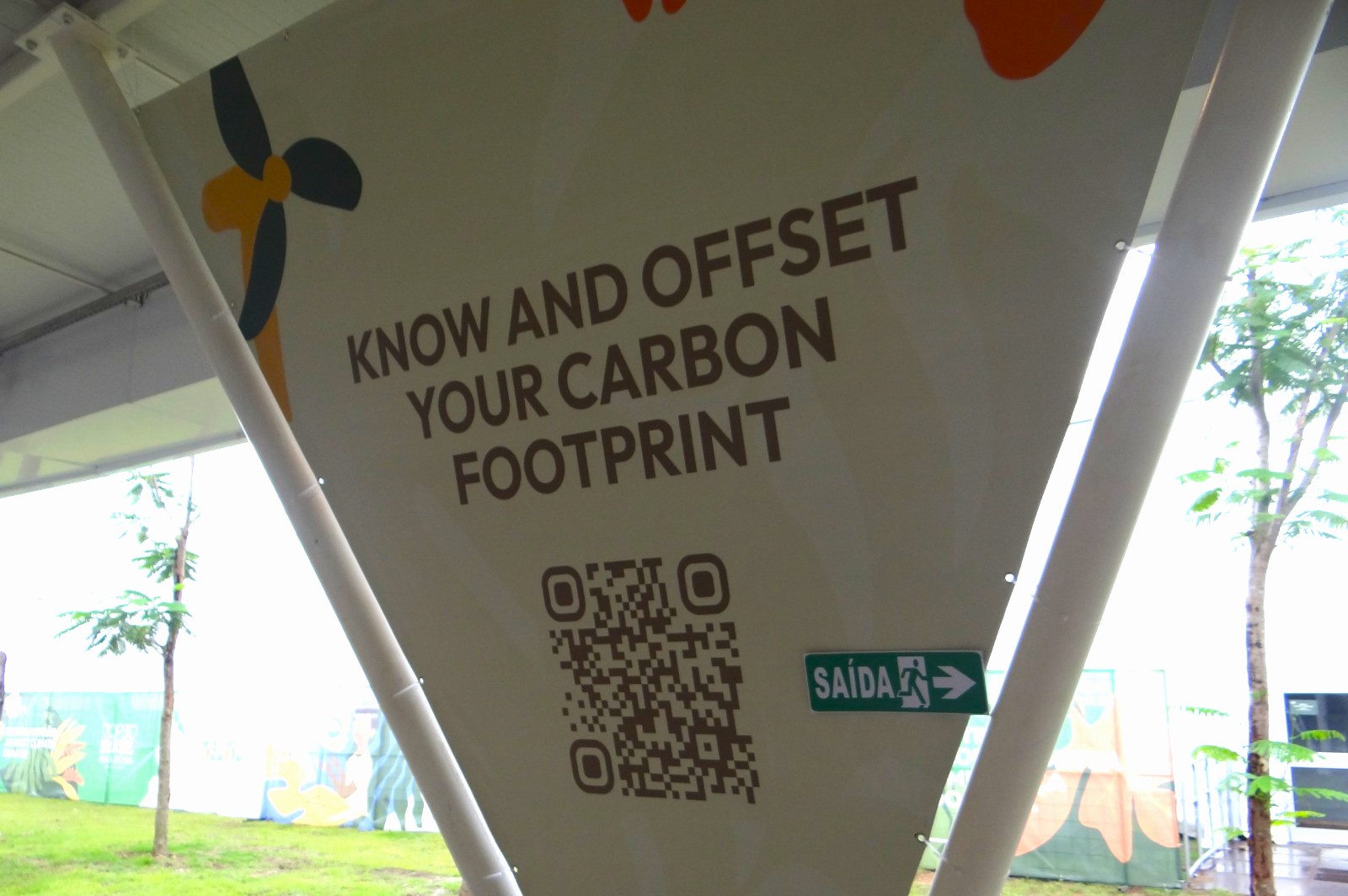
CAIXA also introduced a voluntary compensation platform for COP30 participants and visitors. Through this tool, attendees could estimate the carbon footprint generated by their air travel and perform voluntary offsets. The initiative deepened public climate engagement, offering a simple and transparent mechanism for individuals to contribute to the reduction of the event’s environmental impact.
Mr. Jean Benevides, CAIXA’s Director of Sustainability and Digital Citizenship, emphasized that the certification recognizes two decades of institutional effort. “Every year, international sustainability standards become more demanding, and CAIXA has positioned itself at the vanguard of the Brazilian financial system. We assumed the full responsibility of offsetting COP30 emissions as part of our mission to support the nation’s sustainable development. This achievement consolidates CAIXA as a strategic partner in building a climate agenda aligned with global best practices”.
Requirements of the ISO 14068-1:2023 Standard
Compliance with the ISO 14068-1:2023 standard requires the implementation of a rigorous process to monitor and manage GHG emissions, structured around three primary pillars:
- Quantification of Emissions: The emissions inventory must be comprehensive, detailing both direct and indirect emissions associated with the event. It should be based on internationally recognized criteria.
- Reduction: Define emission reduction targets and implement practical, measurable solutions that significantly reduce the event's carbon footprint.
- Offsetting residual emissions: For unavoidable emissions, the standard requires the use of verified, traceable, high-quality carbon credits to ensure offsetting is environmentally effective.
The carbon neutrality certification, coupled with the UN-certified offset of 130,000 tons of CO2 and the Sustainable Event Management certification, establishes COP30 as a global reference for technical rigor in organizing climate summits. The event sets a new standard for future international gatherings, proving that large-scale diplomacy can be conducted with environmental responsibility and a genuine commitment to carbon neutrality.
English version: Trad. Bárbara Menezes