

COP30 Presidency consolidates results in Antalya and charts paths to raise climate ambition
One year after Belém, the Brazilian COP30 Presidency presented the Roadmaps on fossil fuels and forests and the implementation report of the Baku to Belém Roadmap; established the Global Implementation Accelerator; launched the Belém Mission to 1.5 report; and showed concrete progress in the restructured Action Agenda. In the final negotiations, it is calling for greater climate ambition, justice and science-based decisions
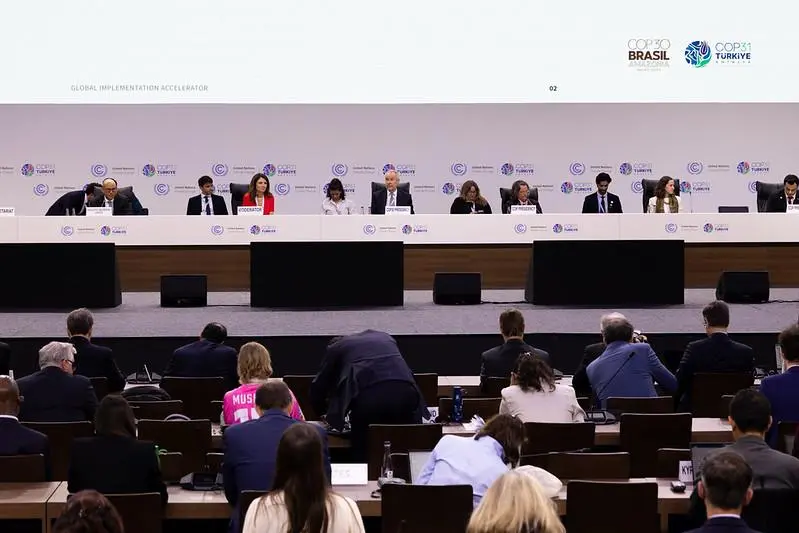
The COP30 Presidency reaches the end of COP31 with deliverables in each of the six priorities it set for 2026, building on the outcomes of Belém: the COP30 Presidency Roadmap for Transitioning Away from Fossil Fuels in Energy Systems, in a Just, Orderly and Equitable Manner; the COP30 Presidency Roadmap on Enhancing Efforts Towards Halting and Reversing Deforestation and Forest Degradation by 2030; the implementation report of the Baku to Belém Roadmap to US$1.3 Trillion; the strengthening of adaptation; the acceleration of the Global Climate Action Agenda; and the two initiatives mandated at COP30, the Global Implementation Accelerator and the Belém Mission to 1.5.
“Belém met the three challenges that President Lula had set for us: in the negotiations, in the participation of the many actors involved, and in implementation,” said COP30 President Ambassador André Corrêa do Lago as he handed over the Presidency to Türkiye at the opening of COP31 on 9 November. At COP31, the Brazilian Presidency showed how the third of these challenges – scaling up and accelerating the implementation of the Paris Agreement – is taking concrete shape.
Roadmaps: from consultation to implementation
Presented on 10 November with the participation of UN Secretary-General António Guterres, the COP30 Presidency Roadmap for Transitioning Away from Fossil Fuels in Energy Systems, in a Just, Orderly and Equitable Manner was built on 267 submissions received through a public consultation. The document concludes that the transition is “urgent, inevitable and yet possible” and proposes the Belém Readiness Index, which helps each country assess its starting point on demand, on supply and across the economy as a whole. “It is past time we stopped treating the transition away from fossil fuels as a taboo or something impossible,” said Guterres. COP30 CEO Ana Toni said: “Every country can do something for the transition away from fossil fuels, and it can start now”.
The Roadmap is already driving international dialogue on implementing the commitments made at COP28. In Glasgow, at COP26, seven events were held on transitioning away from fossil fuels; in Antalya, there were 82, including ministerial dialogues and press conferences at which countries presented progress and new commitments.
To date, seven countries have published national roadmaps – France, the Netherlands, Germany, Finland, Denmark, Ireland and Sweden – and another eight have announced they are preparing one: Luxembourg, Portugal, Spain, Brazil, Tuvalu, Switzerland, Belgium and Chad. Quebec, in Canada, announced a subnational roadmap, and the 16 Pacific Island countries announced a regional roadmap. Counting Tuvalu’s participation in both initiatives, 30 countries have already shown concrete progress on this agenda, forming a group that could grow and report results from COP to COP.
During COP31, Ana Toni also presented the Roadmap to the Santa Marta process, whose first conference brought together 57 countries and whose second edition will be held in 2027 in Tuvalu, with a preparatory stage in Ireland. On 18 November, at a ministerial dialogue convened by the Netherlands, Tuvalu and Ireland, Minister of Environment and Climate Change João Paulo Capobianco announced that Brazil’s National Energy Policy Council (CNPE) had approved guidelines to gradually reduce Brazil’s dependence on fossil fuels, paving the way for Brazil to present its national roadmap at COP32 in Ethiopia. The Minister also reiterated President Lula’s willingness to host a future edition of the international conference on the subject.
Presented at COP31 on 9 November, the COP30 Presidency Roadmap on Enhancing Efforts Towards Halting and Reversing Deforestation and Forest Degradation by 2030 brings together more than 180 submissions and organizes action along five dimensions: conservation; sustainable forest management, agroforestry and the bioeconomy; reducing forest degradation; reducing deforestation; and restoration, reforestation and afforestation. At the COP31 Leaders’ Summit on 11 November, President Lula highlighted that deforestation fell by around 70% in the Amazon and by almost 50% in the Cerrado between 2022 and 2026. Endorsed by 66 countries and the European Union, the Tropical Forest Forever Facility (TFFF) has already mobilized US$8.3 billion. The following day, the Ministry of Environment and Climate Change presented Brazil’s Roadmap to Halt and Reverse Deforestation.
The COP30 Presidency Roadmap on Forests is also mobilizing international civil society. On 18 November, more than 100 organizations, including representatives of Indigenous Peoples, local communities and research institutions, issued a joint call for the implementation of the global forest goals by 2030. The statement recognizes the leadership of the COP30 Presidency and calls for sustained political commitment and for an inclusive, multi-stakeholder implementation process through 2030, with the effective participation of Indigenous Peoples, local communities, people of African descent and other rights holders. The mobilization remains open to new organizations.
The COP30 Presidency’s work was recognized by the Climate Action Network (CAN), which awarded Brazil the “Ray of the Day” on 10 November for its efforts to translate the outcomes of the first Global Stocktake into concrete pathways for implementation.
Finance: from Baku to Belém
In the Global Mutirão Decision adopted at COP30, Parties decided to “urgently advance actions to enable the scaling up of climate finance to developing countries, from all public and private sources, to at least US$1.3 trillion per year by 2035.” To support this stage, on 8 November the COP30 Presidency launched its report on Implementing the Baku to Belém Roadmap to 1.3T, which builds on the Roadmap presented jointly by the COP29 and COP30 Presidencies in November 2025. The document shows that concrete financial trajectories and public policy interventions can raise climate finance for developing countries to between US$1.27 trillion and US$1.41 trillion per year by 2035. If current trends continue, international climate finance would reach no more than US$458 billion to US$461 billion per year.
The report focuses on six sources: concessional finance, private investment, South-South cooperation, the rechanneling of special drawing rights, innovative mechanisms and carbon markets. To support implementation, it presents the 5x5 Implementation Framework, developed with the Independent High-Level Expert Group on Climate Finance (IHLEG), and the Climate Finance Action Compass, which tracks progress across four dimensions: scale, speed, reach and impact. In the foreword, Ambassador Corrêa do Lago writes that “the evidence exists, the instruments are known.” The report was discussed on 13 and 14 November in the Blue Zone and at the Brazil Pavilion.
Together, the two Roadmaps and the Report address complementary dimensions of global climate implementation. At the COP31 Leaders’ Summit, President Lula called for all three documents to be carried forward: “We count on the leadership of Türkiye and Australia to ensure that the recommendations contained in these documents are disseminated and incorporated into the next Global Stocktake.”
Adaptation at the top of the agenda
On 10 November, the COP30 Presidency co-chaired, alongside the COP31 Presidency and the COP31 Presidency of Negotiations, the Baku High-Level Dialogue on Adaptation. The meeting set as a priority the definition of a roadmap to deliver on the commitment in the Global Mutirão Decision to at least triple adaptation finance by 2035 relative to baseline levels, with a view to reaching at least US$120 billion per year.
On 14 November, the National Adaptation Plans Implementation Alliance (NIA), launched in Belém by the COP30 Presidency in partnership with the United Nations Development Program (UNDP), presented its first progress update: 30 members and 52 expressions of interest. On that occasion, COP30 CEO Ana Toni handed over the chairmanship of the Alliance’s Steering Committee to the COP31 Presidency. “The NIA is the way to keep adaptation at the top of the political agenda at every COP,” she said. To date, 95 countries have submitted their National Adaptation Plans. On 19 November, COP30 Program Director Alice Amorim opened a UNDP event dedicated to turning these plans into investment.
Belém initiatives up and running
Created by consensus at COP30, the two mandated initiatives got off the ground in Antalya. On 13 November, the Presidencies of COP30 (Brazil), COP31 (Türkiye) and the COP31 Negotiations (Australia) established the Global Implementation Accelerator. Each year, the Accelerator will give global visibility to two high-impact climate solutions with the potential to trigger positive tipping points, and will invite industry, financiers and civil society to help them scale. The first selection is planned for the first half of 2027, and the effort will culminate in an annual “acceleration summit.” The Steering Committee brings together successive COP Presidencies, including that of COP32 (Ethiopia), as well as the High-Level Climate Champions, heads of multilateral development banks and the Green Climate Fund.
On 16 November, the Belém Mission to 1.5 Report was launched, prepared jointly by the COP29, COP30 and COP31 Presidencies on the basis of more than 140 submissions. The document identifies solutions in energy, industry, agriculture, forests, oceans, health and cities, with a strong focus on clean energy and electrification. “The Belém Mission to 1.5 Report carries a message of possibility. Many solutions are already delivering results,” said Ana Toni.
An Action Agenda with measurable results
At COP30, the Global Climate Action Agenda was reorganized into six thematic axes and 30 objectives, entirely based on the first Global Stocktake, and its coalitions presented 120 Plans to Accelerate Solutions (PAS). In Antalya, this structure was consolidated as the platform for implementation at COPs.
According to the 2026 Yearbook of Global Climate Action, action is moving in the right direction on 16 of the 30 objectives, and 87% of the PAS presented in Belém have made progress. Around 190 countries take part in at least one Action Agenda initiative. Among the deliverables, climate-resilient debt clauses already total US$6.1 billion across seven countries, and 65 industrial plants have reached final investment decision, above the target of 50. Progress remains uneven, however, with energy efficiency, methane from the oil and gas sector, and adaptation finance still lagging.
Initiatives launched in Belém have also gained scale. The Belém Declaration on Hunger, Poverty and People-Centred Climate Action grew from 43 to 50 countries, the Intergovernmental Land Tenure Commitment (ILTC) reached 17 countries and one subnational jurisdiction, and the Super Pollutant Country Action Accelerator reached US$ 50 million. At the Leaders’Summit on Methane and Other Non-CO2 Greenhouse Gases, co-hosted by Brazil, more US$ 480 million was announced.
The structure of the Action Agenda also continues to evolve. The addition of new Plans to Accelerate Solutions (PAS) brought the total to 136. Nine Climate Weeks signed a joint declaration signaling their intention to adopt the six axes of the Action Agenda as a common language for their events. The COP31 Electrification Delivery Package, coordinated by the Energy Transition Axis Activation Group, showed the new structure in action. In another symbolic moment, COP30 High-Level Climate Champion Dan Ioschpe passed the baton to his COP31 successor, Samed Ağırbaş.
At the official closing of the Action Agenda at COP31 on Thursday (19 November), COP30 CEO Ana Toni summed up the year: “COP30 began a process of restructuring the Action Agenda, COP31 consolidated it, and now implementation becomes a central part of the COPs.”
People at the center
Social participation, a hallmark of COP30, was also present in Antalya. The Global Ethical Stocktake (GES), launched by President Lula and UN Secretary-General António Guterres, has entered a new phase. After mobilizing some 13,000 people in 43 countries through 125 self-organized dialogues and six regional dialogues, the initiative is working to bring ethical considerations into the second Global Stocktake, which will conclude in 2028.
On 17 November, Marcele Oliveira concluded her term as COP30 Youth Climate Champion, leaving a legacy of greater youth participation in COPs, with around 4,000 young people directly involved and a platform connecting young people from 46 countries to the Action Agenda. The Special Envoys, members of the COP30 Circles and the Youth Climate Champion also took part in an event with UNDP on the lessons of Belém for inclusive climate action. They also held dialogues on the protection of environmental defenders, building on the Sumaúma Tree of Commitments for Human Rights-Based Climate Action launched in Belém, and on the implementation of the International Court of Justice Advisory Opinion on climate change.
Science and ambition on the road to the 2nd Global Stocktake
In Antalya, the COP30 Presidency reaffirmed its commitment to science and to the scientific leadership of the Intergovernmental Panel on Climate Change (IPCC) at the event that launched the process of the second Global Stocktake (GST2) of the Paris Agreement. The first Global Stocktake (GST1) made it possible, for the first time, to collectively assess, on the basis of scientific evidence, the progress made since the adoption of the Paris Agreement. Its conclusion was clear: the world has moved away from the worst warming scenarios, but is still far from meeting its climate goals. GST2 will take place in a context of overshoot of the 1.5°C limit, making it even more urgent to minimize the magnitude and duration of that period. For the Brazilian Presidency, the process must rely on science to guide concrete decisions on mitigation, adaptation and means of implementation.
“The IPCC’s seventh cycle is vital for GST2, but also beyond the UNFCCC: for the private sector, subnational governments and civil society. We cannot make decisions blindly,” said Ana Toni. The CEO stressed that the new Global Stocktake should answer, with honesty and transparency, whether collective efforts are putting the world on track to meet the Paris Agreement, identifying progress and obstacles. Its outcomes should provide solid guidance for the next cycle of Nationally Determined Contributions (NDCs), strengthening the link between scientific evidence, multilateral decisions and implementation.
In the final hours of COP31, the COP30 Presidency remains engaged in the negotiations, firmly determined to build on the consensus reached in Belém and enshrined in the Global Mutirão Decision, preserving and raising ambition on mitigation and adaptation. The Brazilian Presidency also reaffirms the moral imperative of ensuring social participation and defending the rights and needs of the populations and territories most vulnerable to the impacts of climate change, especially in the face of overshooting 1.5°C. The legacy of Belém is measured not only by the commitments made, but by the capacity to turn them into action, with urgency and justice, with science as the foundation of decisions.