

The Global Implementation Accelerator is established
Brazil, Türkiye and Australia establish the initiative’s governance and partner network to scale two high-impact climate solutions a year, with the first selection expected in the first half of 2027
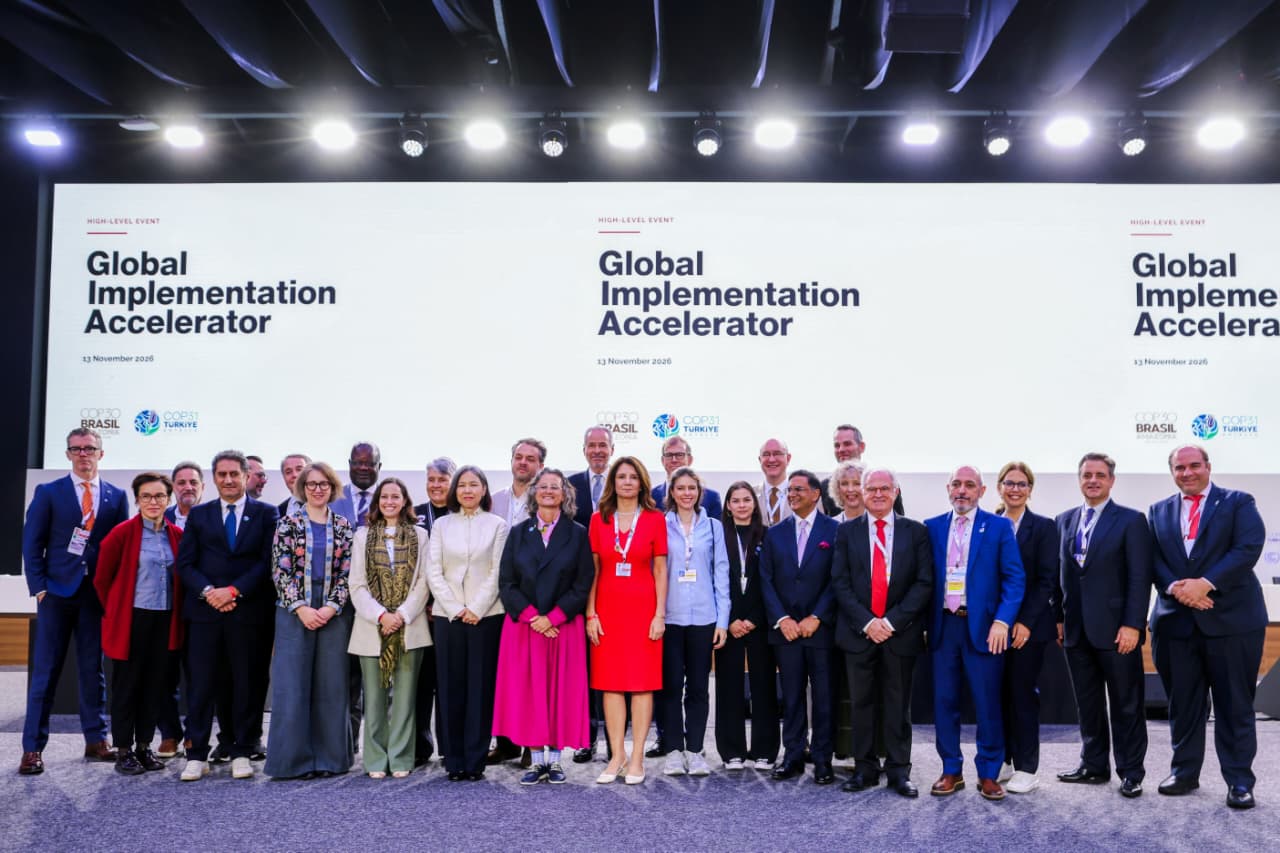
ANTALYA, November 13, 2026 – The COP30 Presidency (Brazil), the COP31 Presidency (Türkiye) and the COP31 Presidency of Negotiations (Australia) established the Global Implementation Accelerator today, one year after Parties to the Paris Agreement launched the initiative at COP30 in Belém.
The initiative was launched through the Global Mutirão decision to accelerate climate action across all actors, support countries in implementing their national climate plans, and help keep 1.5°C within reach while building resilience.
Each year, the Accelerator will shine a global spotlight on two high-impact solutions, and invite industry, financiers, and civil society to support those solutions to scale. This diplomatic effort leverages the joint influence of successive COP Presidencies and will culminate in an annual ‘acceleration summit’.
At a high-level event at COP31, the Presidencies presented the Accelerator’s operational model, including key functions to guide its operation in 2027 and beyond.
For an overview of how the Accelerator will work, including its structure, governance, selection criteria, timeline and partners, download the presentation.
The Accelerator’s solutions will be selected through a competitive process based on their ability to trigger positive tipping points – a system change where wider adoption begins to reinforce itself, allowing solutions to spread faster and more widely.
They will be selected by a Steering Committee, on the advice of an Independent Group of Experts, both of which were formally established today.
Background information
Steering Committee – The Accelerator's decision-making body brings together the COP30 Presidency (Brazil), the COP31 Presidency (Türkiye), the COP31 Presidency of Negotiations (Australia), the incoming COP32 Presidency (Ethiopia), the COP31 HighLevel Climate Champion, the COP32 High-Level Champion (once appointed), the Group of Heads of Multilateral Development Banks, and the Green Climate Fund. The Coalition of Finance Ministers has also been invited and is consulting with its members on participation.
Independent Group of Experts – Five pairs of experts were selected for their credentials across complementary fields: climate impact (Hu Min and Debra Roberts), systems dynamics (Tim Lenton and Michael Greenstone), multilateral cooperation (Jennifer Morgan and Arunabha Ghosh), development and finance (Avinash Persaud and Amir Lebdioui), and private-sector finance (Catherine McKenna and Dan Ioschpe).
Coordination Hub – The Accelerator will be supported day-to-day by a Secretariat, which will be housed by the Climate Champions Team. The Champions facilitate the Global Climate Action Agenda, which brings together initiatives and coalitions to cut emissions, strengthen resilience, and support the shift to sustainable economies.
Partner Network – A group of influential organizations have pledged to support the Accelerator as partners. Proposed contributions from inaugural partners include highlevel convenings, investment readiness to delivery capacity in around 170 countries, financing, connections with businesses and sectoral and subnational coalitions worldwide, and open-source digital tools for cities, among many others. The network remains open to institutions interested in joining, which can submit offers of support anytime.
Partners and their offers of support – as well as the final report with the Blueprint of the Accelerator – can be found on UNFCCC official website