

COP Presidencies and partners strengthen alliance for adaptation implementation
At COP31, Brazil, Türkiye, Ethiopia, UNDP, Italy, Germany and a growing network of partners reaffirmed their commitment to helping countries turn National Adaptation Plans (NAPs) into concrete action, accessible financing and stronger resilience for communities
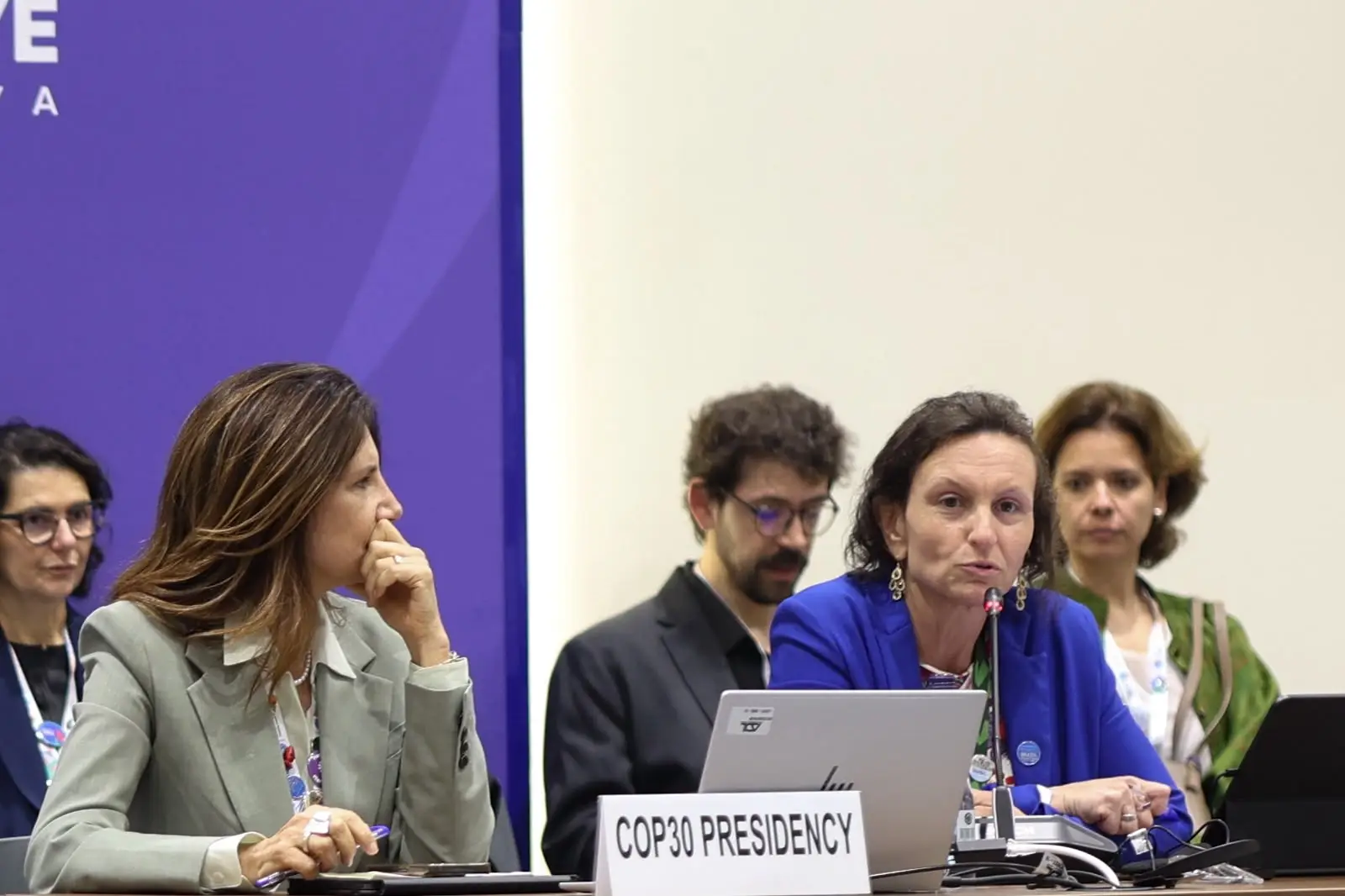
As floods, droughts and extreme heat threaten lives and livelihoods around the world, countries face an increasingly urgent challenge: translating their climate adaptation plans into action that protects people, infrastructure and economies. At COP31, COP Presidencies brought together governments, financial institutions, technical organizations and civil society to strengthen a collaborative effort designed to help countries meet that challenge.
The high-level event, The Power of Collective Action: Accelerating National Adaptation Plans Implementation, held last Saturday (14), highlighted the progress of the NAP Implementation Alliance (NIA), launched at COP30 in Belém by the COP30 Presidency in partnership with the United Nations Development Programme (UNDP), Italy and Germany.
National Adaptation Plans (NAPs) help countries identify climate risks and prioritize responses, from protecting coastal communities and strengthening early warning systems to securing water supplies and making agriculture more resilient. According to the UNFCCC's NAP Central, 95 countries have submitted or shared NAPs, including 83 developing countries and 12 developed countries. The growing challenge is to ensure that these plans translate into concrete action by mobilizing the institutions, technical expertise and financing needed to implement countries' adaptation priorities.
"Now we have to change focus into implementation," said Mokoena France, Chair of the Least Developed Countries Expert Group (LEG). Presenting the findings of the 2026 NAP Progress Report, he identified four critical areas requiring coordinated support: preparing projects for financing, connecting countries with capable implementation partners, expanding access to accredited institutions, and strengthening capacity throughout the delivery cycle, including after financing has been approved. His intervention underscored that completing a NAP is an important milestone, but countries also need the means to translate their priorities into measurable resilience outcomes.
The urgency. The United Nations Environment Programme's 2026 Adaptation Gap Report estimates that developing countries will need approximately US$305 billion annually for adaptation by 2035. Yet international public adaptation finance from developed to developing countries reached only US$28.2–31.7 billion in 2024. Even if the aspiration to triple adaptation finance by 2035, established at COP30, is achieved, these flows would cover just 20–29% of estimated needs.
Sustaining political leadership from Belém to Antalya and Addis Ababa
Opening the event, Ana Toni, CEO of the COP30 Presidency and now former chair of NIA's Steering Committee, emphasized that adaptation must remain a political priority beyond individual climate conferences. "NIA is how we keep adaptation at the top of the political agenda in every COP," she said.
Toni highlighted the progress made under the Paris Agreement, including the adaptation targets adopted in Dubai, the Baku Adaptation Roadmap and the advances achieved at COP30 in Belém. She stressed that the Alliance's strength depends on the engagement of institutions already working on adaptation, bringing together governments, financial institutions, technical partners and communities.
The participation of three consecutive COP Presidencies —Brazil, Türkiye and Ethiopia— reinforced the importance of continuity. Türkiye will take over the chair of NIA's Steering Committee in its next cycle, while Brazil will remain engaged through its Ministry of the Environment and Climate Change.
Speaking on behalf of the COP31 Presidency, Orhan Solak, Deputy Head of Türkiye's Directorate of Climate Change, identified three priorities: connecting national plans with local action, expanding access to adaptation finance, and strengthening international cooperation and knowledge exchange. "The future of adaptation will not be determined by how many plans we develop, but by how effectively we implement them," he said.
Representing the COP32 Presidency, Binyam Yakob Gebreyes, Senior Strategic Advisor, COP32 Presidency (Ethiopia), called for an international support system better aligned with countries' priorities and circumstances. "The system needs to work around countries' priorities and not the other way around," he said.
Gebreyes highlighted the need to connect climate and finance ministries, development banks, funds, technical partners and the private sector. He argued that progress toward COP32 in Addis Ababa should be measured by stronger investment pipelines, financing that reaches countries, and communities better equipped to withstand climate impacts, not simply by new meetings or initiatives.
Connecting countries with the support they need
The NAP Implementation Alliance was created to bring greater coordination to the existing adaptation support ecosystem, rather than establish another institution or duplicate ongoing efforts.
Alice Amorim, COP30 Presidency program director, presented progress made since the Alliance's launch in Belém. NIA had received 52 expressions of interest, with 30 organizations and countries already joining as members. Burundi, Liberia, Moldova, Palau and Sierra Leone were among the countries that had recently expressed interest in participating. "This alliance is built by many brains and many hands," Amorim said, recognizing the contributions of the institutions and experts involved.
With its Secretariat hosted by UNDP Climate Promise, NIA will facilitate cooperation among countries, technical assistance providers, financing institutions and other partners. Planned activities include matching countries with potential support providers, exchanging implementation experiences and identifying gaps in existing assistance. The discussion illustrated why these connections matter. Moderating the country-level discussion, Rohini Kohli, Senior Technical Advisor, Climate Change Adaptation Policy and Planning at the United Nations Development Programme (UNDP), invited countries to identify three priority actions that could make the greatest difference in moving from adaptation planning to implementation over the next 12 months.
Aloisio Lopes Pereira de Melo, Brazil's National Secretary for Climate Change, described Brazil's experience in developing an adaptation plan with 16 sectoral and thematic strategies. He highlighted the importance of clear responsibilities, measurable targets and information that allows local governments to translate national priorities into action, including through the AdaptaCidades initiative.
Bertine Rose Lakjohn, National Adaptation Plan Coordinator with the Climate Change Directorate of the Republic of the Marshall Islands, and Joyce Kaino, Assistant Director, Climate Change, Kenya’s Ministry of Environment, Climate Change and Forestry, also described the practical challenges of implementing NAPs, including limited institutional capacity, difficulty accessing finance, and the need for better climate information, project preparation and coordination across levels of government.
Technical partners bring expertise to accelerate adaptation
A wide range of technical assistance providers presented their contributions to helping countries turn adaptation priorities into action. Moderated by Orville Grey, Head of Secretariat of the NAP Global Network, the discussion brought together organizations working across key sectors, including children's well-being, water security, agriculture, investment preparation and institutional capacity-building.
Gernot Laganda, Director, Climate and Environment Global Practice at UNICEF, emphasized the importance of translating adaptation commitments into safer schools, more resilient health services and reliable water supplies for children. Ingrid Timboe, Deputy Executive Director and Senior Policy Specialist at the Alliance for Global Water Adaptation (AGWA), described efforts to integrate climate-resilient water management into national and local planning, including cooperation with Brazilian institutions.
Martial Bernoux, Senior Natural Resources Officer at the Office of Climate Change, Biodiversity and Environment (OCB) of the Food and Agriculture Organization of the United Nations (FAO), presented support for adaptation across agriculture and food systems, including the joint FAO–UNDP SCALA programme and initiatives that connect local communities with national adaptation priorities.
Amanda McKee, Director of Knowledge and Learning at the NDC Partnership, pointed to persistent gaps between countries' requests for adaptation support and the assistance available, particularly in developing investment-ready projects. Nicholas Taylor, Lead for Adaptation and Resilience at the Global Green Growth Institute (GGGI), highlighted the importance of connecting national plans with project preparation, financial structuring and investment pipelines.
Together, these contributions illustrated NIA's approach: connecting specialized capabilities across institutions so that countries can access more coherent support throughout the implementation process, from understanding climate risks and identifying projects to mobilizing finance and measuring results.
International cooperation to turn priorities into investment
The Alliance's founding partners reaffirmed their commitment to mobilizing technical expertise and financial support for country-led adaptation. Alessandro Guerri, Director General for International and EU Affairs, Ministry of the Environment and Energy Security (Italy), emphasized the importance of "turning political commitment into concrete action in countries and towards their communities."
Guerri highlighted the Adaptation Accelerator Hub, promoted during Italy's G7 Presidency with UNDP's technical and operational support. The Hub helps countries translate adaptation priorities into investment strategies and project pipelines. He pointed to its complementarity with NIA, which can connect that operational experience with a wider network of technical assistance providers, financial institutions and other partners.
Ulf Jaeckel, Head of Division, International Adaptation, Federal Ministry for the Environment, Climate Action, Nature Conservation and Nuclear Safety (Germany), stressed that "climate change is felt at the local level." He outlined Germany's experience supporting adaptation planning by municipalities and vulnerable communities, alongside its international cooperation with developing countries. Jaeckel welcomed the initiative led by the COP30 Presidency and confirmed Germany's continued commitment to NIA, involving both its environment and development cooperation ministries.
"Adaptation is complex, it is context-specific, it is not a one-off project, it's a process," said Arghya Sinha Roy, Director of Climate Change Adaptation and Resilience at the Asian Development Bank (ADB), emphasizing the need for comprehensive support, from climate-risk assessment and project preparation to financing and implementation. Manish Bapna, President and Chief Executive Officer of the Natural Resources Defense Council (NRDC), representing the Secretariat of FINI, an initiative led by the Atlantic Council and NRDC to mobilize investment in adaptation, moderated the discussion on financing and private sector engagement, highlighting the importance of making adaptation projects more investable. Sinha Roy presented a new partnership among multilateral development banks to scale up adaptation investments, alongside ADB's support to 13 countries in translating National Adaptation Plans into investment plans. Representatives of the Green Climate Fund (GCF) and the Inter-American Development Bank (IDB) also discussed how stronger coordination through NIA can help countries access finance and turn adaptation priorities into investable projects.
IDB also introduced the LAC Adaptation Mainstreaming Accelerator (AMA-LAC), launched at COP31, a regional mechanism to help country-led adaptation priorities in Latin America and the Caribbean mature into financing-ready project packages, complementing and strengthening the impact of the IDB Group’s Ready and Resilient Americas initiative.
UNDP, which will host the Alliance Secretariat through Climate Promise, emphasized the importance of building on existing initiatives and avoiding fragmentation. UNDP's Climate Promise has already supported more than 60% of the National Adaptation Plans submitted by developing countries, providing an established foundation for further collaboration.
"You have our commitment to connect those dots," said Cassie Flynn, UNDP's Global Director of Climate Change, referring to the institutions, initiatives and partnerships represented at the event. The discussions underscored a common objective: making technical assistance, project preparation and financing easier to access, while keeping countries' adaptation priorities at the center of international cooperation.
Join the NAP Implementation Alliance
The NAP Implementation Alliance is open to national and subnational governments, multilateral organizations, climate funds, development banks, investors, philanthropies, technical assistance providers, research institutions, civil society organizations and private sector actors committed to accelerating adaptation implementation.
Participating organizations can exchange knowledge and practical experience, identify collaboration opportunities, contribute technical expertise and help countries mobilize support for their National Adaptation Plans.
Interested institutions can join through the membership form on the NAP Implementation Alliance website.
For additional information, contact the NIA Secretariat at nia.secretariat@undp.org.
Watch the full high-level event COP31