

President Lula Concludes Visit to Türkiye, Celebrates COP30 Legacy
“Brazil will become the world’s most committed country to environmental protection,” President Lula said during a meeting with civil society representatives at COP31 in Antalya, Türkiye
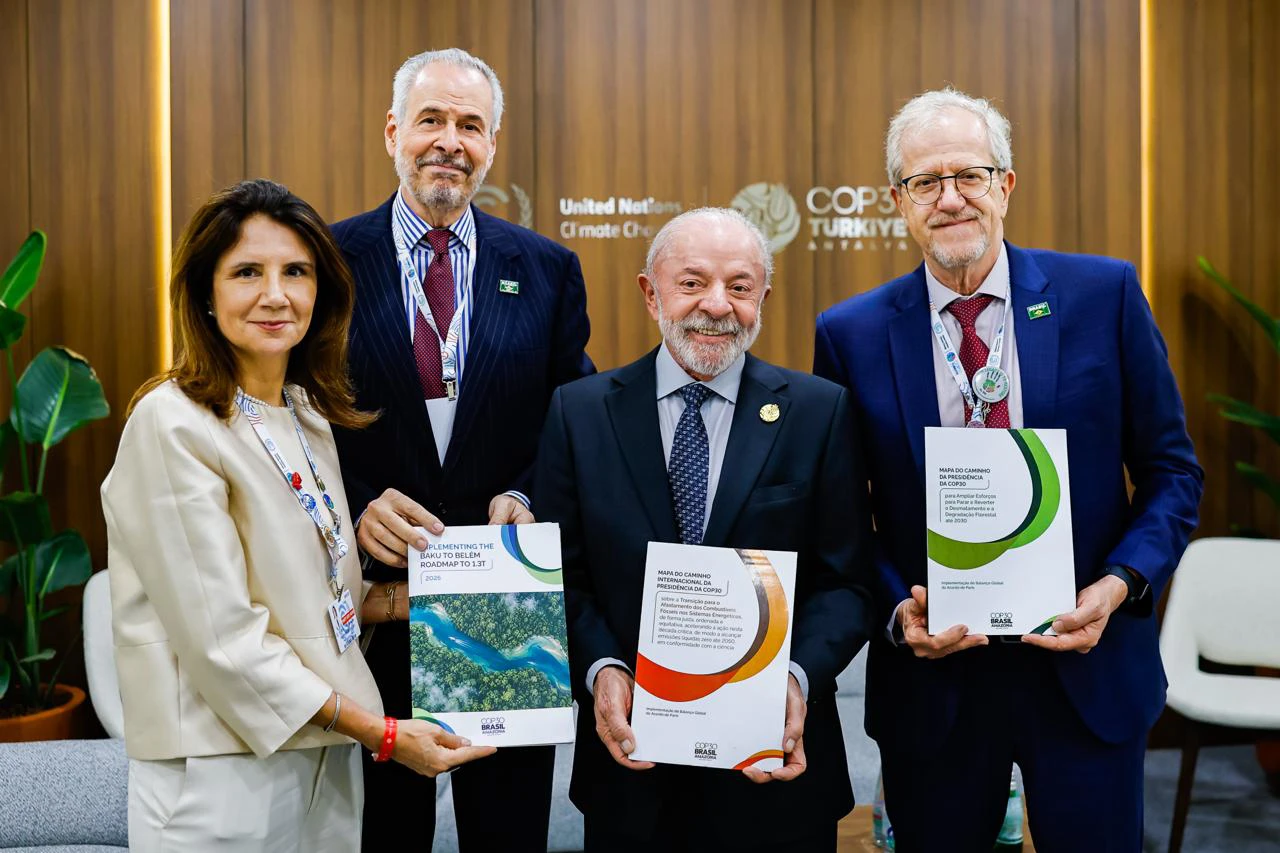
President Luiz Inácio Lula da Silva highlighted the enduring legacy of COP30 on Thursday (November 12), during a meeting with civil society representatives at COP31 in Antalya, Türkiye. Lula emphasized the importance of the outcomes achieved in Belém, particularly the international Roadmaps on Transitioning Away from Fossil Fuels and Enhancing Efforts Towards Halting and Reversing Deforestation and Forest Degradation by 2030.
COP30 President André Corrêa do Lago and CEO Ana Toni personally presented Lula with both documents, along with the report Implementing the Baku to Belém Roadmap to 1.3T. All three aim to accelerate implementation of the Paris Agreement, building on decisions adopted by consensus at COP28.
"We have arrived here with several roadmaps ready to show that we mean business. Our commitment to zero deforestation is not a commitment to the world; it is a commitment to our own conscience and to Brazil," the President told a packed audience. "You must hold your heads high, because Brazil will become the most serious country in the world when it comes to protecting the environment."
Brazil’s Minister of the Environment and Climate Change, João Paulo Capobianco, highlighted the international engagement that led to the strong reception of the COP30 Presidency’s work, which continued to contribute to global climate action throughout 2026. He also underscored the significant participation of Brazilian civil society, a movement that gained momentum at the 1992 Earth Summit in Rio de Janeiro, where the foundations were laid for the UN conventions on climate change, desertification and biological diversity.
“All sectors — civil society, social movements, Indigenous Peoples, representatives of local communities, NGOs, foundations, the private sector, academia and Parliament — bring the energy that drives these conventions and prevents the formality of negotiations from bringing the process to a standstill,” Capobianco said.
Civil Society Voices
COP30 Youth Climate Champion Marcele Oliveira presented President Lula with a report on youth engagement during the Belém conference. According to Oliveira, COP30 “changed the debate on climate justice, the environment and environmental racism around the world, but especially for Brazilian youth.”
Marcele called for young people to be recognized as partners in implementing countries’ climate commitments. “President Lula, this is the army that will implement the Paris Agreement,” she declared.
Indigenous representative Josi Kaingang highlighted the historic participation of Indigenous Peoples at COP30 and the importance of ensuring that climate finance reaches their territories directly. “Environmental protection and management cannot happen without those who do the most to protect and respect nature and Mother Earth,” she said.
Márcio Astrini, Executive Secretary of the Climate Observatory, emphasized the importance of civil society participation and continued dialogue with the government. He thanked Lula for maintaining the tradition of meeting with social movements during UN climate conferences, highlighting the value of listening to organizations that monitor and demand the implementation of climate policies.
During the meeting, Brazilian Development Bank (BNDES) President Aloizio Mercadante announced partnerships expected to mobilize nearly US$ 7 billion in climate investments in Brazil. The financing involves the Green Climate Fund (GCF), BNDES and private investors, focusing on energy transition projects, industrial decarbonization and sustainable solutions.
The initiative brings together three funds selected through a BNDES call for proposals. The projects represent approximately US$ 2.3 billion in equity investments, with the potential to attract additional financing and increase the resources available for Brazil’s ecological transformation. According to Mercadante, the partnership demonstrates the potential to combine domestic public resources, international financing and private capital to accelerate climate action.