

National planning to transition away from fossil fuels gains momentum at COP31
At a ministerial dialogue hosted by the Netherlands, Tuvalu and Ireland, COP30 Presidency highlighted its international Roadmap as a framework for national planning, while Brazil announced steps toward delivering its own roadmap at COP32 in Ethiopia
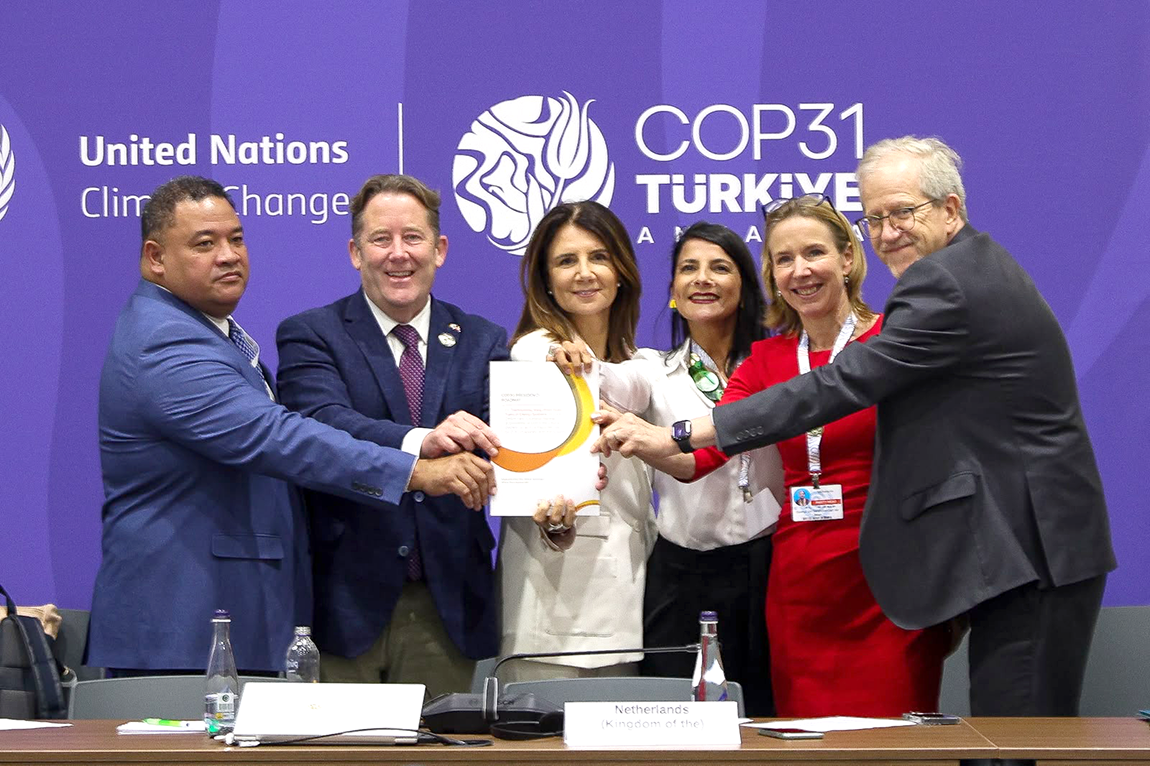
National efforts to plan the transition away from fossil fuels are gaining momentum, as ministers and international leaders gathered once again at COP31 on Wednesday to advance implementation of the commitment made at COP28 in Dubai to transition away from fossil fuels in energy systems in a just, orderly and equitable manner.
Hosted by the Netherlands, Tuvalu and Ireland, in partnership with the COP31 Presidency, the COP31 Presidency of Negotiations and the COP30 Presidency, the Ministerial Dialogue on Implementing the Energy Transition built on the COP30 Presidency Roadmap and the First Conference on Transitioning Away from Fossil Fuels, held in Santa Marta, Colombia.
The event brought together Stientje van Veldhoven, the Netherlands’ Minister of Climate and Green Growth, and Irene Vélez Torres, former Colombian Minister of Environment and Sustainable Development, who jointly chaired the inaugural Conference on Transitioning Away from Fossil Fuels (TAFF) in Santa Marta last April. They were joined by Maina Vakafua Talia, Tuvalu’s Minister of Home Affairs, Climate Change and Environment, and Darragh O’Brien, Ireland’s Minister for Climate, Environment and Energy and Minister for Transport, who will co-chair the next edition of the conference. European Commissioner Wopke Hoekstra, UN Assistant Secretary-General Selwin Hart, and other ministers also participated.
From international commitments to national planning
Ana Toni highlighted the importance of the Roadmap as a practical contribution to help countries assess their dependence on fossil fuels and identify pathways for transitioning according to their national circumstances. "Planning for transitioning away from fossil fuels in the energy sector is a must, not only because of climate change, but because of economics, sovereignty and peace," she said.
The Roadmap proposes the Belém Readiness Approach, country archetypes, policy levers and the TAFF Mutirão to support countries in advancing together while recognizing their different starting points.
Brazil and its national roadmap. João Paulo Capobianco, Brazil's Minister of Environment and Climate Change, announced that the country's National Energy Policy Council approved guidelines earlier this month to gradually reduce dependence on fossil fuels. An interministerial group will develop the plan in 2027, with broad civil society participation, focusing on three priorities: energy security, a just transition that protects workers and vulnerable households, and the financing and international cooperation needed for implementation. "Our roadmap will assess where we remain vulnerable and how to make our energy system more resilient," Capobianco stated, noting that renewable sources already supply nearly 90% of Brazil's electricity. The Minister reaffirmed Brazil's commitment to present its national roadmap at COP32 in Ethiopia.
Minister Capobianco also highlighted the importance of sharing practical experiences among countries, building on the Santa Marta process as a complement to negotiations under the UNFCCC. He noted that President Lula had expressed Brazil’s willingness to host a future edition of the Conference on Transitioning Away from Fossil Fuels and said the possibility would be discussed with Colombia, the Netherlands, Tuvalu, Ireland and other partners.
The growing number of dialogues and national initiatives at COP31 reflects the momentum of the TAFF Mutirão, helping turn a previously difficult international debate into practical planning, cooperation and action. As Ana Toni emphasized, countries may begin from different circumstances, but they can gradually move in the same direction, using a common language and learning from one another.
Read the COP30 Presidency roadmap for transitioning away from fossil fuels in energy systems, in a just, orderly and equitable manner, accelerating action in this critical decade, so as to achieve net zero by 2050 in keeping with the science