

Global Climate Action Yearbook 2026 highlights progress from Belém to Antalya as Marrakech Partnership marks ten years
At COP31, the COP30 Presidency celebrates the achievements of the Global Climate Action Agenda and recognizes Climate High-Level Champion Dan Ioschpe’s leadership in advancing a new era of climate implementation
The Yearbook of Global Climate Action 2026, released at COP31, provides new evidence of progress in implementing the Paris Agreement, highlighting advances in renewable energy, sustainable transport, nature conservation and climate resilience. The publication also marks the tenth anniversary of the Marrakech Partnership for Global Climate Action and showcases the implementation of the Global Climate Action Agenda strengthened under Brazil’s COP30 Presidency.
Produced by the Climate High-Level Champions and UN Climate Change, the Yearbook tracks 96 global indicators, with 44 showing progress across key areas of climate action, 19 showing no progress and 33 lacking sufficient data. The findings highlight the growing momentum of climate solutions across sectors, while providing valuable insights into opportunities to accelerate implementation, scale up successful approaches and strengthen the evidence base for future action.
Among the highlights, global renewable energy capacity grew by 17% in 2025, when renewables overtook coal in global electricity generation. Electric vehicles accounted for one-quarter of light-duty vehicle sales, deforestation declined by nearly 14%, and marine protected areas reached 10% of the world's oceans.
Progress remains uneven. Energy efficiency improvements are still far below the pace required by 2030, methane emissions from oil and gas continue to rise, and adaptation finance has declined.
From Belém to Antalya: the Action Agenda delivers results
The 2026 Yearbook offers an important first assessment of the Global Climate Action Agenda's Five-Year Vision (2026–2030), launched at COP30 in Belém. Under the leadership of the COP30 Presidency and the Climate High-Level Champions, the Action Agenda was reorganized around six thematic axes and 30 objectives, aligned with the outcomes of the first Global Stocktake of the Paris Agreement. The framework connects existing initiatives, governments, businesses, cities, investors and civil society to accelerate implementation through practical, measurable solutions.
According to the Yearbook, 84% of Plans to Accelerate Solutions (PAS) reported progress after one year of implementation. These multi-stakeholder plans seek to overcome barriers related to policy, finance, technology and capacity, helping successful climate solutions reach greater scale.
The Yearbook also reports that 83 cooperative climate initiatives submitted progress information through UN Climate Change's NAZCA portal, compared with 48 in 2023, reflecting growing participation in voluntary climate action reporting.
These results reinforce a central objective of the COP30 Presidency: establishing an Action Agenda that delivers measurable progress throughout the year, connects successive COP Presidencies and strengthens cooperation between governments and the actors responsible for implementing climate solutions.
COP30 Presidency recognizes Dan Ioschpe’s leadership
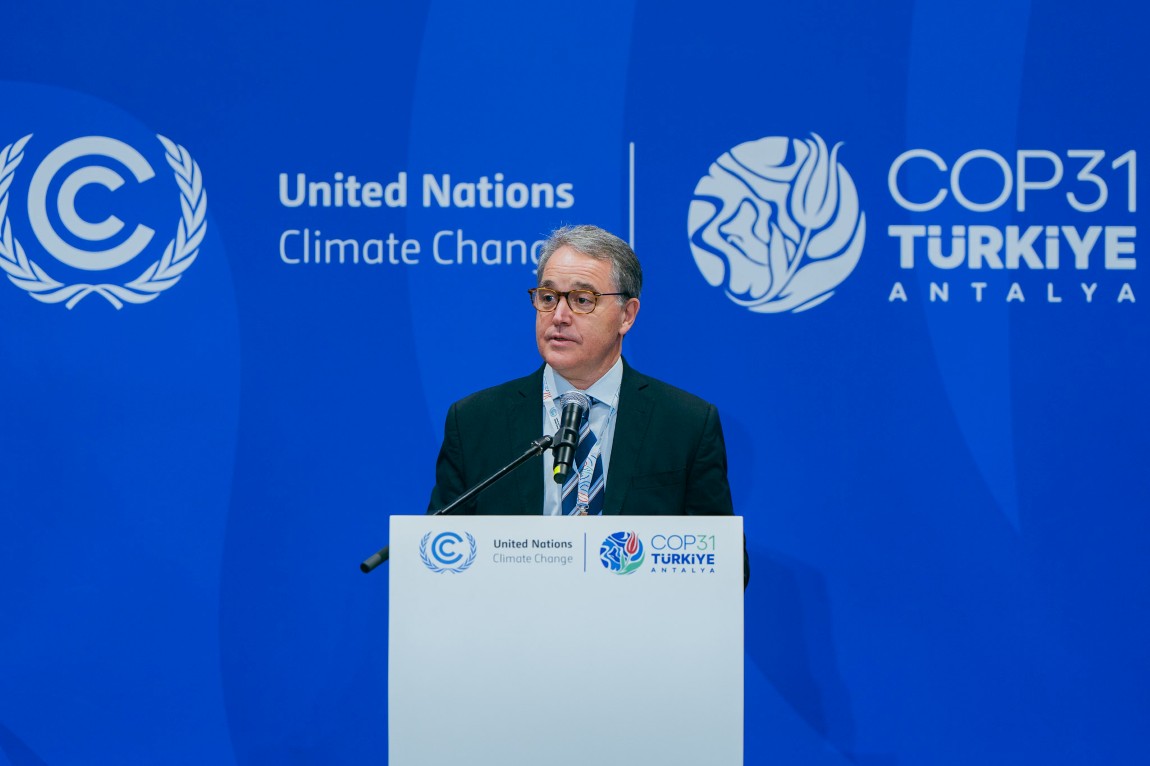
The tenth anniversary of the Marrakech Partnership also provided a special occasion for the COP30 Presidency to recognize the contribution of Dan Ioschpe, COP30 Climate High-Level Champion, as he participated in his final mandated meeting in this role.
Appointed by President Luiz Inácio Lula da Silva in 2025, Ioschpe played a leading role in transforming the Global Climate Action Agenda into a more coherent, implementation-oriented framework. His work helped bring together hundreds of voluntary initiatives, strengthen cooperation across sectors and establish the Five-Year Vision that will guide the Action Agenda through 2030.
The COP30 Presidency particularly recognizes his commitment to connecting climate action with sustainable socioeconomic development, mobilizing the private sector alongside governments and civil society, and translating the spirit of mutirão — collective effort toward a common purpose — into practical international cooperation.
Reflecting on the Partnership's decade of progress, Ioschpe emphasized that it has evolved from a platform for voluntary commitments into an increasingly practical mechanism for implementation.
“The path forward is speeding and scaling up what works, aligning capital, capacity and collaboration,” said Ioschpe.
The importance of his contribution was also recognized by COP30 President André Corrêa do Lago during the opening of COP31, when he thanked Ioschpe for his extraordinary work in preparing the restructured Action Agenda.
Ten years of collective climate action
Established at COP22 in Morocco in 2016, the Marrakech Partnership has become a central platform for engaging cities, regions, businesses, investors, Indigenous Peoples, local communities and civil society in the implementation of the Paris Agreement.
A decade later, its evolution reflects the growing recognition that achieving global climate goals requires both negotiated commitments among countries and sustained action across the real economy and society.
As COP31 advances in Antalya, the Yearbook offers a foundation for the next chapter: strengthening transparency, addressing implementation barriers and scaling solutions that deliver measurable benefits for people, economies and the planet.
The COP30 Presidency celebrates the collective achievements of the Marrakech Partnership and reaffirms its commitment to ensuring that the legacy of Belém continues to accelerate climate action beyond COP31.
Explore the Yearbook 2026: