

COP30 Presidency Roadmap for Transitioning Away from Fossil Fuels Draws Broad Support at COP31
UN Secretary-General António Guterres joins calls to advance the Roadmap’s implementation, as the COP30 Presidency presents the initiative to 800 participants in Antalya
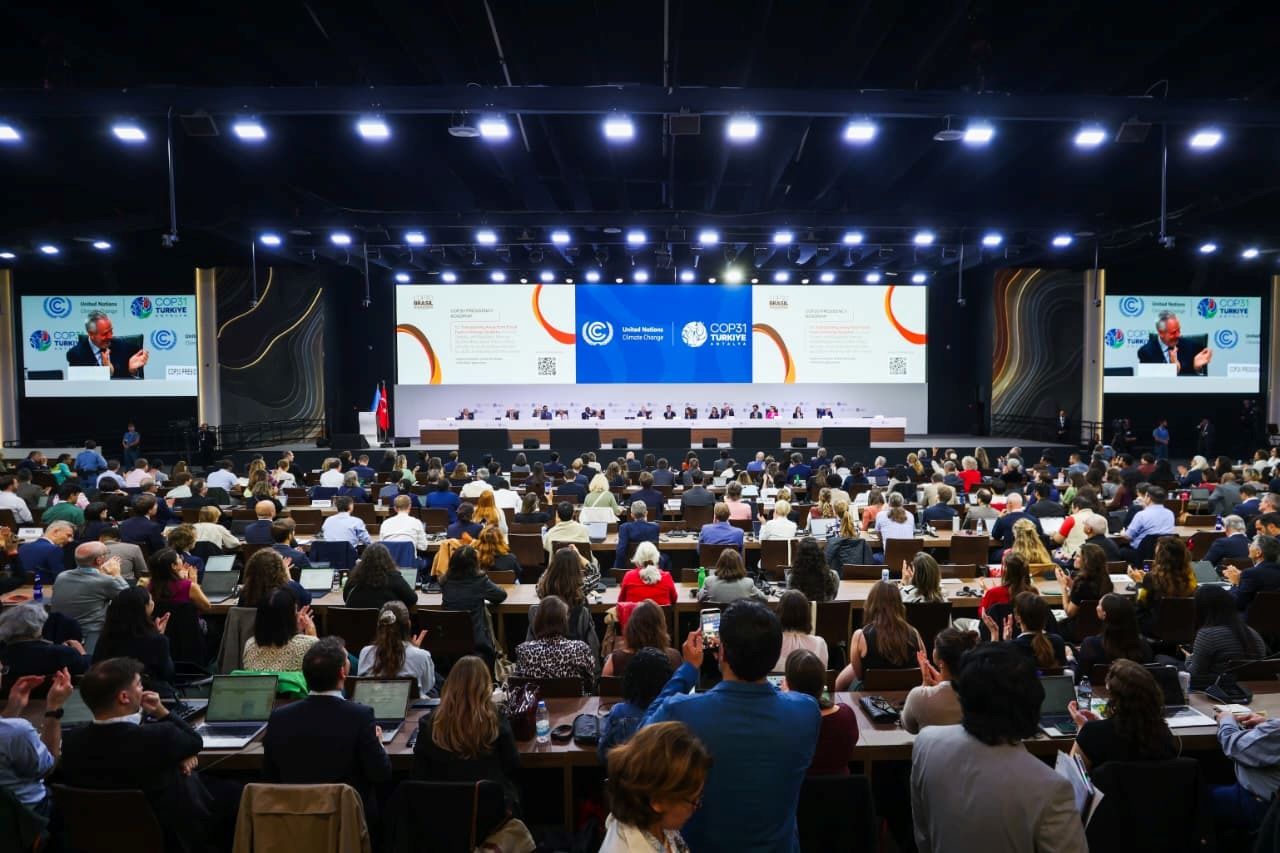
The COP30 Presidency’s Roadmap for Transitioning Away from Fossil Fuels received broad international support at COP31 on Tuesday, with UN Secretary-General António Guterres and representatives from governments and other sectors highlighting its potential to accelerate the global energy transition. Presented to an audience of approximately 800 participants, the COP30 Presidency Roadmap for Transitioning Away from Fossil Fuels in Energy Systems, in a Just, Orderly and Equitable Manner, Accelerating Action in This Critical Decade, so as to Achieve Net Zero by 2050 in Keeping with Science offers practical pathways for countries to turn the commitment made at COP28 in Dubai into action.
“This is a necessary contribution to the implementation we need to deliver,” said Corrêa do Lago. “Each country will have to choose its own path. Every country faces entirely different circumstances. I believe this Roadmap can help bring this discussion into the mainstream.”
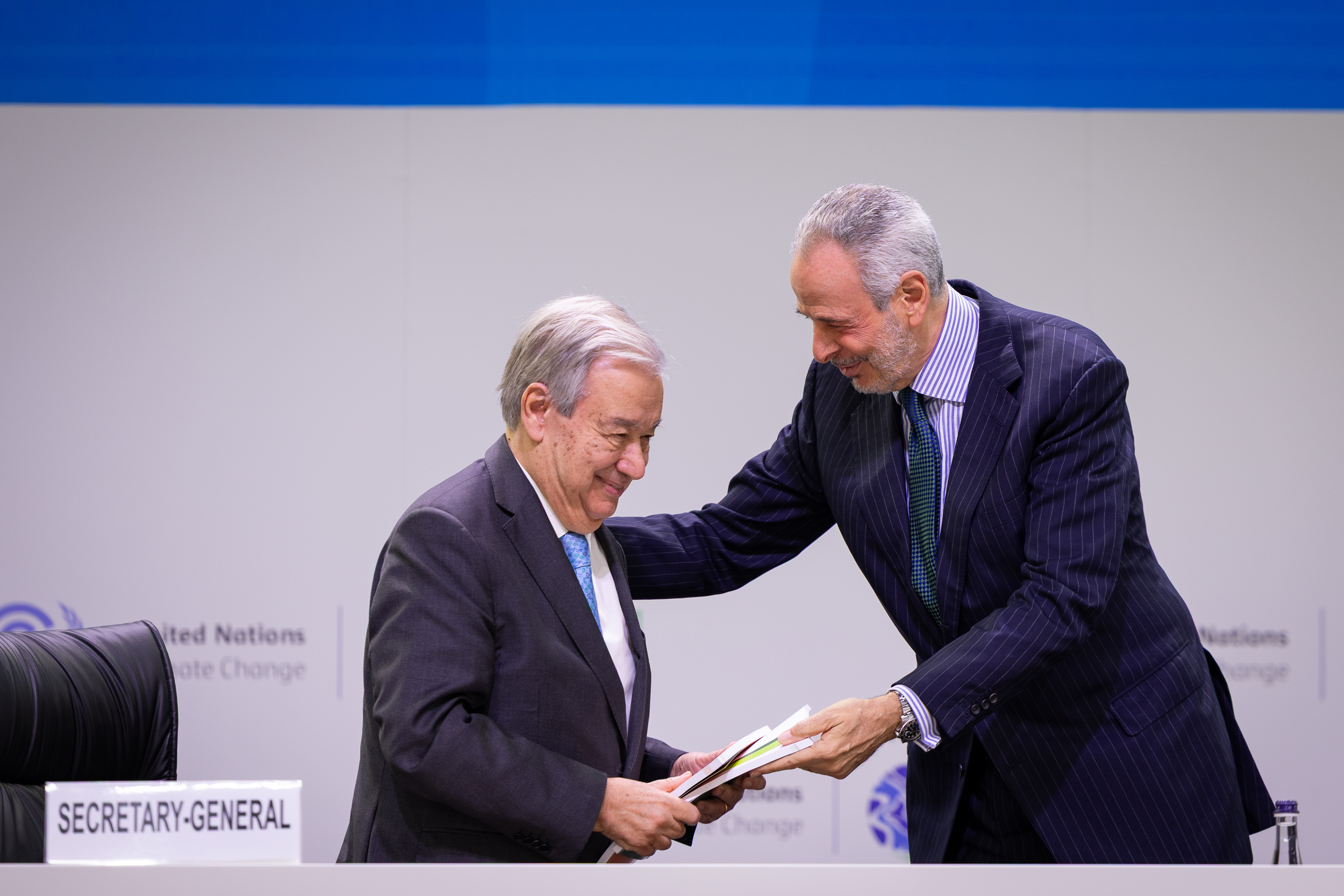
United Nations Secretary-General António Guterres highlighted the Roadmap's importance in accelerating implementation of one of the world's greatest climate challenges. The energy sector accounts for approximately 75% of global greenhouse gas emissions.
“It is long past time to stop treating the transition away from fossil fuels as a taboo or an impossibility, and I thank the COP30 Presidency for its leadership,” Guterres said. “We must leave Antalya with a clear understanding of the next steps to advance this Roadmap, and I encourage the current and future COP Presidencies to carry this work forward. We must give the world a reason to believe in the commitment made in Dubai.”
Government officials and delegates from numerous countries attended alongside representatives of civil society, the private sector, academia, and the media. COP30 CEO Ana Toni outlined the Roadmap's underlying principles, emphasizing the value of continued collaboration and collective learning. “It is essential that we keep talking and learning from one another, not only at each COP but also between conferences,” she said.
Toni also stressed that the Roadmap provides a starting point for every country, regardless of its circumstances or stage of transition. “Start now. Don't wait.”
Brazil's Minister of the Environment, João Paulo Capobianco, and former Minister Marina Silva also took part in the presentation. Both highlighted the role of Brazil and President Luiz Inácio Lula da Silva in calling for and supporting the Roadmap's development. They also acknowledged the challenges Brazil itself faces in advancing climate solutions: while approximately 90% of its electricity comes from renewable sources, the country is also an oil producer.
“We understand what this transition requires of us, and we know we must move forward,” Capobianco said. “Every country starts from a different place. Through this Roadmap, we invite all countries to join forces to protect workers, expand access to finance, and support one another in accelerating the transition.”
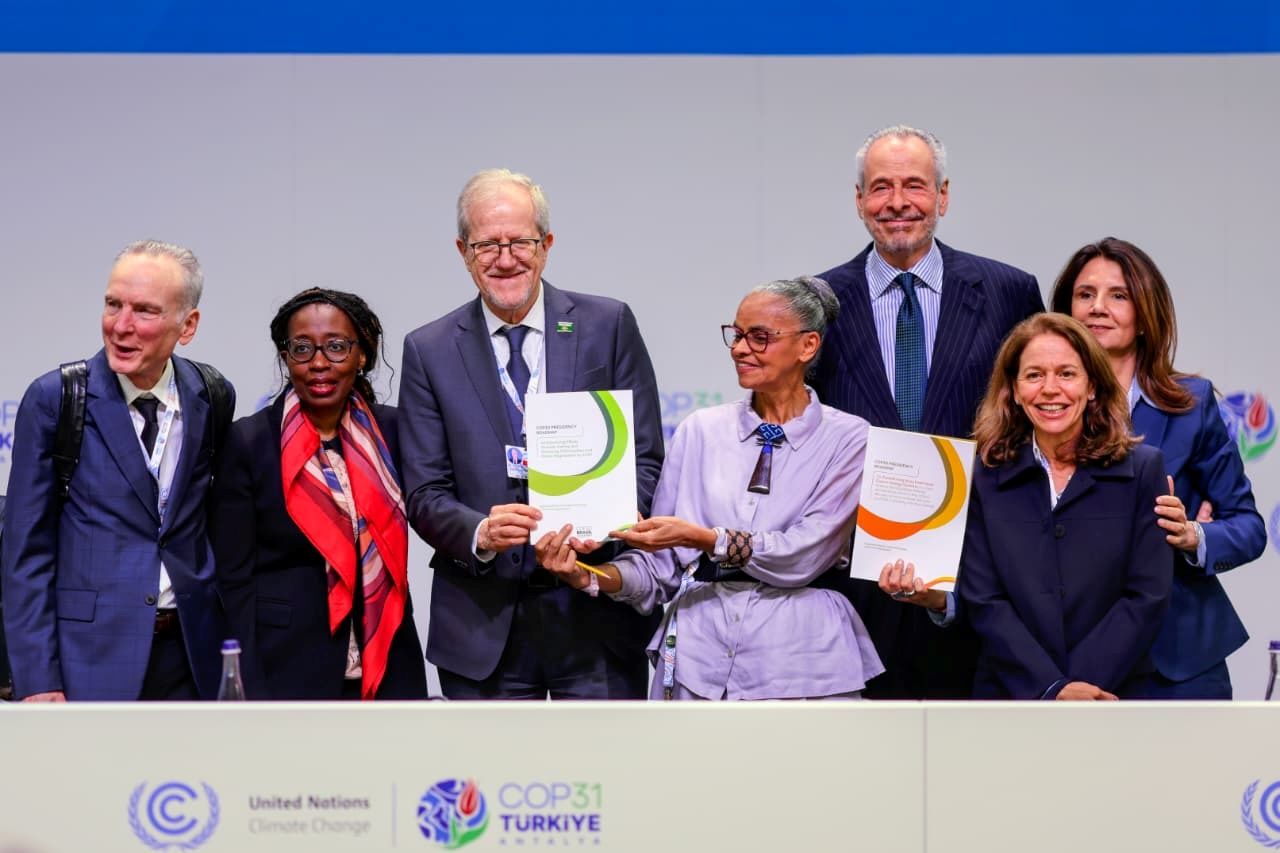
Read additional statements of support for the COP30 Roadmap:
Simon Stiell, Executive Secretary of the United Nations Framework Convention on Climate Change (UNFCCC)
“The gap between science and action remains far too wide. That is where this Roadmap makes a valuable contribution. It helps countries deliver what they have already agreed. Dubai set the direction, Belém built momentum, and Antalya must accelerate delivery.”
Patricia Espinosa, COP30 Special Envoy for Latin America and the Caribbean, former UNFCCC Executive Secretary, and CEO and Founder of onepoint5
“It shifts the conversation from whether we should transition to how we make progress. So this is really a remarkable contribution. Our immediate task is to take action on the ground.”
Laurent Fabius, COP21 President, who presided over the adoption of the Paris Agreement
“When a decision is taken, it has to be fulfilled. And we say in our statement that precise things have been said in Dubai and we have to implement them. This Roadmap says what to do and how to act.”
Alok Sharma, COP26 President
“This is a really concrete Roadmap. I want to see it from the perspective of the people that we represent who are not in this room: the voters of our countries, the population of our countries. The reality is that, for many of them, they have not seen energy prices come down over the last few years. They've actually seen them go up. And that is what these Roadmaps have to address.”
John Kerry, Distinguished Visiting Fellow at the Carnegie Endowment for International Peace, former U.S. Secretary of State and former U.S. Special Presidential Envoy for Climate
“The hard truth is the fossil fuel story is still moving in the wrong direction. That is why roadmaps are so important. We don't need more promises. We need plans.”
David Higgins, Head of the International Climate and Energy Division, Australia
“As countries plan for their future, evidence and advice on ensuring an orderly transition will be very important. We know there are challenges, and the Roadmap doesn't shy away from this. But there are also very clear and significant benefits, and the opportunity for countries to transition away from fossil fuels and towards clean energy in a nationally determined manner.”
Rachel Kyte, UK Special Representative for Climate
“You took a phrase, ‘to transition away from fossil fuels’, which was in danger of becoming just a slogan, and you turned it into a planning principle for all of us. That was no mean diplomatic feat.”
Michel Heijdra, Director-General for Climate and Energy, Netherlands
“Countries have different starting points, different resources, and different dependencies. And progress requires cooperation that recognizes those differences and helps countries find workable pathways.”
Omotenioye Majekodunmi, Director-General of Nigeria’s National Council on Climate Change
“We must industrialize and decarbonize simultaneously. And we need to mobilize investments. This is the real test of this Roadmap: whether we can translate transition pathways into investable opportunities.”
Heike Henn, State Secretary at Germany’s Federal Ministry for the Environment, Climate Action, Nature Conservation and Nuclear Safety
“We are so happy that the COP31 Presidency also allowed this process to take center stage. And please, COP31 and COP32 Presidencies, help us continue this work moving forward. All of us need to make Antalya a success, with a clear signal that the transition is not only ongoing but will speed up.”
Francesco La Camera, Director-General of the International Renewable Energy Agency (IRENA)
“This Roadmap gives a common language for action. For too long, our energy future was written by what was beneath the ground. With renewables, every country can now wake up and write its own destiny.”
Julia Surupka, Head of the Powering Past Coal Alliance Secretariat
“We very much agree with the core message of the Roadmap: that wherever you are in your transition journey, however fast you can move, it's really important to start the planning now.”
Marina Silva, Brazilian Federal Deputy and former Minister of the Environment and Climate Change
“At COP28, the first Global Stocktake recognized the need to transition away from fossil fuels in energy systems in a just, orderly and equitable manner. We are gathered here to carry forward a process that began with a historic decision, gained momentum in Belém, and must now move into implementation.”