COP30 Presidency launches international roadmaps to accelerate transition away from fossil fuels and halt deforestation and forest degradation by 2030
From commitments to implementation, the two Roadmaps propose practical pathways for countries to advance climate action, strengthen international cooperation and mobilize investment, while supporting economic development, energy security and people's livelihoods.
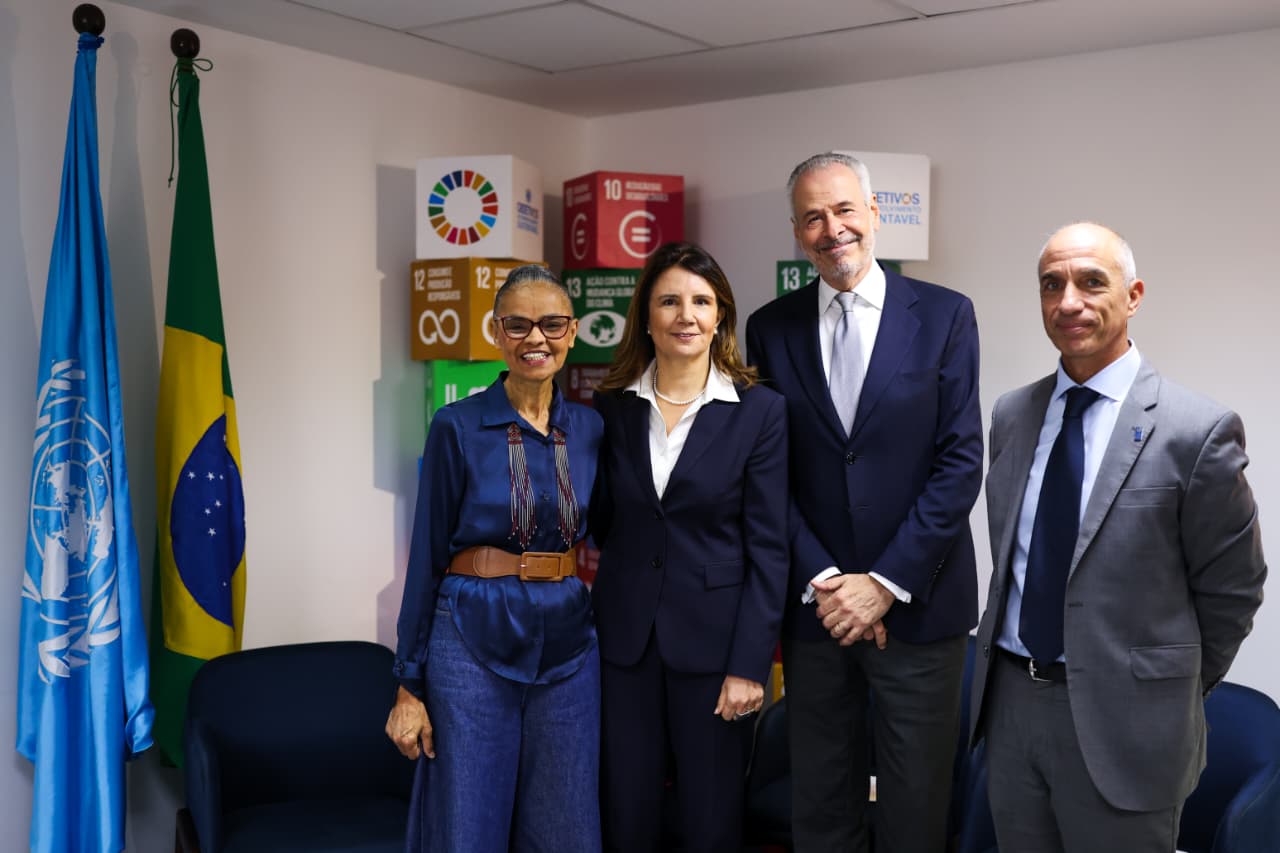
BRASÍLIA, November 3, 2026 — COP30 President André Corrêa do Lago and CEO Ana Toni today presented two international Roadmaps to accelerate the implementation of historic climate commitments: one on transitioning away from fossil fuels in energy systems and another on halting and reversing deforestation and forest degradation by 2030.
The Roadmaps address two major drivers of climate change (energy accounts for 75% and forest loss for 11% of global greenhouse gas emissions), offering practical approaches to turn international agreements into national policies, investments and measurable results. They build on the first Global Stocktake of the Paris Agreement, adopted by consensus at COP28 in Dubai in 2023.
Both Roadmaps were announced at the closing plenary of COP30 in Belém, inspired by President Luiz Inácio Lula da Silva's call to move beyond declarations and accelerate climate implementation. At the COP30 Leaders' Summit, President Lula stated that “the world needs a clear roadmap to end its dependence on fossil fuels.” Following extensive discussions among Parties and other stakeholders, Ambassador Corrêa do Lago committed to developing the two complementary Roadmaps under his responsibility as COP30 President.
Their publication fulfills that commitment and advances a central priority of the Brazilian Presidency: strengthening multilateralism by putting decisions already agreed upon by countries into practice. The Roadmaps reflect the principle of common but differentiated responsibilities and respective capabilities, not only between countries but also within them, recognizing that the causes and consequences of the climate crisis and domestic wealth inequality are deeply interconnected.
Developed through broad international consultations, the Roadmaps are voluntary, non-prescriptive contributions from the COP30 Presidency. These documents are not subject to negotiation.
The Roadmaps were launched at the UNDP Brazil office, a key partner of the COP30 Presidency. The partnership supported a comprehensive international consultation process and the logistical and technical efforts behind today's releases.
COP30 Presidency Roadmap for Transitioning Away from Fossil Fuels in Energy Systems, in a just, orderly and equitable manner, accelerating action in this critical decade, so as to achieve net zero by 2050 in keeping with the science
This COP30 Presidency Roadmap concludes that transitioning away from fossil fuels is urgent, inevitable and yet possible, and that every country can begin taking action, regardless of its starting point.
An open call on the UN Climate Convention platform drew 267 contributions; 21 of them came from Parties or groups of Parties, representing 115 Parties in all. As the Roadmap points out, the global energy transformation is already underway. Renewable energy, electrification and efficiency improvements are creating opportunities to strengthen energy security, reduce dependence on volatile international fuel markets and develop new industries.
The transition requires careful coordination. Fossil fuel production needs to decline alongside demand, while low-emissions energy systems expand sufficiently to maintain reliable and affordable energy. Reducing supply faster than demand can generate shortages and price volatility; maintaining production beyond future demand risks prolonging fossil fuel dependence and leaving investments underused.
At the center of the Roadmap is the Belém Readiness Approach, which examines countries' exposure to fossil fuels and their capacity to manage the transition across three complementary pillars: energy demand, energy supply and the broader economy. The demand pillar examines energy use in transport, industry, and buildings, while the supply pillar assesses how fossil fuel production can adapt as low-emissions energy systems expand and demand declines. The economic pillar addresses fiscal dependence, investment, the cost of capital, and price signals, among other topics. A set of indicators and metrics, to be used by countries, helps to identify strengths and challenges.
The assessments allow countries to identify their respective archetypes for each pillar, showing where exposure is greatest, where capacity is constrained, and where existing strengths can accelerate progress. Foundational levers can be applied to all countries, while archetype-specific implementation levers are tailored to each transition profile.
The Roadmap also outlines three proposals for advancing implementation: encouraging countries, subnational governments and sectors to start now, using the Belém Readiness Approach to assess their circumstances and identify priorities; launching a TAFF Mutirão, a collective agenda to accelerate coordinated action in this critical decade, through 2033; and sustaining international dialogue and cooperation, including through future COP Presidencies and the Global Stocktake, to assess progress and address shared implementation challenges.
A central principle is that a just, orderly and equitable transition must stimulate development, expand access to affordable modern energy, protect workers and communities, and reflect different national development circumstances. Countries do not need to follow identical pathways to move toward the same climate objective.
COP30 Presidency Roadmap on Enhancing Efforts Towards Halting and Reversing Deforestation and Forest Degradation by 2030
This COP30 Presidency Roadmap identifies opportunities to accelerate forest protection, sustainable use and recovery through coordinated national action, international cooperation and finance. The Roadmap takes a global approach, covering tropical, subtropical, temperate, and boreal forests, as well as forest-related ecosystems such as peatlands and mangroves.
According to the Food and Agriculture Organization of the United Nations (FAO), annual deforestation declined from 17.6 million hectares in 1990-2000 to 10.9 million hectares in 2015-2025, but remains substantial. Tropical forests account for approximately 45% of global forest area and 88% of deforestation recorded between 1990 and 2025.
The Roadmap also highlights forest degradation, a less visible challenge in which forests remain standing but lose their capacity to store carbon, regulate water, support biodiversity and sustain livelihoods. Heat, drought and fires can intensify degradation, increasing the risk of irreversible changes in major forest ecosystems, including the Amazon.
The Roadmap identifies five complementary areas of action in national strategies: conservation; sustainable forest management, agroforestry and bioeconomy; combating forest degradation; combating deforestation; and restoration, reforestation and afforestation.
Drawing on extensive international consultations, the Roadmap proposes a five-step approach for countries to strengthen implementation: Diagnose forest conditions and drivers of loss; Align policies, institutions and finance; Target results; Deliver actions while monitoring progress; and Evaluate and adjust implementation.
It also presents four proposals for using existing decisions of COPs for implementation: improving forest information and monitoring systems; strengthening technical assistance and capacity-building; combating transnational environmental crime, including support for the protocol under the UN Convention against Transnational Organized Crime, launched in October; and promoting trade incentives that reward sustainable and deforestation-free production.
Finance is one of the largest implementation gaps. According to UNEP, annual forest finance must rise from US$ 84.5 billion in 2023 to more than US$ 300 billion per year by 2030. Domestic public budgets accounted for 88.3% of recorded finance in 2023, while international public finance represented only 3.4%. Most tropical forests are in developing countries, so the burden of most of the conservation and sustainable use of forests relies on their national budgets.
The Roadmap examines 30 international forest financing mechanisms, including results-based payments, jurisdictional REDD+ and the Tropical Forest Forever Facility (TFFF). It finds that many existing instruments operate below their potential, pointing to the need to scale financing, improve access and reward countries and communities for conservation and sustainable forest management.
From Belém to Antalya: strengthening multilateralism toward implementation
Together, the two Roadmaps advance a shared approach: international agreements establish common goals, while implementation requires country-led action, targeted international cooperation and greater financial investment.
The COP30 Presidency invites future COP Presidencies to sustain implementation dialogues on the transition away from fossil fuels, including ahead of the second Global Stocktake in 2028. The Forest Roadmap proposes international actions and indicative milestones through 2030.
Both documents also identify opportunities for the Global Climate Action Agenda, which brings together over 480 initiatives and coalitions and more than 100 Plans to Accelerate Solutions (PAS) to mobilize governments, businesses, investors and civil society around practical implementation.
The Roadmaps are closely connected to the COP30 Presidency Report on Implementing the Baku to Belém Roadmap to 1.3T, launching later this week, which addresses efforts to scale climate finance for developing countries to at least US$1.3 trillion annually by 2035, from all public and private sources. Together, the three documents connect the transformations needed in energy and forest systems with the financing, institutions and cooperation required to deliver them.
As the international community prepares for COP31 in Antalya, the COP30 Presidency's message is that the world already has a substantial foundation of climate decisions adopted by consensus. The urgent task is to turn them into action, protecting the climate while strengthening energy security, sustaining forests and creating development opportunities that benefit people everywhere.
Read the full Report: COP30 Presidency Roadmap for Transitioning Away from Fossil Fuels in Energy Systems, in a just, orderly and equitable manner, accelerating action in this critical decade, so as to achieve net zero by 2050 in keeping with the science
Read the full Report: COP30 Presidency Roadmap on Enhancing Efforts Towards Halting and Reversing Deforestation and Forest Degradation by 2030