

87% of plans launched in Belém report progress as Action Agenda closes at COP31
At the Global Climate Action Agenda’s closing session at COP31, COP30 CEO Ana Toni said implementation is now at the heart of the COPs and that the structure built in Belém is still evolving
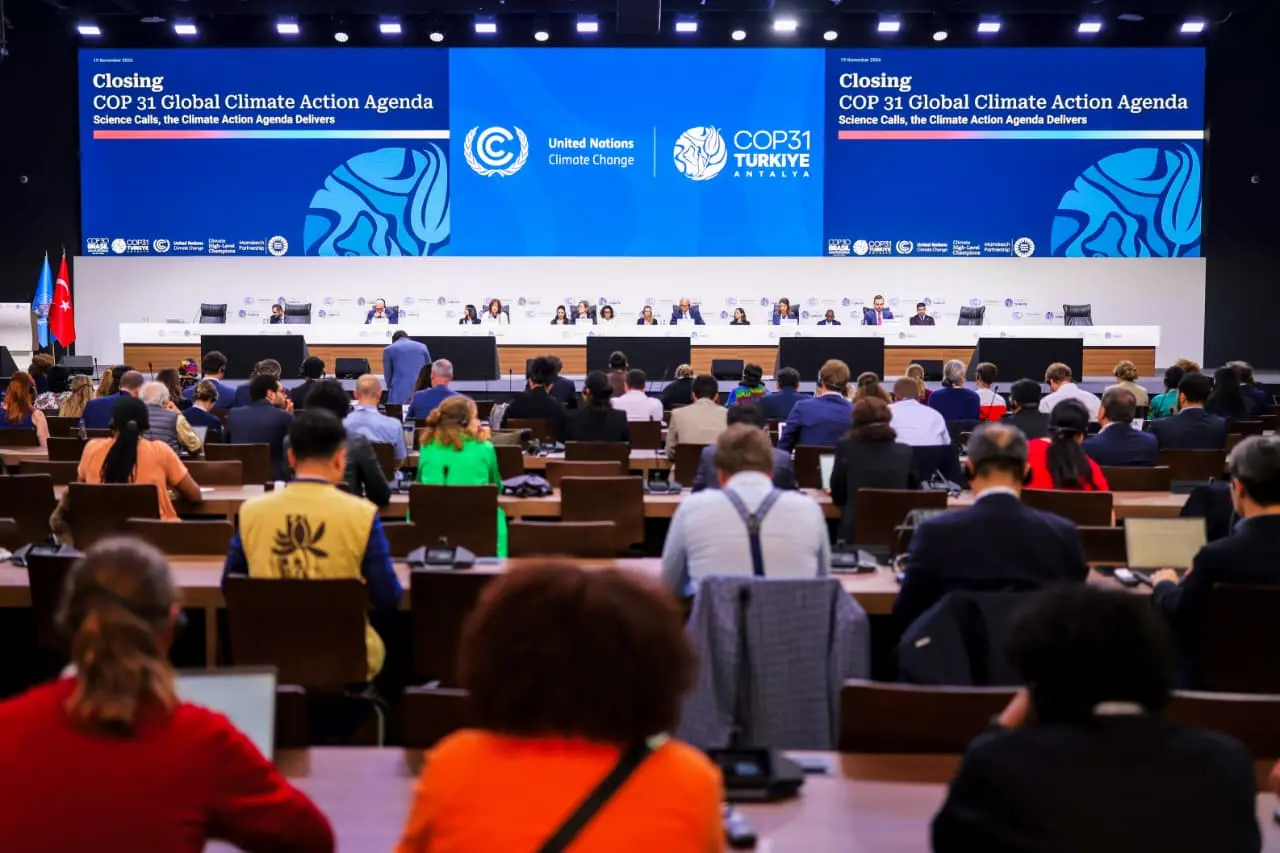
The Global Climate Action Agenda formally closed at COP31 in Antalya on Thursday, 19 November, with the high-level event “Science Calls, the Climate Action Agenda Delivers”, convened by the COP30 and COP31 Presidencies, the Climate High-Level Champions and the UNFCCC Executive Secretary. In her opening remarks, COP30 CEO Ana Toni took stock of the first year of implementation since Belém. “One year after Belém, we are able to say what has really happened,” she said.
Toni thanked the COP31 Presidency for taking forward the work that began in Brazil. “COP30 started a process to restructure the Action Agenda, COP31 has consolidated it, and implementation is now being mainstreamed at COPs,” she said. She also thanked the Climate High-Level Champions, the UNFCCC and the Climate Champions Team for keeping the Action Agenda’s structures running and, above all, the community of coalitions, initiatives, businesses, subnational governments, investors, civil society and countries that make it happen. “You are the engine of this process, the ones who are actually doing the work and delivering the results,” she said.
Speaking for the COP31 Presidency, COP31 CEO Fatma Varank stressed the continuity between Presidencies. “As we enter the second decade of the Paris Agreement, the five-year vision for global climate action launched at COP30 and grounded in the Global Stocktake provides a common framework for successive presidencies to advance implementation of the Agreement and follow up on the outcomes of the first Global Stocktake,” she said. “The six axes enable each presidency to build its action agenda on the work already underway.”
According to Varank, Türkiye drew on all six axes to shape its action agenda, identifying ten priority themes and six voluntary global targets for 2035. “Over the past two weeks, events held across the six axes of the Global Climate Action Agenda have provided our partners with an opportunity to share the work they have been advancing between COPs,” she said.
A structure built around the Global Stocktake
At COP30 in Belém, the Action Agenda was reorganized around six thematic axes and 30 objectives drawn entirely from what Parties agreed in the first Global Stocktake. The new structure brings together the coalitions and initiatives working on implementation, which put forward 120 Plans to Accelerate Solutions (PAS), already under way across different parts of the world.
One year on, the Action Agenda can show transparently what is actually happening. The Yearbook of Global Climate Action 2026 finds that action is heading in the right direction on more than half of the objectives (16 of 30). Three show mixed results, three are stalling, and for eight there is not yet enough data to tell. Of the 120 PAS presented in Belém, 87% have reported progress, and 38% of the 40 with quantitative targets are on track or ahead.
Action is under way in every region, using a range of levers from new financial instruments to regulation, public policy, standards and capacity-building. Around 190 countries are involved in at least one Action Agenda initiative, as are tens of thousands of businesses and hundreds of subnational governments.
Results on the ground
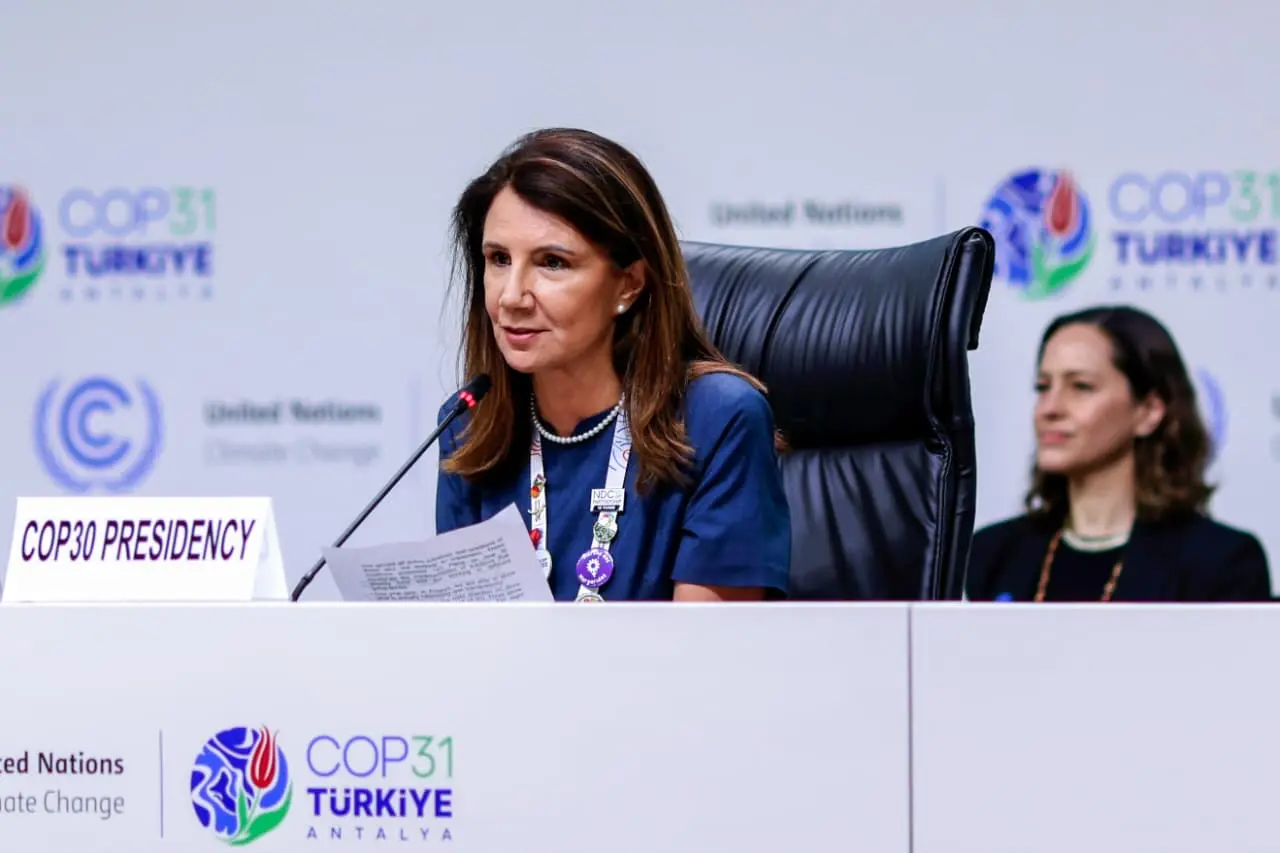
Toni pointed to concrete examples. Since COP30, the Financial Instruments for Ready and Resilient Response (FIRRe) PAS, led by the Inter-American Development Bank (IDB), has expanded climate-resilient debt clauses to US$ 6.1 billion across seven countries. In industry, 65 plants have reached final investment decision, beating the target of 50 set by the Industrial Transition Accelerator (ITA) at COP28. New plants this year are driving industrial transformation in countries such as Kenya, South Africa, Egypt, Brazil, Thailand and Paraguay. And the Tropical Forest Forever Facility (TFFF) reached US$ 8.3 billion in commitments during COP31.
Other examples cover mitigation, adaptation and means of implementation, from land rights, country platforms, carbon markets and methane to a solar hub for Small Island Developing States with the International Solar Alliance and electrification, including power grids.
A structure that keeps evolving
The Action Agenda’s structure keeps evolving as the community learns together, even during COP31. New PAS are still being added to fill important gaps, such as early warning systems and methane from oil and gas, bringing the total to 136. The UNFCCC has invited countries to voluntarily appoint focal points for the Action Agenda, so that they can approach its solutions as a menu of options for cooperation. Nine Climate Weeks issued a joint statement expressing their intent to use the six axes as a common language, carrying this work forward year-round and connecting every region to the Global Climate Action Agenda.
The Global Implementation Accelerator, created at COP30, is now fully up and running and adds a new layer to the Agenda: each year it will identify and fast-track two solutions with the potential to trigger positive tipping points, working closely alongside the BRIDGE initiative launched by COP31. This year, the Yearbook and the NAZCA portal have also taken transparency a step further.
“Implementation has become mainstream. The Action Agenda is its platform,” Toni said, adding that the continuity of this structure must remain at the service of accelerated, transparent implementation. She congratulated COP31 on putting implementation at the heart of the COPs.
For the full picture of the Action Agenda’s results, see the Yearbook of Global Climate Action 2026.