
COP30 Presidency Proposal to Halt Deforestation Gains Support at UN Forum on Forests
The COP30 Presidency presented in New York the Roadmap to Halt and Reverse Deforestation and Forest Degradation by 2030, bringing together countries, experts, and organizations to strengthen cooperation and climate finance
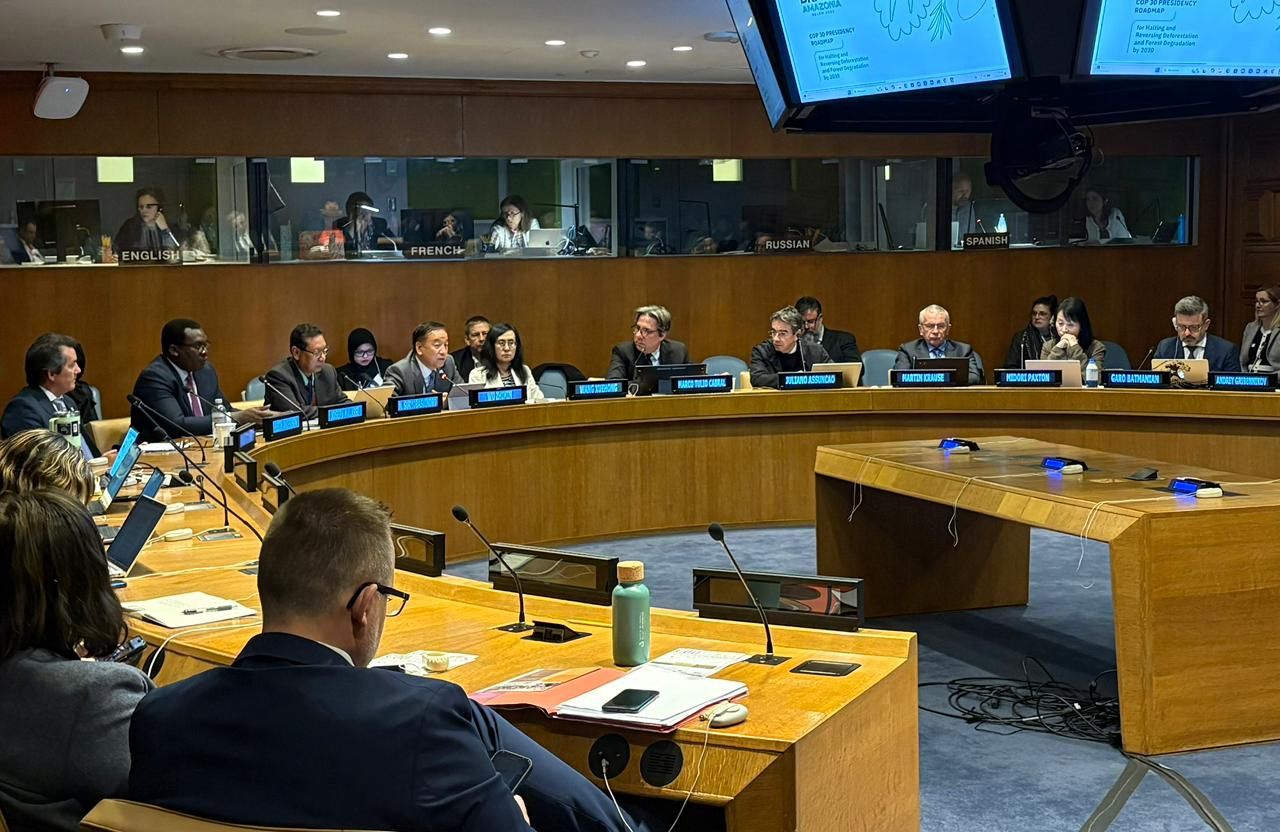
The COP30 Presidency is consolidating one of the key policy instruments of the upcoming Climate Conference: a Roadmap to Halt and Reverse Deforestation and Forest Degradation by 2030. Still being developed throughout 2026, the initiative was presented at the UN in New York during the 21st session of the United Nations Forum on Forests (UNFF21), at an event that brought together governments, multilateral organizations, and international experts.
A strong message emerged throughout the sessions: forests cannot be treated solely as an environmental agenda. They are increasingly central to economic resilience, livelihoods, food and water security, biodiversity protection, and long-term prosperity.
According to diplomat Marco Tulio Scarpelli Cabral, coordinator of the COP30 Presidency Roadmap drafting team, the process has already received more than 130 contributions from countries, as well as proposals submitted by researchers and civil society organizations from different parts of the world.
"This is very important, very significant, because it is one more endorsement. We hope there will be others to this effort being made by the COP30 Presidency," he said.
Marco Tulio stressed that the debate is no longer whether the world will halt deforestation by 2030, but how we will get there. The Roadmap highlights that annual forest loss already generates an estimated US$81 billion in economic damages linked to climate impacts, with cascading effects across agriculture, infrastructure, water systems, and energy markets. As Martin Krause, Director of UNEP's Climate Change Division, noted, this is "a cost that finance ministers and infrastructure investors are already paying — often without even realizing it."
The discussions reinforced the importance of:
sustainable land-use practices at landscape scale;
direct financing for Indigenous Peoples and local communities;
stronger transparency and due diligence frameworks in supply chains;
repurposing harmful subsidies toward sustainable incentives;
mobilizing catalytic and long-term capital, including through initiatives such as the Tropical Forests Forever Facility (TFFF);
enhanced cooperation between producer and consumer countries to strengthen green trade
The dialogues were co-led by UN Climate Change (UNFCCC), UNDP, FAO, UN Environment Programme (UNEP), Nature for Climate (N4C), the International Climate Policy Hub (ICPH) and partners including Climate Policy Initiative/PUC-Rio, Global Optimism, WWF, Forest Stewardship Council and Instituto Igarapé, bringing together perspectives from multiple forest regions — Brazil, Canada, China, Ecuador, Germany, Guatemala, Indonesia, the Philippines, Norway, Switzerland and the United Kingdom — to exchange experiences, challenges, and practical solutions around forest governance, finance, restoration, sustainable land use, and implementation at scale.
As discussions advance from COP30 toward COP31, the Forest Roadmap is evolving not only as a document, but as a platform for coordination, implementation, and convergence across existing forest initiatives and stakeholders. Its success will depend on each country identifying biome-specific drivers, opportunities, and pathways capable of delivering meaningful results on the ground.
UN Resolution Reinforces Global Action to Halt and Reverse Deforestation and Forest Degradation by 2030
UNFF21 approved a resolution reinforcing the urgency of accelerating the implementation of the United Nations Strategic Plan for Forests and the achievement of the Global Forest Goals by 2030. The text highlights the need to scale up sustainable forest management, strengthen international cooperation, expand climate finance, and intensify efforts to combat deforestation and forest degradation, acknowledging the complexity and cross-cutting nature of the challenge. The resolution also underscores that forest conservation requires coordinated action across different sectors and public policies — encompassing not only the forest agenda, but also security, agriculture, bioeconomy, and climate change.
Among the key points, the resolution recognizes initiatives led by countries and organizations to promote technological innovation, technology transfer, capacity building, and the exchange of experiences in sustainable forest management. The text also reinforces the importance of international cooperation in addressing forest fires, including prevention, response, and recovery of affected areas.
Paragraph 12 of the Resolution highlights multilateral initiatives to halt and reverse deforestation and forest degradation by 2030 and invites UNFF members to contribute with actions aligned with the Global Forest Goals. In this context, the resolution recognizes that the COP30 Presidency initiative offers pathways to achieve these objectives.
The resolution also supports the strengthening of forest-based bioeconomy, valuing agroforestry systems, family farming, and community-based management as instruments for income generation, food security, and environmental conservation.
On financing, the text recognizes the urgent need to scale up resources for forest protection and restoration. It also reinforces the role of the Forum on Forests as the UN's main intergovernmental body dedicated exclusively to the issue, and calls for stable financial resources to ensure the functioning of the secretariat and the preparation of the final review of the international forest architecture planned for 2030.
The resolution — to be submitted to the United Nations Economic and Social Council (ECOSOC) for adoption — will be published under reference E/CN.18/2026/L.1.