From COP30 to COP31: André Corrêa do Lago Delivers Closing Address as Brazil’s COP Presidency Comes to an End
At the opening of COP31 on Monday, November 9, in Antalya, Türkiye, Ambassador André Corrêa do Lago concluded Brazil’s Presidency of the UN Climate Change Conference with a speech reflecting on the legacy of Belém and the challenges of sustaining international cooperation to accelerate implementation of the Paris Agreement
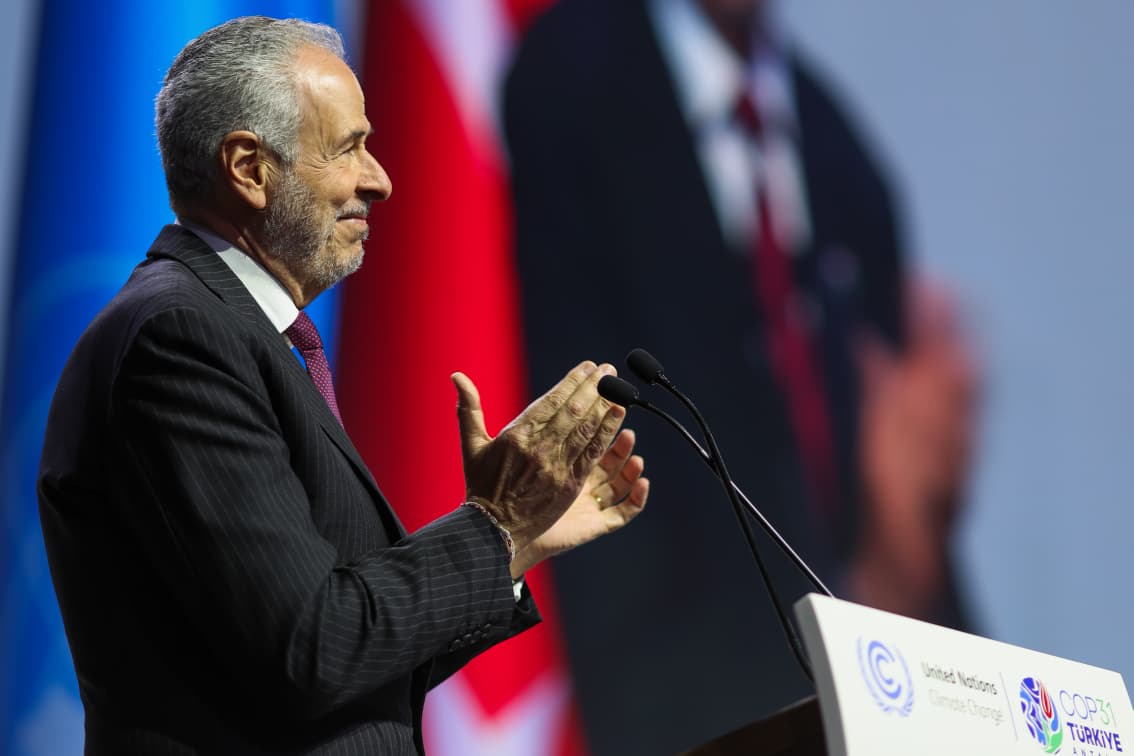
At the opening of COP31 on Monday, November 9, in Antalya, Türkiye, Ambassador André Corrêa do Lago concluded Brazil’s Presidency of the UN Climate Change Conference with a speech reflecting on the legacy of Belém and the challenges of sustaining international cooperation to accelerate implementation of the Paris Agreement. The Presidency passed to Türkiye, which will work in partnership with Australia, responsible for leading the COP31 negotiations.
“Belém delivered on the three challenges that President Lula had presented to us: on the negotiations, on the participation of the many stakeholders, and on the implementation,” Ambassador Lago said. “We are very happy to see the COP31 Presidency and the Presidency of Negotiations so committed to contributing to this very long process, in which we are building more and more together.”
Read the full text of André Corrêa do Lago’s speech below
“Ministers, heads of delegation, my dear Murat Kurum, Minister of Turkey, who will soon be the president of this COP, and dear friends. Minister Chris Bowen, also a dear friend, who will have the very special function of president of the negotiations.
I would also like to salute the head of delegation of Ethiopia, who is going to welcome us at COP32, and my dear friend Mukhtar Babayev, the president of COP29, one of the most elegant and wonderful people I have met in all my experience in the United Nations. And Simon, dear Simon, lovely to be here with you. Thank you first, and your Secretariat, a fantastic Secretariat, that allowed us to have these two years, because it really was an experience to be President-designate and then President of the COP. A great, great honor.
I have to start by thanking, obviously, so many people who supported us. First, the structure that prepared COP30. I have here my High-Level Champion, Dan Ioschpe, who was absolutely extraordinary in the preparation of this new restructured Action Agenda. I really thank you so much, dear Dan. Also our Youth Champion, Marcele, who has injected excitement in the young generation in my country and elsewhere.
I also have to thank all the members of our advisory councils. We had advisory councils on science and on economics, and I really want to thank you all for your very special support. Then we have our special envoys. Some of them are here, and we could not have prepared COP30 without them. We also had four circles, one of which was presided over by Laurent Fabius, and they were extremely important for the preparation and for the year that followed COP30.
To my team, thank you. Thank you for hiding all the wrong things that the president of the COP was doing. You're amazing, and I thank you very much.
I want to say a special word to the Brazilian negotiators, represented here by Ambassador Liliam Chagas, who did an amazing job at COP30 and now.
I also want to salute Minister Marina Silva. Minister Marina Silva was Minister of the Environment and Climate Change of Brazil during the preparation of the COP, and is now a member of Parliament. She was instrumental in working with President Lula to prepare for Belém.
But obviously, the person I have to thank most is the CEO, Ana Toni. Ana was truly the co-president of the COP, and it was so great that I think we could face even another year.
And I have to thank you all, because it is thanks to the fact that we worked together that we achieved what we achieved at COP30 and during this year that followed the meeting in Belém. So many of you have supported me, have guided me, have inspired me. Thank you very much to so many friends that I see in this room.
But obviously there is one person who is simply essential to mention today, who is arriving this evening: the man who led Brazil for many years and who has now been amazingly, brilliantly reelected, for the good of my country and for the good of this agenda, President Luiz Inácio Lula da Silva.
When President Lula nominated me as incoming president of COP30, he told me he wanted three things at the COP. He wanted to strengthen multilateralism, which I believe we absolutely needed at the moment this happened last year. It was a really very difficult moment, and the tide is turning, but at the time it was a really difficult moment, and so we had to concentrate on negotiations.
Then he said he wanted to bring people closer to the COP and the COP closer to people, which I think we worked on very much in the period of mobilization before the COP, but also during the COP, with the amazing presence of civil society and the very strong voices that we heard and took into the COP.
And the third was that he wanted to expand and accelerate the implementation of the Paris Accord. He wanted Paris to reach people, for people to understand that what we negotiate is changing people's lives. And this, I believe, is why we decided to restructure the Action Agenda: to make sure that everyone can participate in the implementation of the Paris Accord.
We had, as Brazilians, a very strong challenge, because we were responsible in 1992 for the Earth Summit, where the convention was signed. So we needed to give very special attention to how this agenda was going to continue ten years after Paris. And I believe that here we are certainly among people who believe that Paris is working. I believe we showed that to the world last year in Belém. The rulebook is ready. We negotiated very strongly among ourselves, and we brought results that we know support what science tells us: that we have to do everything possible to limit warming to 1.5 degrees. And thanks to Paris, as so many analyses show, we have evolved from a perspective of more than 4 degrees to, at the moment, around 2.7. So we did a lot, but we still have a lot to do.
Some people told me that COP30 was a bit of a different COP: that most COPs are characterized by tactics, and that COP30 was about strategy. I like that definition very much, and I believe nothing demonstrates it more than the Global Mutirão decision that we all agreed upon on the last day of the COP. With the Mutirão decision, we have very clearly shown that we have a consensus that we have to move decisively into implementation.
We know, as negotiators, what we need to do to preserve the principles of the UNFCCC and Paris. We also know that many, many other actors are the ones who are going to implement the decisions that we have negotiated. Inside our governments, we know that we need a larger role for this implementation, with ministries of finance, infrastructure, energy, transportation, industry, agriculture, and central banks, all essential actors for implementation. And the Action Agenda is welcoming all these representatives of our governments, together with subnational governments, cities that are absolutely central, but also business, academics, think tanks, NGOs, and the representatives of the most diverse communities.
We need to bring more and more Indigenous people. We have to bring more and more Afro-descendants. We were very happy that more youth were represented at the COP, and also children. But we need all these actors very intensively. And a very special word, obviously, for women. We need women to correct lots of the things that we men did wrongly for many, many years.
Together, restructuring the Action Agenda to be an instrument of implementation of the Global Stocktake very clearly gives it legitimacy: we can work on what we have agreed by consensus. And the Action Agenda is advancing very quickly. We negotiators know that our speed depends very much on consensus, but the Action Agenda does not need consensus, and we can see the most fantastic coalitions being formed in it.
In Belém, Brazil presented a series of initiatives that were very well received in the Action Agenda. The Tropical Forests Forever Facility is a very innovative and important step. The Open Coalition on Compliance Carbon Markets is another coalition that is so important, together with the Belém 4x Pledge on Sustainable Fuels. And now this year in Antalya, in the same line, to have electrification, waste, and other priorities that Türkiye has presented will really prove how wonderful and efficient the Action Agenda can be.
We have to remember every day the victims of climate change, be it in Rio Grande do Sul, in Brazil, in Nepal, in many countries of Africa, or Europe. We have to remember every day that we have to be guided by science. But it is essentially an agenda for people. We cannot fail our people, and we cannot fail the most vulnerable people, because in all our countries we have them.
We need a functional Just Transition Mechanism that will make sure this agenda is recognized as an agenda that will make people's lives better. We cannot lose the trust of our population that this agenda needs their support because it is going to bring a better life. We cannot forget that the climate agenda is a development agenda, and also that the transition cannot create or strengthen inequalities.
We believe that all this fits very much into the strengthening of adaptation, which I also believe was a great result of Belém. Adaptation is not only essential, as we now all completely agree, but it is also what comes closest to the people and what makes people feel that they are being considered in this very difficult moment in which climate change is arriving much more quickly than expected.
We have to always think of the most vulnerable, because the wealthiest people in all our countries can change their behavior. The wealthiest people in the world have been responsible for an increase of emissions and for an increase of consumption. That is something we have to really work upon. And we have to defend, as I said, the most vulnerable. We all know that the poorest people are the least responsible for climate change and that they are the main victims.
I also think that we must erase the perception that upgrading the lives of the poorest, who have no access to electricity or infrastructure, will mean a significant increase in emissions. We now know that the wealthiest people are the ones increasing emissions, and we have to take people out of poverty. This is an absolute obligation of ours.
During the mobilization period of the COP, as we were working with all our different partners, we heard a lot that we were ready for implementation, but that we needed to discuss three more issues that were extremely important, that were already approved by consensus but needed to be stimulated for a more intense debate. These three issues are fossil fuels, deforestation, and finance.
Having heard so many partners, we committed at the end of the COP to prepare two roadmaps, one on deforestation and one on fossil fuels. We decided to prepare these roadmaps, and we published them this week, together with a document on the implementation of the Baku to Belém document that I prepared with Minister Babayev and presented at COP30. We chose to present these documents this week, and I have to put it very, very clearly: these documents are meant for implementation. They are inputs for debates in our countries, for implementation. And we chose to use the wording of the GST, the Global Stocktake.
So one is the COP30 Presidency Roadmap for Transitioning Away from Fossil Fuels in Energy Systems in a Just, Orderly, and Equitable Manner, Accelerating Action in This Critical Decade, so as to achieve net zero by 2050 in keeping with the science. This document is available, and I hope it will be an input for very important discussions for implementation. The other is the COP30 Presidency Roadmap on Enhancing Efforts Towards Halting and Reversing Deforestation and Forest Degradation by 2030. Again, a document that I hope will be an important input for these discussions.
In these documents, I chose two quotes from people I admire and that I believe are very much linked to our debates. One is by the brilliant Brazilian geographer Milton Santos, who used to say that “the world is formed not only by what already exists, but by what can actually exist”. The other is by the Spanish philosopher José Ortega y Gasset: "I am myself and my circumstance." They refer very clearly to some of the challenges we have. First, we must always respect the differences between the countries and the circumstances of the countries that are here. And the other is that we have to try to do what many think is impossible.
So I hope that with this last step in our contribution to COP30, we will be able to make progress in the debates on these issues, to implement what we have decided in the GST.
Belém delivered on the three challenges that President Lula had presented to us: on the negotiations, on the participation of the many stakeholders, and on the implementation. I believe that negotiations and implementation are now being more and more understood through what we are calling a two-tier multilateralism. We are very happy to see the COP31 Presidency and the Presidency of Negotiations so committed to contributing to this very long process, in which we are building more and more together.
The world looks at COPs for rules, justice, solutions, so many things. The COPs have many dimensions. But I believe that whatever we do, we can never lose our moral compass. We can never forget that we are on the right side of history. So let's continue to deliver what our people expect from us for fighting climate change, with a sense of urgency permanently, but with people and science in our minds always.
Thank you very much.
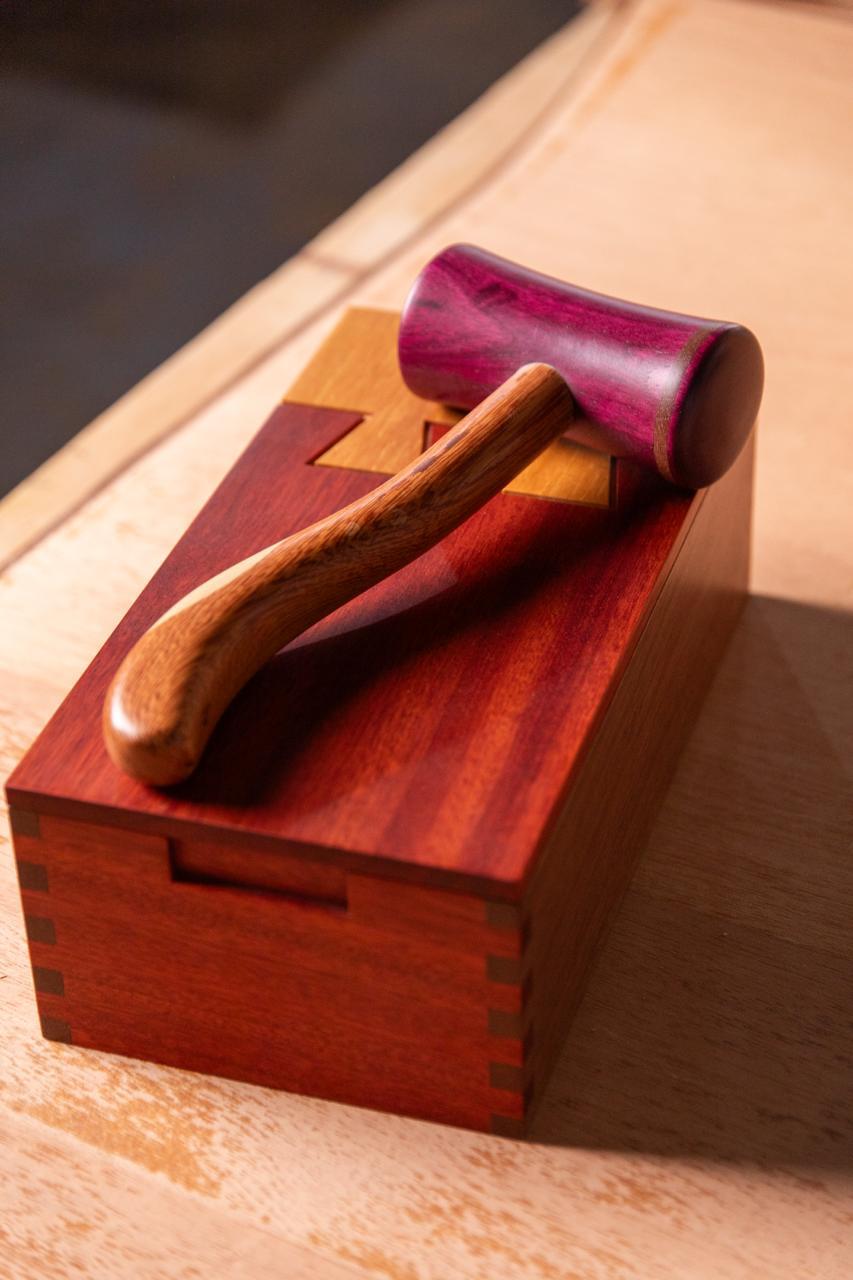
A Symbol of Continued International Cooperation
The handover of the Presidency was also marked by the presentation of a ceremonial gavel designed by Brazilian artist Etel Carmona and crafted from Brazilian woods of different origins, sourced from Indigenous communities in the Amazon and Atlantic Forest, certified sustainably managed areas, ecological restoration initiatives, and productive plantations. The result is a mosaic of Brazil’s forests expressed through materials, craftsmanship, and design, celebrating the country’s biodiversity and artisanal traditions. The gavel marks the transfer of the Presidency and symbolizes the continuity of dialogue and consensus-building that underpin international climate cooperation.