
From Ambition to Implementation: 290 London Climate Action Week Events Advance the Global Climate Action Agenda
During London's climate week, the Action Agenda brought together governments, businesses, investors and civil society to accelerate the implementation of Plans to Accelerate Solutions (PAS) and strengthen collaboration across its thematic axes on the road to COP31 in Antalya.
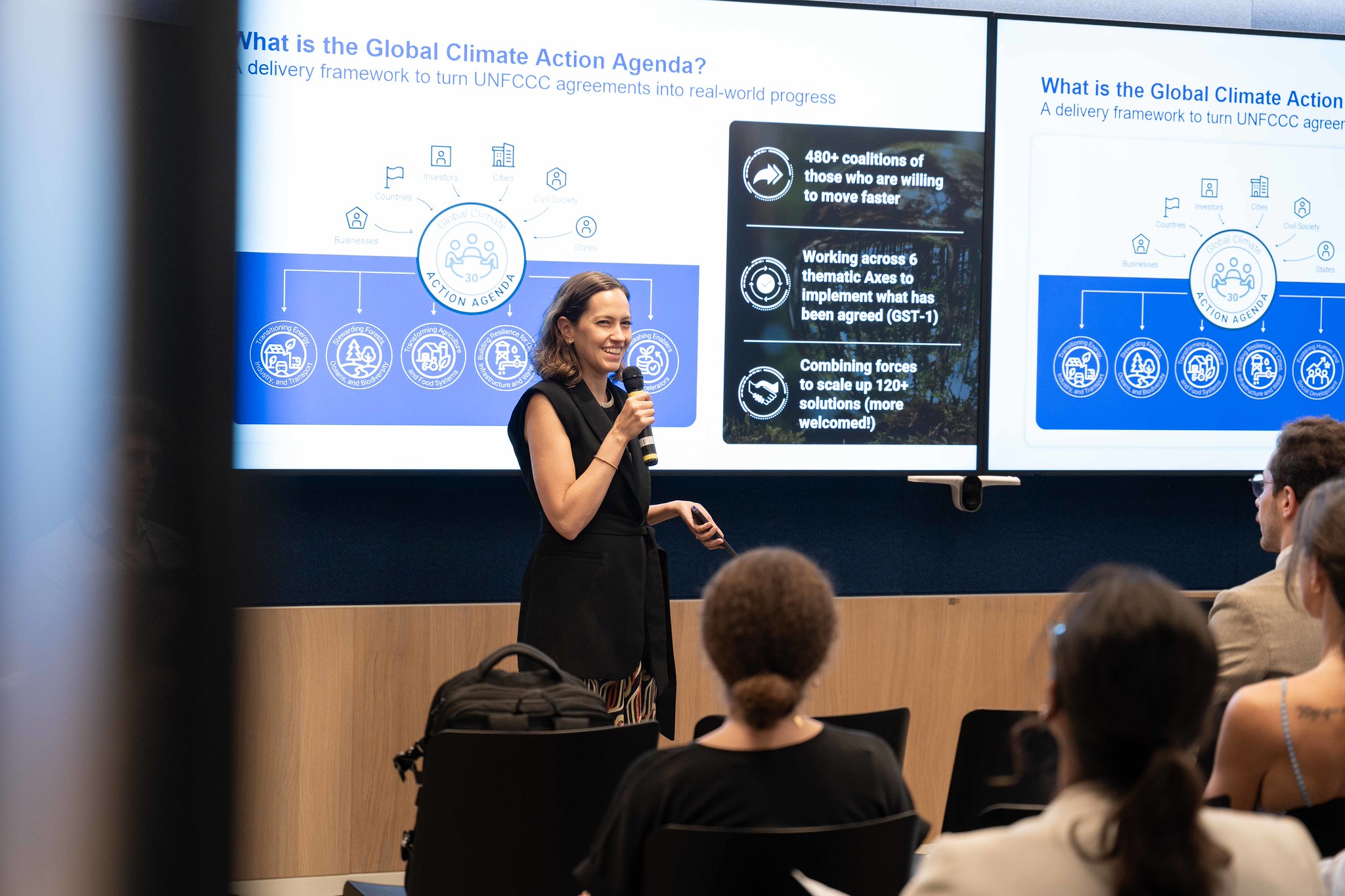
London was the stage, this week, for a series of meetings in which the Global Climate Action Agenda placed implementation at the center of the debate. During London Climate Action Week (LCAW), the Action Agenda brought together governments, businesses, investors and civil society around a shared purpose: to convert the commitments made at COP30 in Belém into concrete results on the road to COP31 in Antalya, Türkiye.
The week's programming benefited from strategic partnerships that broadened the Action Agenda's reach: E3G, organizer of LCAW, and Climate Action and World Climate Foundation, responsible for flagship events of the week, worked alongside the COP30 Presidency to connect their programming to the Action Agenda.
Seven months after the conference in Belém, the more than 480 initiatives and 120 Plans to Accelerate Solutions (PAS) that form the backbone of the Action Agenda are already showing traction. The London programming helped demonstrate how the Five-Year Vision (2026–2030), launched at COP30, is taking shape through coordinated action across the six thematic axes defined from the conclusions of the first Global Stocktake — from energy to cities, from industry to food systems.
Carbon Standards Harmonization in Focus
One of the highlights on this front was the opening of the global public consultation on the ISO Net Zero Standard (ISO 14060), held at Guildhall in partnership with the British Standards Institution (BSI). The panel brought together representatives from ISO, the GHG Protocol, and the financial and business sectors, inviting companies, governments and civil society to submit contributions to their national standards bodies before the countries' vote on 9 September. This marks an important milestone for the Plan to Accelerate Solutions (PAS) on harmonizing global carbon accounting standards under Axis 6 of the Action Agenda: Unleashing Enablers and Accelerators including on Financing, Technology and Capacity Building.
The consultation is part of a broader convergence effort. In early June, ISO 32212 was published, focused on transition planning for financial institutions, and the partnership between ISO and the GHG Protocol advanced, with final standards expected by 2028. To support this momentum, Action Agenda initiatives also announced the creation, in 2026, of a new Activation Group dedicated to net-zero emissions.
PAS in the Spotlight: From Carbon Accounting to Energy Transition
The harmonization theme also opened the first in a series of high-level roundtables held at BCG's office in London. Titled "Making Carbon Count", the meeting addressed carbon markets and carbon accounting as a foundation for implementation ahead of COP31, with UNIDO leading the discussion on industrial decarbonization. Participants highlighted the complementarity among the PAS and the importance of the ISO–GHG Protocol partnership for building high-integrity markets.
Throughout the week, additional roundtables addressed other axes of the Action Agenda. In partnership with the Global Alliance for Buildings and Construction (GlobalABC), a high-level roundtable discussed scaling climate and circular solutions for heat-resilient, near-zero emission buildings, with the participation of private sector initiatives, governments, investors and civil society linked to different PAS. Other sessions addressed the transition away from fossil fuels, the financing of climate solutions through the Action Agenda, and the PAS on fertilizers — all bringing together state and non-state actors around implementation.
Finance and Business Commitment in the Era of Implementation
At the launch of the Business Breakthrough Barometer 2026, produced in partnership with the High-Level Climate Champions, the Breakthrough Agenda and the Marrakech Partnership, views from more than 500 executives across 60 countries confirmed that ambition is no longer the primary bottleneck — 92% see sustainability as a competitive advantage and 89% have maintained or increased their climate-related investments over the past year. This was followed by Sectoral Business Coalitions for Climate Action: Scaling a Proven Model Across the Global South, organized by CEBDS with support from BCG and We Mean Business Coalition, which showed how structured private-sector engagement can translate national commitments into action: in Brazil, the model brought together around 200 organizations and mapped more than 140 climate transition levers that directly informed the country's Climate Plan and NDC implementation strategy. "Capital is available, but investment follows certainty. Governments, businesses and financial institutions must work together to reduce friction, lower risk and accelerate mobilization," said Ana Toni, CEO of COP30.
At the Financing Climate Solutions through the Action Agenda session, co-organized by the COP30 Presidency and the High-Level Climate Champions, initiatives presented concrete solutions to investors, multilateral development banks and financial institutions — among them Eco Invest, linked to the FX Hedge PAS, which has already mobilized over BRL 75 billion, including approximately BRL 46 billion from foreign investors.
The Road to Antalya
The link between the COP presidencies was strengthened throughout the week. It even gave its name to the leadership dialogue "From COP30 to COP31: Accelerating Implementation", held at the 19th UNEP FI Global Roundtable on Sustainable Finance — one of the world's leading forums on sustainable finance, which brought together more than 500 in-person participants in London.
"For a long time, climate and the financial sector existed in completely separate spheres. What we sought to do at COP30 was to bring these two worlds together to find common solutions to the greatest crisis we will face over the next 100 years," said Ana Toni, during the event.
More than the announcement of targets, what was seen in London were solutions taking shape — a sign that, in the journey between Belém and Antalya, the measure of climate progress is increasingly focused on implementation.